
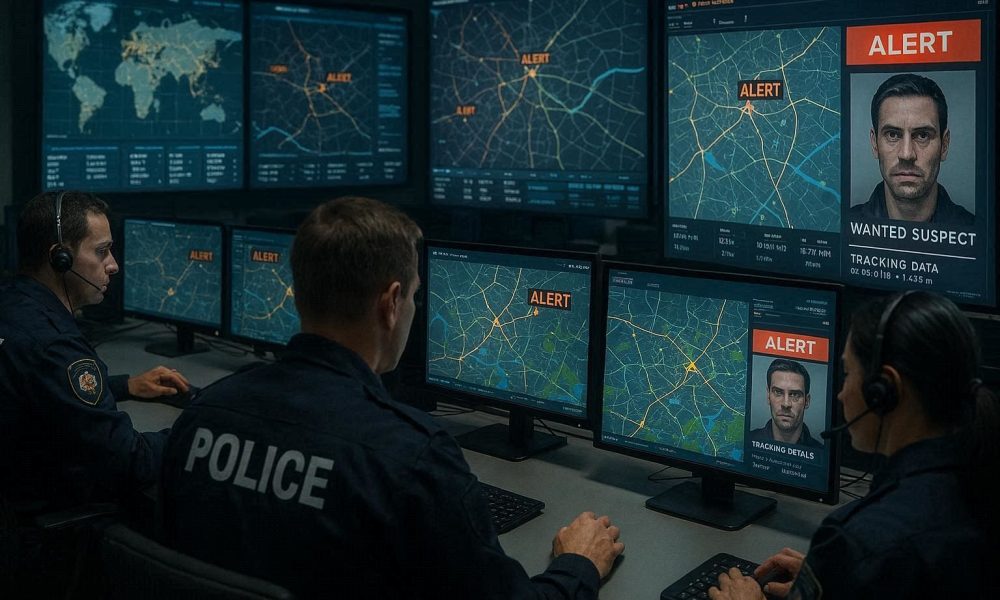
Biometrics expose identity fraud, criminal histories, and false travel identities as Europe’s new border architecture moves from theory into enforcement
WASHINGTON, DC, April 30, 2026,
Europe’s new biometric border system is already changing the risk equation for travelers using false identities, because the old weakness of manual passport inspection is being replaced by automated checks that compare faces, fingerprints, travel records, and prior refusal data in seconds.
The early enforcement results show why fugitives, document fraud networks, and identity manipulators are facing a tougher border environment: the European Entry and Exit System has registered tens of millions of crossings and has led to large-scale refusal actions during its rollout phase.
According to recent reporting on EU border figures, more than 52 million crossings were registered after the system’s initial launch, more than 27,000 refusals of entry were recorded, and almost 700 people were identified as posing a security threat to the European Union.
Biometrics have turned border identity from a document question into a body-based verification test.
The reason the new system matters is simple but unforgiving: a forged passport may change a name, nationality, or date of birth on paper, but it cannot easily change the fingerprints or facial measurements linked to an earlier border record.
The European Union’s official Entry and Exit System framework records travel document data, entry and exit details, refusals of entry, and biometric identifiers for non-EU short-stay travelers, replacing the older passport-stamp model with a centralized electronic border record.
This means that a traveler presenting one identity today may still be compared against records created under another identity in the past, especially when fingerprints or facial images connect the person to previous crossings, refusals, or security concerns.
For law-abiding travelers, this can mean faster identity confirmation over time, but for people carrying forged documents or switching identities, the same system can expose inconsistencies that a tired officer at a crowded border might once have missed.
The Romanian case shows why separate documents no longer guarantee separate identities.
One of the most instructive cases reported during the EES rollout involved Romania, where biometric comparison identified a traveler who was using two separate identities and documents because the person’s biometric data matched a prior refusal of entry.
Technology coverage of the rollout reported that the person had previously been denied entry to the Schengen Area on multiple occasions, and that biometric comparison exposed the link between separate identities that manual processing likely would not have detected.
The case illustrates the core power of biometric border screening: the system not only asks whether a document looks real, but also whether the person presenting it matches previous biometric and immigration records.
Without biometrics, a traveler carrying separate documents under separate identities may have relied on fragmented records, language differences, inconsistent national databases, or human error to avoid immediate detection at the checkpoint.
With biometrics, the body becomes the anchor record, meaning that the person can change documents more easily than they can change the biometric markers already associated with past border activity.
The end of the paper-era fugitive is arriving faster than many expected.
For decades, fugitives and document fraud networks exploited the gap between physical paperwork and disconnected government systems, because a passport could be forged, a photograph could be swapped, and an alias could survive when border posts lacked real-time comparison tools.
That gap is narrowing because EES-style systems create a cumulative identity history, allowing authorities to detect patterns involving overstays, prior refusals, document irregularities, repeated aliases, and biometric matches across different points of entry.
The operational difference is enormous because a manual officer might previously have needed suspicion before digging deeper, while an automated system can generate an alert before the traveler has time to explain, adjust, or disappear into the destination country.
A hit does not automatically prove criminality, and legitimate travelers can still face delays due to errors or mistaken matches, but the enforcement trend is clear: identity claims are now tested against more data than ever before.
Automated refusal changes the psychology of false identity travel.
The old false-document model depended on confidence, timing, and performance, because the traveler needed to look calm, answer questions smoothly, and hope the officer accepted the document at face value.
The new biometric model shifts the burden because confidence no longer matters if a fingerprint, facial image, or previous refusal record contradicts the identity being presented at the kiosk or inspection booth.
This change is especially damaging for fugitives because running often requires movement, and movement creates records through airlines, border systems, hotels, payment platforms, phone networks, and immigration databases.
A person attempting to cross under an alias may now discover that the new name is less important than the old biometric record, especially when a previous refusal or law enforcement alert remains connected to the traveler’s physical identifiers.
Security hits are only one part of a broader enforcement picture.
The nearly 700 security-risk identifications reported during the rollout are only one category, because refusal decisions can also involve expired documents, fraudulent papers, immigration violations, insufficient entry conditions, or prior refusal records.
This broader refusal environment matters because border systems are not designed only to catch wanted individuals, but also to identify people whose documents, travel purpose, status, or history do not meet entry requirements.
For regular travelers, the lesson is administrative discipline, because old mistakes involving overstays, expired passports, inconsistent names, or missing documents may become more visible when electronic records replace stamps and fragmented paper trails.
For fugitives and document fraud users, the lesson is more severe because a single biometric match can connect separate identities, revive old refusal histories, and trigger immediate officer attention at the moment of attempted entry.
EES and ETIAS together create a layered border system.
EES operates at the border by registering entries, exits, refusals, and biometric data, while ETIAS is designed as a pre-travel authorization system for visa-exempt visitors before they arrive at the Schengen frontier.
Together, these systems create a layered model in which screening may occur before departure and again at physical entry, reducing the old reliance on a single face-to-face inspection moment.
That layered structure is important because a traveler with a weak identity story may face questions before boarding, during authorization, at the kiosk, and during officer review if the system identifies a relevant concern.
The future border, therefore, becomes less like a single gate and more like a sequence of data checks, each one testing whether the traveler’s documents, biometrics, and history remain consistent.
Biometric records make identity fraud harder to compartmentalize.
Identity fraud works best when records remain separate, because one name appears in one file, another document appears somewhere else, and no system connects the same person across those separate identities.
Biometric systems attack that separation by linking the person to the record, meaning the same fingerprints or face can expose multiple names, documents, applications, or refusals that were supposed to remain separate.
This is why the Romanian case is so significant, because it shows how biometrics can detect a traveler who may have appeared to be different people on paper but remained the same person in the system.
For organized fraud networks, this poses a greater problem because each detected traveler may reveal document suppliers, travel routes, application patterns, payment methods, and support networks associated with the identity scheme.
Privacy concerns remain serious, but they do not make fake documents safer.
The growth of biometric borders creates real privacy concerns, including data retention, accuracy, oversight, remedies for false matches, cybersecurity risk, and the long-term consequences of storing sensitive identifiers that cannot be changed.
Those concerns deserve public debate, especially because ordinary travelers may experience delays, system errors, or anxiety when sensitive personal data is incorporated into an expanding border-management infrastructure.
However, privacy concerns do not make fake documents safer or more defensible, because attempting to defeat biometric screening with forged paperwork usually creates greater legal and personal exposure.
The safer approach for legitimate travelers with privacy concerns is lawful preparation, accurate documents, a clear travel purpose, secure digital habits, and professional guidance before complex mobility decisions create avoidable risk.
Legal privacy planning is different from hiding from the system.
A lawful traveler may seek privacy for family security, public exposure, political instability, online harassment, reputational risk, or legitimate concerns about unnecessary commercial and digital data trails.
That need is real, but the response must be legal, because privacy planning cannot depend on false passports, misleading declarations, forged civil records, or attempts to evade valid border and law enforcement checks.
Through Amicus International Consulting, qualified clients can explore lawful privacy and mobility planning that focuses on controlled exposure, confidentiality, secure relocation, and referral to appropriate professional resources.
For clients who qualify, Amicus International Consulting’s second passport services may support lawful contingency planning when a second citizenship is properly issued, verifiable, and used consistently with applicable rules.
The new border rewards coherence, not secrecy.
Coherence means that a traveler’s passport, biometric data, visa record, travel purpose, residence status, banking profile, and prior movement history do not conflict with one another during routine inspection.
Secrecy without a legal foundation often creates contradictions, especially when a person relies on a false name, a fake document, or an improvised explanation that cannot survive database comparison.
For legitimate travelers, coherence can reduce problems because accurate records, valid documents, and calm explanations make it easier to resolve questions when technology produces delays or officers follow up.
For people trying to move unlawfully, coherence is almost impossible because forged documents may change the surface identity, while biometric records, travel history, and prior refusals preserve the underlying trail.
The lesson from early EES results is already clear.
The first major lesson is that border automation is not merely a convenience upgrade, because it is an enforcement transformation that turns every crossing into a deeper identity comparison.
The second lesson is that biometrics can expose identity fraud even when separate documents appear valid, because fingerprints and facial images can connect people to previous refusals, alerts, or immigration histories.
The third lesson is that lawful travelers need preparation, because the same systems that catch fraud can also create confusion when names, documents, or prior records are inconsistent.
The fourth lesson is that fugitives and document fraud users are facing a shrinking margin for error, because manual weaknesses are being replaced by systems designed to detect inconsistencies instantly.
In 2026, the border no longer asks only whether a passport looks authentic, because it increasingly asks whether the person, the document, and the stored record all tell the same story.




