
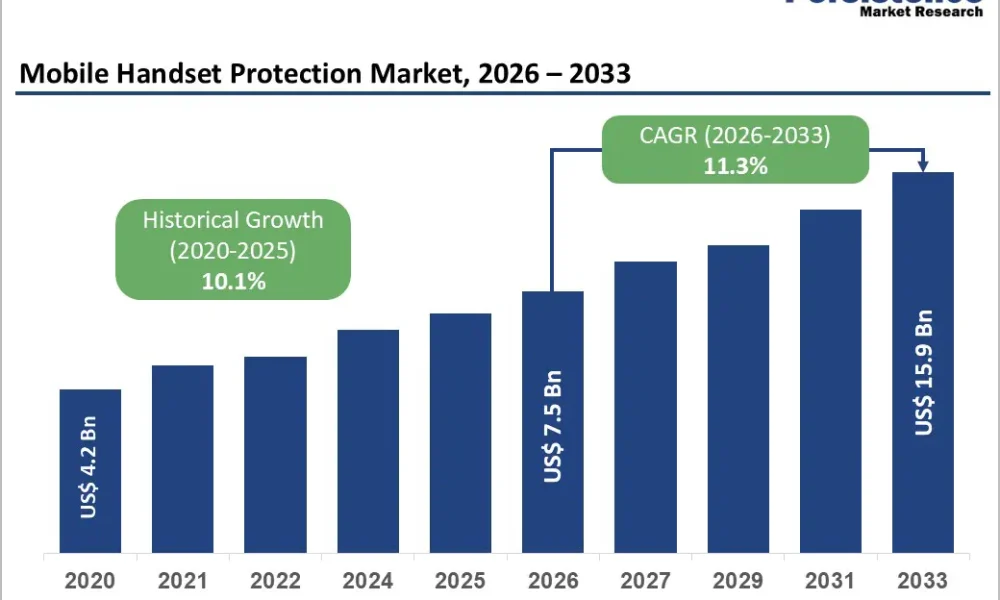
The global mobile handset protection market is undergoing a significant transformation, driven by the rapid evolution of smartphones and the increasing financial risks associated with device ownership. As smartphones become more advanced, expensive, and integral to everyday life, the demand for protection solutions—ranging from insurance plans to extended warranties and cybersecurity coverage—continues to rise.
Valued at US$ 7.5 billion in 2026, the market is projected to reach US$ 15.9 billion by 2033, expanding at a compound annual growth rate (CAGR) of 11.3%. This growth reflects not only rising smartphone penetration but also increasing awareness among consumers regarding device protection against physical damage, theft, and cyber threats.
Market Overview
Mobile handset protection plans provide financial and technical support to users in case of accidental damage, theft, mechanical failure, or even digital threats. These plans are offered by mobile carriers, original equipment manufacturers (OEMs), retailers, and third-party insurers.
With over 6.8 billion smartphone users globally, representing approximately 85% of the world’s population, the addressable market for protection services has reached unprecedented levels. The increasing reliance on smartphones for banking, communication, entertainment, and work has further emphasized the importance of safeguarding these devices.
Key Market Drivers
Escalating Smartphone Penetration and Premiumization
One of the primary drivers of the mobile handset protection market is the rapid growth in smartphone adoption, especially in emerging economies. Additionally, the shift toward premium devices—priced above $600—has significantly influenced consumer behavior.
Premium smartphones now account for 46.7% of global shipments, up from 35% in 2020. These devices incorporate cutting-edge technologies such as:
- Foldable displays
- AI-powered features
- Advanced camera systems
- 5G connectivity
However, with innovation comes higher repair costs. In many cases, repairing a premium smartphone can cost up to 40% of its original price, making protection plans a financially viable option.
Consumers purchasing high-end devices are more inclined to invest in protection. For instance, premium smartphone users are significantly more likely to opt for insurance compared to mid-range users, highlighting a clear correlation between device value and protection adoption.
Rising Incidence of Device Damage and Theft
Another major growth driver is the increasing frequency of smartphone damage and theft. Studies indicate that:
- 30% of users experience accidental damage within the first year
- Millions of smartphones are stolen annually worldwide
- Screen damage remains the most common issue
Repair costs have surged dramatically, with average screen replacement costs for flagship devices reaching over $300. This growing risk landscape has heightened consumer awareness, with nearly 78% of smartphone users recognizing the financial vulnerability associated with device loss or damage.
As a result, protection plans that cover accidental damage, theft, and mechanical failures have gained widespread acceptance.
Market Restraints
High Premium Costs and Price Sensitivity
Despite increasing awareness, the adoption of mobile handset protection plans is hindered by cost concerns. Monthly premiums typically range from $8 to $19 per device, which can be a significant expense, particularly in developing economies.
Key challenges include:
- 42% of users cite cost as the primary barrier
- Low adoption rates (around 12%) in price-sensitive markets
- Preference for cheaper third-party repair services
Younger demographics, such as Gen Z and millennials, often prefer to take the risk rather than commit to recurring payments, especially during periods of economic uncertainty.
Complex Claims Processes and Regulatory Challenges
Operational inefficiencies also pose a challenge to market growth. Many users report dissatisfaction with:
- Lengthy claims processing times (7–10 days)
- Claim denials due to unclear policy terms
- Complex verification procedures
Additionally, regulatory fragmentation across regions complicates compliance for providers. These issues can negatively impact customer trust and overall market penetration.
Emerging Opportunities
Expansion in Emerging Markets
Emerging economies in Asia Pacific, Latin America, and Africa present substantial growth opportunities. Countries like India and China are witnessing:
- Rapid smartphone adoption
- Rising disposable incomes
- Increased demand for premium devices
India, for example, is expected to see significant growth in smartphone insurance adoption as digital awareness improves and 5G services expand.
Telecom operators are leveraging this opportunity by bundling protection plans with device purchases and network subscriptions, achieving higher attachment rates.
Integration of Cybersecurity and AI-driven Services
The convergence of device protection with cybersecurity is a major trend shaping the market’s future. With smartphones increasingly used for financial transactions and data storage, they have become prime targets for cyberattacks.
Key developments include:
- AI-powered threat detection
- Identity theft monitoring
- Remote data wiping
- Predictive maintenance using machine learning
Cybersecurity-integrated protection plans are expected to generate $2.1 billion in additional revenue by 2030, making them a key area of innovation.
Category-wise Insights
Protection Provider Analysis
Mobile operators and carriers dominate the market, holding approximately 41% share. Their advantages include:
- Direct access to customers at the point of sale
- Seamless billing integration
- Bundled offerings with device financing
These providers achieve high adoption rates, especially for premium devices, by offering convenient enrollment and flexible payment options.
Pricing Model Trends
The monthly subscription model is the most popular pricing structure, accounting for 67% of the market. Consumers prefer:
- Lower upfront costs
- Predictable monthly payments
- Flexibility to cancel or upgrade
This model aligns with broader subscription economy trends and helps providers maintain customer retention.
Sales Channel Evolution
E-commerce and online platforms are the fastest-growing sales channels, expanding at a 16.8% CAGR and capturing 38% market share.
Key drivers include:
- AI-based product recommendations
- Instant policy activation
- Seamless digital purchasing experience
Online platforms also enable better product comparison and customer reviews, improving transparency and trust.
Regional Insights
North America
North America leads the global market with a 38.8% share, driven by:
- High smartphone penetration (over 90%)
- Strong carrier presence
- High adoption of premium devices
The region benefits from advanced protection offerings, including cybersecurity integration and AI-driven diagnostics.
Europe
Europe accounts for 24% of the market, characterized by:
- Strong regulatory frameworks
- Growing demand for sustainable solutions
- Increasing adoption of refurbished device protection
Countries like Germany, the U.K., and France are key contributors to regional growth.
Asia Pacific
Asia Pacific is the fastest-growing region, with a 12.5% CAGR. Growth is fueled by:
- Expanding middle class
- Rapid digitalization
- Increasing smartphone penetration
China and India are the primary growth engines, supported by strong e-commerce ecosystems and telecom operator initiatives.
Competitive Landscape
The mobile handset protection market is moderately consolidated, with the top players accounting for approximately 62% of the market share. Key companies include:
- Apple Inc.
- Asurion LLC
- AT&T Mobility
- Verizon Wireless
- SquareTrade
- Best Buy Inc.
- T-Mobile, Inc.
These companies focus on:
- Strategic partnerships with carriers and OEMs
- AI-driven claims processing
- Expansion into cybersecurity services
- Mergers and acquisitions for global expansion
Innovation in customer experience, such as instant claims processing and proactive device monitoring, is becoming a key differentiator.
Recent Market Developments
Recent industry developments highlight the growing focus on innovation and expansion:
- July 2025: Launch of advanced device lifecycle management programs
- October 2025: Enhanced protection plans with expanded coverage features
- December 2025: Major acquisitions to strengthen global presence and technological capabilities
These developments indicate a shift toward integrated, customer-centric protection ecosystems.
Future Outlook
The future of the mobile handset protection market lies in:
- Embedded insurance models at the point of purchase
- AI-driven predictive maintenance
- Cybersecurity integration
- Flexible subscription-based pricing
- Expansion into emerging markets
As smartphones continue to evolve into multifunctional digital hubs, the need for comprehensive protection solutions will only intensify.
Conclusion
The global mobile handset protection market is poised for robust growth, driven by increasing smartphone penetration, rising device costs, and growing awareness of financial and digital risks. While challenges such as high premiums and operational inefficiencies persist, ongoing innovation and expansion into emerging markets present significant opportunities.
With the market expected to nearly double by 2033, stakeholders—including insurers, telecom operators, and OEMs—must focus on delivering value-driven, transparent, and technologically advanced protection solutions to stay competitive in this rapidly evolving landscape.
Related Reports:




