
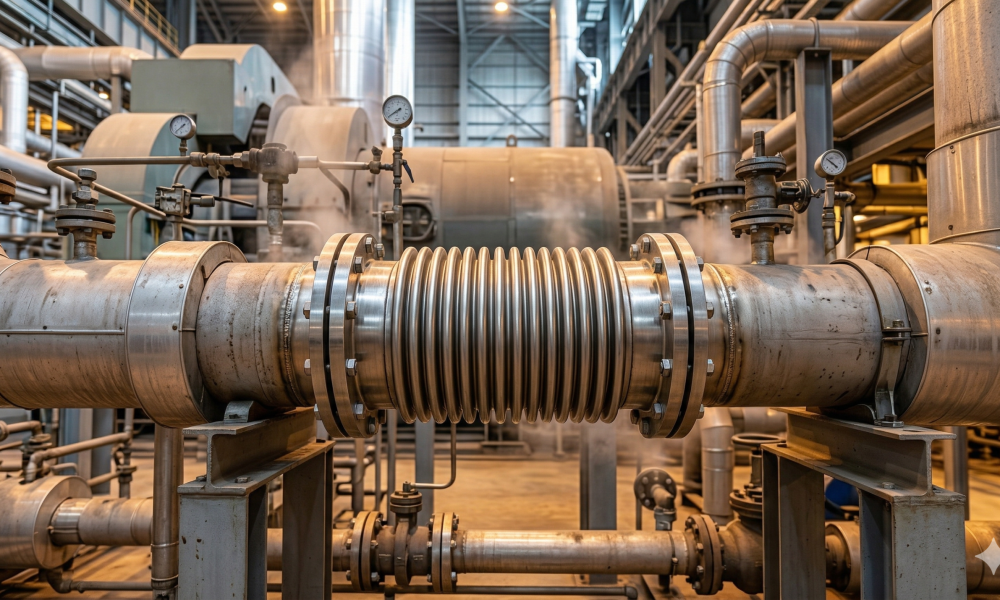
Expansion Bellows
Expansion bellows are flexible components used in piping systems to absorb movement, reduce stress, and maintain system integrity. They are designed to accommodate thermal expansion, vibration, and mechanical displacement, making them an essential part of many industrial and commercial installations.
What Are Expansion Bellows?
Expansion bellows are engineered sections of pipe or ducting that can expand and contract without causing damage to the system. They are typically made from materials such as stainless steel, rubber, or specialised alloys, depending on the application and operating conditions.
Their primary purpose is to handle changes in length or position caused by temperature fluctuations, pressure variations, or external forces. By doing so, expansion bellows help prevent strain on connected components such as pipes, valves, and joints.
How Expansion Bellows Work
The design of expansion bellows includes a series of convolutions or corrugations. These folds allow the component to flex in multiple directions while maintaining strength and durability.
When a system experiences thermal expansion, the bellows compress or extend to absorb the movement. Similarly, they can accommodate lateral or angular displacement, ensuring that the overall system remains stable and functional.
This flexibility reduces the risk of cracking, leakage, or structural failure in rigid piping systems.
Types of Expansion Bellows
Expansion bellows come in various forms to suit different applications and movement requirements.
Axial Bellows
Axial expansion bellows are designed to absorb movement along the length of the pipe. They are commonly used where expansion and contraction occur in a straight line.
Lateral Bellows
These bellows accommodate movement perpendicular to the pipe axis. They are useful in systems where misalignment or side-to-side motion is expected.
Angular Bellows
Angular expansion bellows allow for rotational movement between connected sections. They are often used in complex piping layouts where directional changes occur.
Universal Bellows
Universal bellows consist of two bellows connected by a central pipe section. This design allows them to handle a combination of axial, lateral, and angular movements.
Materials Used in Expansion Bellows
The choice of material depends on factors such as temperature, pressure, and the type of fluid or gas being transported.
Metal Bellows: Often made from stainless steel, these are suitable for high-temperature and high-pressure environments.
Rubber Bellows: Flexible and resistant to certain chemicals, rubber bellows are commonly used in water and HVAC systems.
Fabric Bellows: Used in low-pressure applications such as air handling systems, offering lightweight flexibility.
Each material offers different advantages in terms of durability, flexibility, and resistance to environmental conditions.
Applications of Expansion Bellows
Expansion bellows are used across a wide range of industries and systems.
Heating and Cooling Systems
In HVAC systems, expansion bellows accommodate temperature changes in pipework, reducing stress and preventing damage.
Industrial Processing
Manufacturing plants use expansion bellows to handle movement in pipelines carrying steam, chemicals, or other fluids.
Power Generation
Power plants rely on expansion bellows to manage thermal expansion in high-temperature piping systems.
Water and Wastewater Systems
These components are used to absorb movement and vibration in pipelines, helping maintain consistent flow and reducing wear on infrastructure.
Marine and Offshore Applications
Expansion bellows are also used in shipbuilding and offshore installations, where they help manage movement caused by waves, temperature changes, and mechanical forces.
Benefits of Expansion Bellows Reduced System Stress
By absorbing movement, expansion bellows minimise stress on pipes and connected equipment, reducing the risk of damage.
Improved Longevity
Protecting systems from excessive strain helps extend the lifespan of components and reduces maintenance requirements.
Vibration Control
Expansion bellows can dampen vibrations caused by pumps, compressors, or external forces, improving overall system stability.
Leak Prevention
By accommodating movement, these components help maintain secure connections and reduce the likelihood of leaks.
Key Considerations When Selecting Expansion Bellows
- Choosing the right expansion bellows requires careful consideration of several factors.
- Operating temperature and pressure
- Type of movement (axial, lateral, or angular)
- Compatibility with the media being transported
- Installation space and system design
- Required lifespan and maintenance expectations
Proper selection ensures that the bellows perform effectively and safely within the system.
Installation and Maintenance
Correct installation is essential for the performance of expansion bellows. They should be aligned properly and installed according to manufacturer guidelines to avoid unnecessary stress.
Regular inspection is also important. Checking for signs of wear, corrosion, or damage helps identify issues early and prevents potential system failures.
Conclusion
Expansion bellows play a crucial role in maintaining the integrity and efficiency of piping systems. By absorbing movement, reducing stress, and accommodating thermal expansion, they help ensure reliable operation across a wide range of applications.
Their versatility, combined with a variety of materials and designs, makes expansion bellows an essential component in modern engineering systems.




