
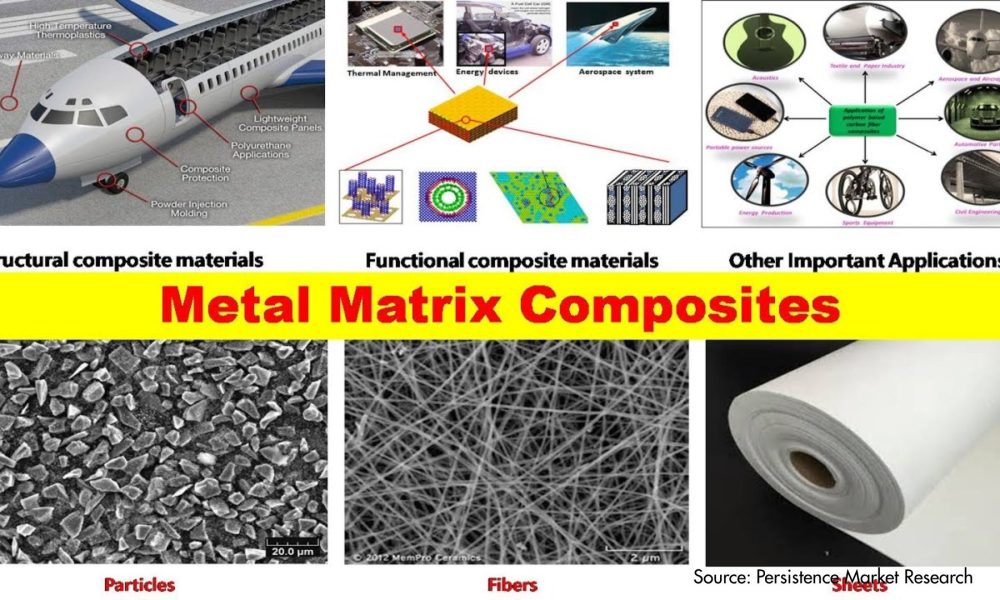
The Metal Matrix Composite (MMC) Market is gaining significant momentum as industries increasingly demand lightweight, high-strength, and high-performance materials. Metal matrix composites are engineered materials in which a metal matrix such as aluminum, magnesium, or titanium is reinforced with ceramic particles, fibers, or whiskers. These materials offer superior mechanical strength, wear resistance, and thermal stability compared to conventional metals, making them ideal for high-performance applications.
According to industry analysis, the global metal matrix composite market is projected to reach US$ 458.7 million in 2026 and expand to approximately US$ 658.5 million by 2033, growing at a CAGR of 5.3% during the forecast period.
The growth is mainly driven by increasing adoption of lightweight materials in automotive, aerospace, electronics, and industrial machinery sectors.
Get Your FREE Sample Report Instantly – Click Now: https://www.persistencemarketresearch.com/samples/34701
Market Overview
Metal matrix composites combine the strength of metals with the improved mechanical and thermal properties of reinforcing materials such as silicon carbide, carbon fiber, and alumina. This hybrid structure provides enhanced stiffness, durability, and heat resistance while maintaining relatively low weight.
The increasing focus on energy efficiency and emission reduction is encouraging manufacturers to replace conventional materials with advanced composites. MMCs enable significant weight reduction in transportation equipment, which improves fuel efficiency and overall performance.
Moreover, advancements in manufacturing technologies such as powder metallurgy, liquid metal infiltration, and additive manufacturing are making MMC production more efficient and cost-effective. As a result, industries are increasingly integrating these materials into high-performance components.
Key Market Drivers
Growing Demand for Lightweight Materials in Automotive Industry
One of the most important factors driving the metal matrix composite market is the growing need for lightweight materials in the automotive sector. Automotive manufacturers are continuously seeking materials that can reduce vehicle weight without compromising structural strength.
MMCs provide exceptional stiffness-to-weight ratios and improved wear resistance, making them suitable for automotive components such as:
- Brake rotors
- Pistons
- Cylinder liners
- Connecting rods
- Chassis components
The automotive industry accounts for about 35% of total MMC consumption, making it the largest end-use sector.
Additionally, the rapid shift toward electric vehicles (EVs) is creating new opportunities for MMC applications, particularly in thermal management systems and battery structures.
Expanding Aerospace and Defense Applications
The aerospace and defense industries have long been early adopters of advanced materials. Metal matrix composites are widely used in aerospace applications because of their ability to withstand extreme temperatures and mechanical stresses while maintaining lightweight properties.
These materials are used in components such as turbine engines, structural aircraft parts, and satellite systems. MMCs offer improved fatigue resistance, enhanced thermal conductivity, and higher operating temperatures compared to conventional alloys.
As global air travel increases and governments invest heavily in defense modernization programs, the demand for high-performance materials like MMCs is expected to rise significantly.
Rising Demand in Electronics and Thermal Management
Another major growth driver is the increasing use of metal matrix composites in electronics and power systems. Modern electronic devices generate significant heat, and efficient thermal management is essential to maintain performance and reliability.
MMCs provide excellent thermal conductivity and dimensional stability, making them suitable for:
- Heat sinks
- Power electronics modules
- Semiconductor packaging
- Electronic substrates
With the expansion of data centers, telecommunications infrastructure, and high-power electronic systems, the demand for advanced thermal management materials continues to grow.
Market Restraints
High Production Costs
Despite the strong growth potential, the metal matrix composite market faces certain challenges. One of the main restraints is the high cost associated with manufacturing MMC components.
Producing these materials often requires specialized equipment and complex processes such as powder metallurgy and infiltration techniques. These processes increase production costs compared to traditional metals.
Additionally, machining MMCs can be challenging due to their hardness and abrasive reinforcement materials, which may increase tooling costs and processing time.
Matrix Material Insights
Metal matrix composites can be categorized based on the type of matrix material used.
Aluminum Matrix Composites
Aluminum matrix composites dominate the market, accounting for around 50% of total MMC consumption.
The popularity of aluminum is attributed to several advantages, including:
- Low density
- Excellent corrosion resistance
- High recyclability
- Good thermal conductivity
These properties make aluminum-based MMCs widely used in automotive, aerospace, and industrial applications.
Other Matrix Materials
Other important matrix materials include:
- Magnesium
- Copper
- Titanium
- Nickel alloys
Each material provides specific performance benefits depending on the application requirements.
Reinforcement Material Insights
The reinforcing material plays a crucial role in determining the mechanical properties of metal matrix composites.
Common reinforcement materials include:
- Silicon carbide
- Carbon fibers
- Alumina particles
- Titanium carbide
Among these, silicon carbide reinforcement is widely used because it significantly improves hardness, wear resistance, and thermal conductivity.
Production Technology Insights
Several manufacturing methods are used to produce metal matrix composites.
Powder Metallurgy
Powder metallurgy is the most widely used production technology, accounting for around 46% of global MMC production.
This method offers several advantages, including:
- Uniform distribution of reinforcement materials
- Precise control over material composition
- High dimensional accuracy
Other Production Methods
Other common manufacturing processes include:
- Liquid metal infiltration
- Casting techniques
- Deposition processes
These technologies enable manufacturers to produce MMC components with complex geometries and enhanced mechanical properties.
Regional Analysis
Asia Pacific
Asia Pacific is currently the largest and fastest-growing regional market for metal matrix composites.
The region benefits from strong industrial growth in countries such as:
- China
- Japan
- India
- South Korea
Rapid expansion in automotive manufacturing, electronics production, and aerospace development is driving demand for advanced composite materials across the region.
North America
North America represents a significant market due to its advanced aerospace and defense industries. The United States has a strong presence of major aerospace manufacturers that utilize MMCs in aircraft components and defense equipment.
Furthermore, increasing investment in next-generation electronics and high-performance materials research is supporting market growth.
Europe
Europe is another important market for metal matrix composites. The region’s automotive manufacturers are increasingly adopting lightweight materials to meet strict emission regulations and fuel-efficiency standards.
European aerospace companies are also investing heavily in advanced composite materials to improve aircraft performance and reduce operating costs.
Competitive Landscape
The global metal matrix composite market is moderately competitive, with several specialized manufacturers and advanced materials companies participating in the industry.
Key players include:
- 3M
- CPS Technologies Corp
- Plansee Group
- Sandvik AB
- Materion Corporation
- Sumitomo Electric Industries Ltd
- ADMA Products Inc
- DWA Aluminum Composites
- TISICS Ltd
These companies focus on innovation, strategic partnerships, and advanced manufacturing technologies to maintain competitive advantages.
Get a Customized Market View in One Click: https://www.persistencemarketresearch.com/request-customization/34701
Future Opportunities
The future of the metal matrix composite market looks promising due to increasing adoption across high-technology industries.
Some major opportunities include:
- Growth of electric vehicles
- Expansion of aerospace manufacturing
- Increasing demand for high-performance electronics
- Advancements in additive manufacturing
- Development of next-generation composite materials
The integration of MMCs with emerging technologies such as 3D printing and advanced thermal management systems is expected to unlock new applications and expand the market further.
Conclusion
The metal matrix composite market is poised for steady growth as industries increasingly adopt advanced materials that offer superior mechanical properties and lightweight performance. The automotive, aerospace, and electronics sectors are key drivers of market demand, supported by the global push for energy efficiency and technological innovation.
Although high production costs remain a challenge, continuous advancements in manufacturing technologies and increasing investment in research and development are expected to improve affordability and expand applications. As industries move toward high-performance and sustainable materials, metal matrix composites will play an increasingly important role in shaping the future of advanced engineering solutions.
About Persistence Market Research:
Persistence Market Research delivers strategic research solutions that drive business growth. Founded in 2012 and registered in England and Wales in 2023 as Persistence Research & Consultancy Services Ltd., we have completed 3,600+ custom and syndicated studies and supported 2,700+ projects for leading research firms. Combining traditional methodologies with modern tools, we provide actionable insights to multinational corporations, consultants, investors, and government bodies, earning strong trust through long-term client relationships.
Contact Us:
Persistence Market Research
Second Floor, 150 Fleet Street,
London, EC4A 2DQ, United Kingdom
USA Phone: +1 646-878-6329
UK Phone: +44 203-837-5656
Email: [email protected]
Web: https://www.persistencemarketresearch.com




