
The Europe biosimilars market is witnessing rapid expansion as cost-effective alternatives to expensive biologic therapies gain traction across the region. With the rising prevalence of chronic diseases, including autoimmune disorders, cancer, and inflammatory conditions, healthcare systems are increasingly turning to biosimilars to improve patient access while managing treatment costs. Patent expiries of several blockbuster biologics have opened opportunities for biosimilar manufacturers, allowing them to offer therapies with comparable safety and efficacy at significantly lower prices. Moreover, strong regulatory frameworks established by the European Medicines Agency (EMA) have streamlined biosimilar approvals, ensuring adherence to rigorous safety and quality standards while fostering market adoption.
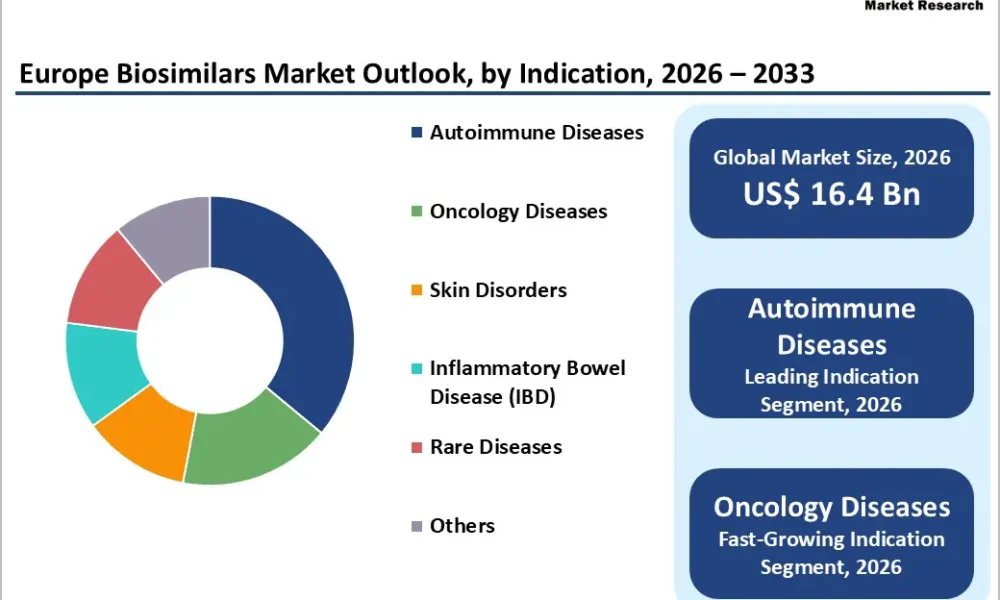
The market size is projected to grow from US$ 16.4 billion in 2026 to US$ 44.3 billion by 2033, representing a robust CAGR of 15.3% during the forecast period. Germany is anticipated to dominate the market, benefiting from early adoption of biosimilars, extensive physician awareness programs, and a well-established healthcare infrastructure that supports biosimilar distribution. Oncology and autoimmune disease therapies represent the leading segments, driven by high patient demand, increasing therapeutic options, and growing awareness among clinicians. Additional factors, such as favorable reimbursement policies, value-based healthcare initiatives, and expansion of hospital pharmacy networks, continue to propel market growth.
Download Your Free Sample & Explore Key Insights: https://www.persistencemarketresearch.com/samples/34923
Key Highlights from the Report
• Increasing patent expirations of biologics across multiple therapeutic areas are expected to drive biosimilar adoption.
• Growing preference for cost-effective biosimilar alternatives for autoimmune, oncology, and inflammatory conditions is fueling sales.
• Leading manufacturers are enhancing digital marketing and distribution strategies to broaden market reach.
• Oncology biosimilars are projected to witness a CAGR of 13.7% through 2033.
• Hospital pharmacies are expected to see the fastest growth in distribution channels with a CAGR of 14.2%.
• Germany is likely to dominate the Europe biosimilars market with a CAGR of 15%, supported by major manufacturers’ portfolio expansion.
Market Segmentation
The Europe biosimilars market can be segmented based on product type, indication, and distribution channels. By product type, biosimilars for oncology, autoimmune disorders, diabetes, and inflammatory diseases dominate due to their high therapeutic demand and favorable reimbursement policies. Oncology biosimilars are rapidly growing as the incidence of cancer increases, and healthcare systems aim to reduce treatment costs for expensive biologics. Autoimmune disease biosimilars remain the largest segment, accounting for approximately 36% of the market, driven by conditions such as rheumatoid arthritis, psoriasis, Crohn’s disease, and ankylosing spondylitis.
By distribution channel, hospital pharmacies are the leading segment, accounting for the majority of biosimilar sales. Hospitals act as key points of care for complex biologics and specialty therapies, enabling close patient monitoring, adherence to clinical protocols, and cost savings through the substitution of originator biologics. Retail pharmacies also contribute to market growth, particularly in regions with outpatient treatment programs and biosimilar substitution policies. Additionally, emerging digital platforms and e-pharmacies are supporting broader patient access and awareness, further strengthening distribution channels.
Regional Insights
Germany, France, the United Kingdom, and Italy represent the leading European markets for biosimilars, collectively driving regional growth. Germany’s market dominance is attributed to robust regulatory support, early adoption of biosimilars, and active promotion by manufacturers such as Sandoz AG and Amgen Inc. France and the UK are witnessing growing adoption due to increasing cost pressures on healthcare budgets and implementation of value-based reimbursement policies. Southern and Eastern Europe, including countries such as Spain, Italy, and Poland, are gradually increasing biosimilar uptake, supported by government initiatives and awareness campaigns targeting healthcare professionals. Regulatory harmonization across the EU also facilitates cross-border approvals, enabling wider access to biosimilars.
Get Custom Insights Designed for Your Businecss: https://www.persistencemarketresearch.com/request-customization/34923
Market Drivers
The Europe biosimilars market is primarily driven by the need for cost-effective therapies in healthcare systems facing escalating biologic treatment expenses. Patent expiries of originator biologics create significant opportunities for biosimilar manufacturers to introduce affordable alternatives, thereby reducing overall healthcare expenditure. Strong regulatory support from the EMA ensures that biosimilars meet stringent safety and efficacy standards, boosting physician confidence and market adoption. Additionally, reimbursement policies across Europe favor biosimilar prescriptions, while value-based healthcare initiatives encourage hospitals and clinics to integrate cost-effective treatments. Increasing patient awareness, improved access to specialty care, and ongoing R&D investment in novel biosimilar formulations further contribute to the market’s growth trajectory.
Market Restraints
Despite its rapid growth, the Europe biosimilars market faces several challenges that may hinder adoption. Intellectual property and patent litigation remain significant barriers, with originator biologics often protected by complex patent portfolios and “evergreening” strategies that delay biosimilar entry. High legal costs and prolonged disputes create uncertainty for biosimilar manufacturers, slowing market penetration. Additionally, adoption rates vary across European countries due to conservative prescribing habits, limited physician awareness, and minimal pricing differences between originator biologics and biosimilars in certain regions. These factors collectively impede the full utilization of biosimilars in the healthcare system.
Market Opportunities
Significant opportunities exist in biosimilar-reference biologic switching, allowing healthcare providers to transition patients from high-cost originator biologics to cost-effective biosimilars. This approach is especially relevant in chronic disease management, where long-term treatment costs are substantial. Loss of intellectual property protection for several blockbuster biologics over the next decade is expected to create €30 billion in market potential between 2030 and 2032. Expansion into non-oncology therapeutic areas, including autoimmune disorders, diabetes, and inflammatory diseases, presents additional growth opportunities. As physician confidence in biosimilar efficacy increases and regulatory support for interchangeability strengthens, market adoption is expected to accelerate, further reducing healthcare costs and expanding patient access.
Checkout Now & Download Complete Market Report: https://www.persistencemarketresearch.com/checkout/34923
Company Insights
The Europe biosimilars market is characterized by the presence of both established pharmaceutical giants and specialized biosimilar manufacturers. Key players operating in the market include:
• Fresenius Kabi
• Biogen Inc.
• Celltrion, Inc.
• Pfizer Inc.
• Amgen Inc.
• Samsung Bioepis Co., Ltd.
• Biocon
• Viatris (Mylan Pharmaceuticals Inc.)
• Coherus BioSciences, Inc.
• Boehringer Ingelheim Pharmaceuticals, Inc.
• Eli Lilly and Company
• Bio-Thera Solutions, Ltd.
Recent developments include Sandoz’s launch of Afqlir®, a biosimilar to Eylea® (aflibercept), in the UK in November 2025, with subsequent expansion plans in Germany and France. Additionally, Apotex Inc. partnered with Coherus Biosciences in July 2024 to license toripalimab, an anti-PD-1 monoclonal antibody, marking its entry into oncology biologics for distribution upon regulatory approval in Canada.
Conclusion
The Europe biosimilars market is positioned for strong growth through 2033, driven by the increasing need for cost-effective treatments, favorable regulatory frameworks, and the expiry of patents for high-value biologics. Germany, with its robust healthcare infrastructure and active promotion of biosimilars, is expected to remain the leading regional market, while segments such as oncology and autoimmune therapies continue to drive sales. Market opportunities in biosimilar switching and expansion into non-oncology indications provide additional avenues for growth. Despite challenges posed by patent litigation and variable adoption rates, ongoing investments in R&D, digital distribution, and physician awareness are likely to support sustained market expansion. The combined efforts of leading pharmaceutical companies, regulatory support, and healthcare system initiatives ensure that Europe’s biosimilars market will continue to deliver cost savings, improve patient access, and shape the future of biologic therapy across the region.




