
Industrial Electrification Market Overview
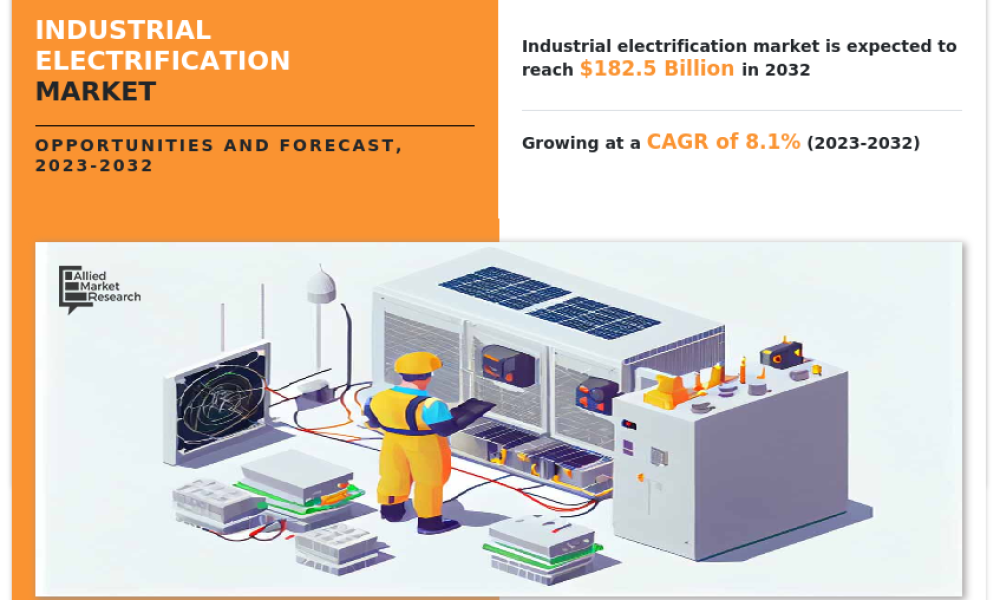
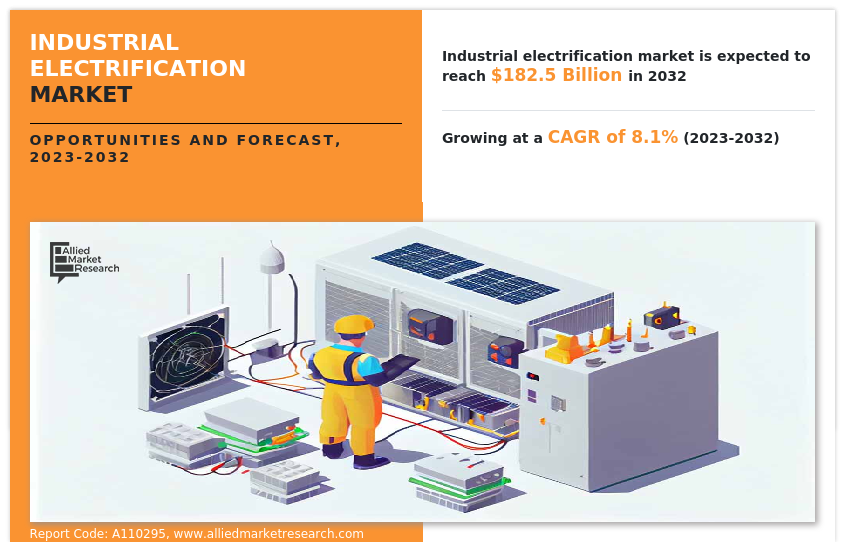
According to a new report published by Allied Market Research, the Industrial Electrification Market was valued at $83.5 billion in 2022 and is projected to reach $182.5 billion by 2032, growing at a CAGR of 8.1% from 2023 to 2032. The increasing adoption of automation, the transition toward sustainable manufacturing practices, and the rising demand for energy-efficient industrial systems are expected to drive the expansion of the Industrial Electrification Market in the coming years.
What Is Industrial Electrification?
Industrial electrification refers to the integration of electrical and electronic technologies into industrial operations and processes. It involves replacing traditional mechanical, hydraulic, or pneumatic systems with electric-powered equipment and machinery.
The goal of electrification is to enhance operational efficiency, precision, and reliability across manufacturing and industrial facilities. Electric systems enable improved automation, better energy management, and enhanced productivity. As industries seek to modernize operations and reduce operational costs, the adoption of electrified systems continues to rise, supporting the growth of the Industrial Electrification Market globally.
Download PDF Brochure: https://www.alliedmarketresearch.com/request-sample/110779
In addition, electrification enables the integration of advanced digital technologies, including sensors, monitoring tools, and analytics platforms. These technologies allow manufacturers to collect real-time data, analyze performance, and optimize production processes, further accelerating the development of the Industrial Electrification Market.
Sustainability Goals Driving Market Growth
A key driver of the Industrial Electrification Market is the growing emphasis on sustainability and environmental responsibility. Many industrial organizations have set ambitious targets to reduce carbon emissions and minimize their environmental impact.
Electrification plays a significant role in achieving these sustainability goals. When industrial operations transition from fossil-fuel-based systems to electric-powered equipment, greenhouse gas emissions can be significantly reduced. This shift helps companies align with global climate initiatives and environmental regulations.
Furthermore, electrified systems can be powered by renewable energy sources such as solar and wind power. Integrating renewable energy into industrial operations further supports carbon reduction strategies while improving long-term energy security.
As governments and organizations worldwide continue to prioritize sustainable manufacturing, the Industrial Electrification Market is expected to experience substantial growth.
Benefits of Electrifying Industrial Processes
Industrial electrification offers several operational advantages for manufacturing and production facilities. Electric motors, pumps, and control systems are typically more energy efficient than traditional mechanical systems. This efficiency helps companies lower electricity consumption and reduce operational expenses.
Electric systems also require less maintenance compared to mechanical alternatives. As a result, industries can benefit from reduced downtime and improved equipment reliability.
Additionally, electrification enables precise control of machinery and processes. This capability is particularly important in industries that require high levels of accuracy, such as automotive manufacturing, electronics production, and chemical processing.
These advantages are encouraging industries to adopt electrified solutions, thereby supporting the long-term expansion of the Industrial Electrification Market.
Challenges in Industrial Electrification
Despite its numerous benefits, the transition toward electrification can present certain challenges. Retrofitting existing industrial infrastructure with electrified systems may require significant modifications to machinery and production lines.
Such upgrades can involve high initial investment costs and may cause temporary disruptions to operations. Integration challenges may also arise when incorporating new electrified technologies into legacy industrial systems.
These factors may slow down adoption in some industries and act as a restraint on the growth of the Industrial Electrification Market during the transition phase.
However, ongoing technological advancements and supportive government policies are expected to help industries overcome these challenges in the long term.
Industry 4.0 and Automation Creating Opportunities
The rise of automation and digital manufacturing, often referred to as Industry 4.0, is creating significant opportunities for the Industrial Electrification Market. Electrified systems are easier to integrate with automated equipment, robotics, and digital monitoring tools.
Automation enables manufacturers to improve operational efficiency, reduce errors, and increase productivity. Electrification also facilitates advanced process control and real-time monitoring, allowing industries to optimize performance and energy usage.
As manufacturers increasingly adopt smart factory technologies, the demand for electrified equipment and systems is expected to grow rapidly. This trend is anticipated to create lucrative opportunities for companies operating in the Industrial Electrification Market.
Market Segmentation Overview
The Industrial Electrification Market is segmented based on product, application, and region.
By Product
Based on product type, the market is categorized into starter motors and alternators, electric pumps, electric power steering (EPS), integrated starter generators (ISG), and others.
Among these segments, the starter motors and alternators segment dominated the market in terms of revenue in 2022. Modern vehicles and industrial systems rely heavily on stable electrical power to support advanced technologies such as infotainment systems, safety features, and telematics.
Alternators play a crucial role in providing this electrical power, which is expected to drive strong demand for starter motors and alternators in the coming years. This segment is projected to grow at a CAGR of 8.7% during the forecast period.
By Application
Based on application, the Industrial Electrification Market is divided into automation and control, energy efficiency, data and analytics, and others.
The automation and control segment held the largest share of the market in 2022 and is expected to continue leading during the forecast period. Electrified systems enable precise control of industrial equipment and improve energy efficiency, helping organizations reduce operating costs.
In addition, electrification supports the integration of renewable energy sources into industrial operations. This transition helps industries lower greenhouse gas emissions and reduce dependence on fossil fuels.
The automation and control segment is expected to grow at a CAGR of 8.3% between 2023 and 2032.
Regional Insights
Regionally, the Industrial Electrification Market is analyzed across North America, Europe, Asia-Pacific, and LAMEA (Latin America, Middle East, and Africa).
The Asia-Pacific region accounted for the largest share of the global market in 2022, representing more than 35% of total revenue. The region is also projected to grow at the fastest pace, with a CAGR of approximately 8.7% during the forecast period.
Rapid industrialization, urbanization, and economic development across countries such as China, India, and Southeast Asian nations are driving strong demand for electrified industrial systems.
Governments and industries in the region are investing heavily in modernizing manufacturing facilities by adopting advanced automation technologies and electric machinery.
Furthermore, the growing adoption of renewable energy sources—including solar, wind, and hydropower—is supporting the transition toward electrified industrial processes.
The increasing adoption of electric vehicles and charging infrastructure in Asia-Pacific is also encouraging electrification in industrial logistics and transportation sectors.
Get a Customized Research Report: https://www.alliedmarketresearch.com/request-for-customization/110779
Competitive Landscape
Leading companies operating in the Industrial Electrification Market include BorgWarner Inc., DENSO Corporation, Johnson Electric Holdings Limited, AISIN Corporation, Bharat Bijlee Limited, Bonfiglioli Transmissions Private Limited, General Electric, Kirloskar Electric Company, ABB Ltd., and Continental AG.
These companies are focusing on innovation, product development, and strategic collaborations to strengthen their market presence.
Conclusion
The Industrial Electrification Market is poised for strong growth as industries continue to modernize operations and adopt sustainable technologies. Rising investments in automation, renewable energy integration, and smart manufacturing systems are driving the global shift toward electrified industrial processes. As technological innovations continue to advance and industries prioritize energy efficiency and carbon reduction, the Industrial Electrification Market is expected to play a critical role in shaping the future of global manufacturing.
Other Trending Reports:-
Industrial Electrification Market
About Us
Allied Market Research (AMR) is a full-service market research and business-consulting wing of Allied Analytics LLP based in Portland, Oregon. Allied Market Research provides global enterprises as well as medium and small businesses with unmatched quality of “Market Research Reports” and “Business Intelligence Solutions.” AMR has a targeted view to provide business insights and consulting to assist its clients to make strategic business decisions and achieve sustainable growth in their respective market domain.
Pawan Kumar, the CEO of Allied Market Research, is leading the organization toward providing high-quality data and insights. We are in professional corporate relations with various companies and this helps us in digging out market data that helps us generate accurate research data tables and confirms utmost accuracy in our market forecasting. Each and every data presented in the reports published by us is extracted through primary interviews with top officials from leading companies of domain concerned. Our secondary data procurement methodology includes deep online and offline research and discussion with knowledgeable professionals and analysts in the industry.




