
The event tourism market has become a vital component of the global travel and hospitality industry, attracting millions of travelers who journey specifically to attend large-scale events such as sporting competitions, music festivals, exhibitions, and cultural celebrations. Event tourism blends entertainment, culture, and travel experiences, encouraging visitors to explore destinations beyond traditional sightseeing. Governments, tourism boards, and private event organizers increasingly view large events as powerful tools to boost local economies, increase international visibility, and stimulate hospitality and transportation sectors.
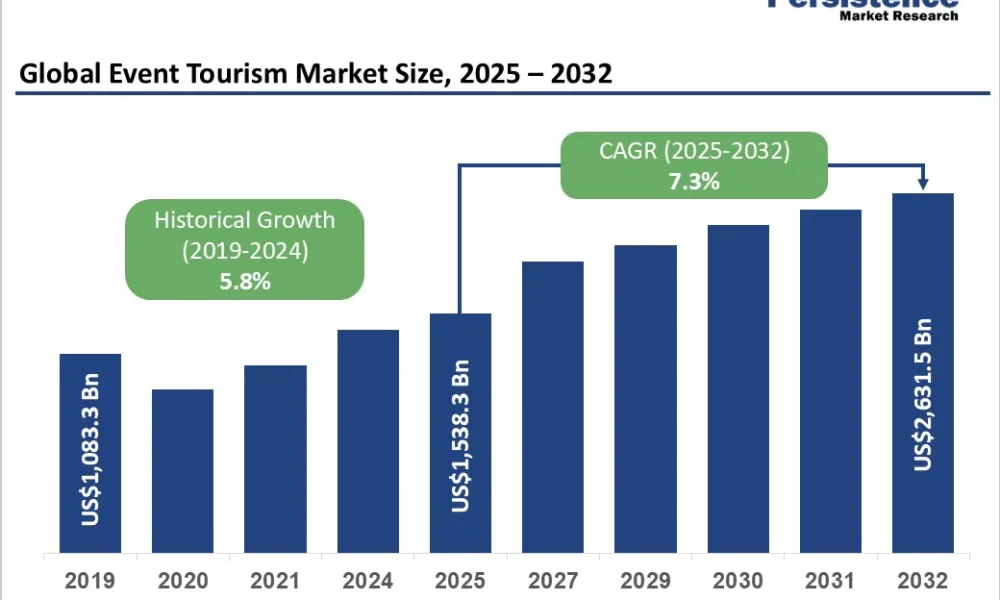
According to Persistence Market Research, the global event tourism market size is likely to be valued at US$1,538.3 Bn in 2025 and is expected to reach US$2631.5 Bn by 2032, expanding at a CAGR of 7.3% during the forecast period from 2025 to 2032. Growth is primarily driven by the resurgence of international travel, the expansion of global sporting and cultural event calendars, and the commercialization of hybrid event formats. Rising sponsorship revenues, data-driven monetization strategies, and increased government investments in destination marketing are further accelerating market momentum. International sports tournaments and music festivals remain leading segments, while Europe and North America continue to lead the market due to established event infrastructure and strong tourism ecosystems.
Download Your Free Sample & Explore Key Insights : https://www.persistencemarketresearch.com/samples/35688
Key Highlights from the Report
➤ The event tourism market is projected to grow from US$1,538.3 Bn in 2025 to US$2631.5 Bn by 2032.
➤ Rapid expansion of international sporting tournaments and music festivals is fueling tourism demand.
➤ Growing popularity of hybrid events combining physical and digital experiences is transforming the industry.
➤ Government investments in destination marketing and tourism infrastructure are boosting global event travel.
➤ Rising corporate sponsorships and brand partnerships are increasing event commercialization.
➤ Adoption of data-driven monetization and ticketing platforms is improving event revenue generation.
Market Segmentation
The event tourism market can be segmented based on event type, visitor category, and booking channels. Event types typically include sports events, cultural festivals, music concerts, exhibitions, and corporate conventions. Among these, sports tourism represents a major share due to the global appeal of international tournaments and championships that attract fans from multiple countries. Cultural and music festivals are also gaining traction as travelers increasingly seek immersive experiences that combine entertainment with local culture and traditions.
In terms of visitor categories, the market includes domestic tourists and international travelers. Domestic travelers often attend regional events and festivals, while international visitors travel specifically for globally recognized sporting competitions, concerts, and exhibitions. Online ticketing platforms and digital travel booking channels are transforming the way consumers plan event-based travel. Integrated travel packages that combine accommodation, transportation, and event access are becoming increasingly popular among tourists seeking convenience and seamless experiences.
Customize This Report for Your Exact Requirements : https://www.persistencemarketresearch.com/request-customization/35688
Regional Insights
Europe remains one of the most influential regions in the event tourism market due to its strong heritage of cultural festivals, music events, and international sporting competitions. Cities across the region frequently host large-scale global events that attract visitors from around the world. Established transportation infrastructure, well-developed hospitality sectors, and government initiatives promoting tourism events further support market growth across European destinations.
North America also plays a significant role in the global event tourism industry. The region hosts numerous large-scale sporting tournaments, music concerts, and conventions that attract global audiences. Meanwhile, the Asia-Pacific region is rapidly emerging as a promising market as governments invest heavily in tourism infrastructure and global event hosting. Countries across the region are increasingly organizing international sports competitions, cultural festivals, and exhibitions to boost tourism revenues and global recognition.
Market Drivers
One of the most influential drivers of the event tourism market is the resurgence of international travel. As global travel restrictions ease and tourism rebounds, more travelers are seeking unique and memorable experiences tied to global events. International sporting tournaments, concerts, and cultural festivals provide compelling reasons for tourists to travel long distances. These events generate significant visitor spending on accommodation, dining, transportation, and entertainment, making them highly valuable for local economies.
Another major driver is the expansion of global event calendars and hybrid event formats. Event organizers are increasingly hosting year-round festivals, conventions, and tournaments across multiple destinations. Hybrid event models that combine physical attendance with digital participation allow organizers to expand audience reach and generate additional revenue streams. Sponsorship deals, streaming rights, and data-driven engagement strategies are also contributing to the growing commercial value of global events.
Market Restraints
Despite strong growth prospects, the event tourism market faces certain challenges. One major restraint is the high cost associated with organizing large-scale events, including infrastructure development, security, logistics, and marketing expenses. Hosting global sporting tournaments or international exhibitions requires extensive planning and financial investment, which can place significant pressure on host cities and governments.
Another challenge is the uncertainty surrounding geopolitical conditions and global economic fluctuations. Political instability, travel restrictions, or economic downturns can affect international visitor arrivals and reduce event attendance. Additionally, concerns regarding crowd management, safety, and environmental impact may influence the ability of destinations to host large gatherings, potentially limiting market growth in certain regions.
Market Opportunities
The growing popularity of experiential travel and cultural immersion presents strong opportunities for the event tourism market. Travelers are increasingly prioritizing experiences over traditional sightseeing, and events provide an engaging way to explore local culture and traditions. Destinations that successfully integrate festivals, sports tournaments, and cultural events into tourism strategies can significantly boost visitor engagement and economic impact.
Another major opportunity lies in technology integration and digital event engagement. Advanced ticketing systems, mobile event applications, and data analytics platforms are transforming the way events are marketed and managed. These technologies allow organizers to personalize visitor experiences, optimize crowd management, and enhance revenue generation through targeted promotions and sponsorship opportunities.
Ready to Dive Deep? Buy Full Report Today : https://www.persistencemarketresearch.com/checkout/35688
Company Insights
Key players operating in the event tourism market include:
- Informa PLC
- Live Nation Entertainment
- Cvent (Blackstone-owned)
- Reed Exhibitions / RELX
- Messe Frankfurt
- GL Events
- Eventbrite
- MCI Group
- BCD Meetings & Events
- ATPI Group
- Freeman
- Marriott International
- Hilton Worldwide
- Accor Group
- TUI Group
- dmg events
- Clarion Events
- Emerald Expositions
- Informa Markets
- Messe München
Recent Developments
- March 2024: Live Nation Entertainment expanded its global concert tour operations to meet increasing international event tourism demand.
- October 2023: Cvent Inc. launched advanced event data analytics tools to improve attendee engagement and event planning capabilities.
Future Opportunities and Growth Prospects
The future of the event tourism market appears highly promising as international travel continues to expand and event organizers explore innovative engagement models. Governments and tourism authorities are increasingly recognizing the economic benefits of hosting large-scale events and are investing heavily in infrastructure development and destination promotion. The integration of technology, digital ticketing, and hybrid participation models will further enhance event accessibility and global reach.
In the coming years, the expansion of global sports tournaments, music festivals, and cultural celebrations will continue to attract millions of travelers worldwide. Strategic partnerships between event organizers, tourism boards, and hospitality providers will play a crucial role in shaping the long-term growth of the event tourism market while delivering immersive and memorable travel experiences for global audiences.




