
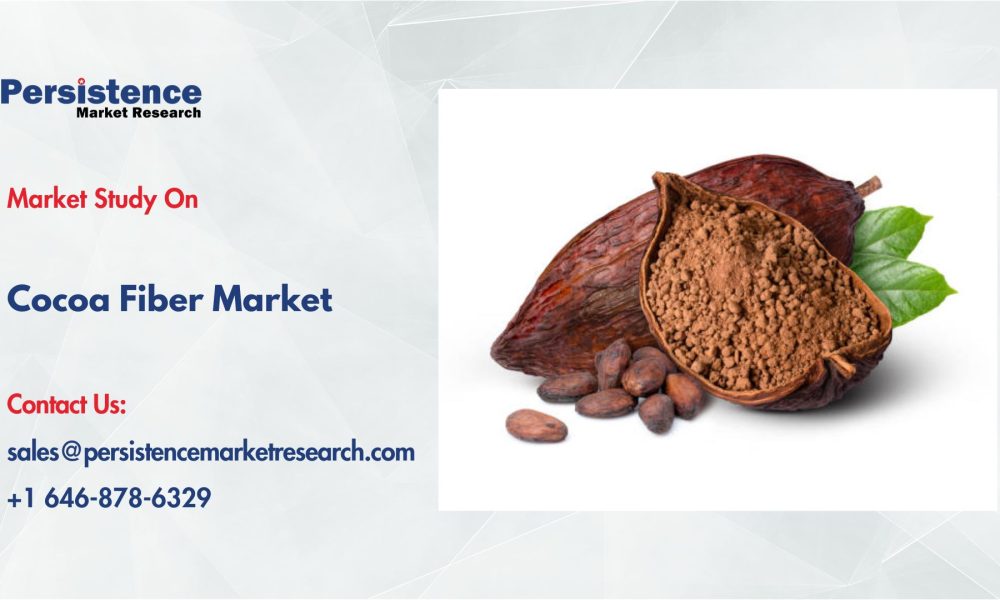
The global cocoa fiber market is gaining significant momentum as food manufacturers and health-conscious consumers increasingly seek functional ingredients that offer both nutritional benefits and natural origins. Cocoa fiber, derived from cocoa bean processing byproducts, is emerging as a valuable ingredient due to its high dietary fiber content, antioxidant properties, and versatile functionality across multiple industries.
As demand for clean-label, plant-based, and sustainable ingredients continues to expand globally, cocoa fiber is becoming a preferred component in food formulations, nutraceutical products, and cosmetic applications. Food manufacturers are incorporating cocoa fiber into baked goods, snacks, beverages, and dietary supplements to enhance nutritional profiles and support digestive health.
Growing awareness about the importance of dietary fiber consumption, along with rising demand for functional foods, is further strengthening the market outlook. Additionally, cocoa fiber offers an opportunity for cocoa processors to utilize byproducts more efficiently, supporting sustainability initiatives and reducing production waste.
Market Overview and Forecast
The global cocoa fiber market size is projected to grow from US$ 417.3 million in 2026 to approximately US$ 696.8 million by 2033, registering a compound annual growth rate (CAGR) of 7.6% during the forecast period from 2026 to 2033. This notable growth reflects increasing interest in natural dietary fibers and plant-derived functional ingredients across several industries.
Cocoa fiber is primarily obtained from the husk and shell of cocoa beans during chocolate production. These byproducts are rich in insoluble fiber and polyphenols, making them valuable for improving digestive health and enhancing antioxidant intake. As consumer demand for healthier food alternatives continues to grow, cocoa fiber is gaining traction as a natural ingredient capable of improving both nutrition and product functionality.
One of the major drivers of market growth is the rapid expansion of the global functional food and beverage industry. Consumers are increasingly seeking products that offer health benefits beyond basic nutrition, including improved gut health, weight management, and metabolic wellness. Cocoa fiber’s ability to enhance fiber content without significantly altering taste or texture makes it an attractive option for food manufacturers.
Another significant factor supporting market growth is the rising focus on sustainable food production. The utilization of cocoa processing byproducts to produce cocoa fiber helps reduce waste and promotes circular economy practices within the cocoa industry. As sustainability becomes a key priority for both manufacturers and consumers, ingredients derived from agricultural byproducts are gaining widespread acceptance.
In addition, the increasing popularity of plant-based diets and natural ingredients is creating new opportunities for cocoa fiber producers. The ingredient is suitable for vegan and vegetarian products and aligns well with the clean-label trend, which emphasizes minimal processing and transparent ingredient sourcing.
Get Your FREE Sample Report Instantly – Click Now: https://www.persistencemarketresearch.com/samples/34742
Segmentation Analysis
By Nature
Based on nature, the cocoa fiber market is segmented into conventional cocoa fiber and organic cocoa fiber. Among these segments, conventional cocoa fiber currently holds the largest share of the global market. The widespread availability of conventionally grown cocoa beans and established supply chains enable manufacturers to produce cocoa fiber at relatively lower costs. This affordability makes conventional cocoa fiber highly attractive for large-scale food manufacturing applications.
Conventional cocoa fiber is widely used in bakery products, cereals, snack bars, and beverages where manufacturers aim to enhance fiber content while maintaining cost efficiency. The segment continues to dominate due to its extensive use across industrial food production and its compatibility with existing processing technologies.
However, the organic cocoa fiber segment is expected to experience the fastest growth during the forecast period. Increasing consumer preference for organic food products and stricter regulations regarding pesticide residues are encouraging manufacturers to develop organic ingredient solutions. Organic cocoa fiber is particularly popular among premium food brands, health-focused consumers, and companies targeting clean-label product positioning.
As organic food markets expand globally, particularly in North America and Europe, demand for organically sourced cocoa fiber is expected to rise significantly. Manufacturers are investing in certified organic supply chains to meet the growing demand for sustainable and pesticide-free ingredients.
By Application
By application, the cocoa fiber market is segmented into food & beverage, pharmaceuticals, personal care & cosmetics, and animal feed.
The food and beverage sector represents the largest application segment for cocoa fiber. Food manufacturers use cocoa fiber as a functional ingredient to increase dietary fiber content, improve texture, and enhance the nutritional profile of products. It is widely incorporated into bakery products, breakfast cereals, chocolate products, dairy alternatives, smoothies, and snack bars.
In addition to its nutritional benefits, cocoa fiber also contributes to improved moisture retention and fat reduction in certain formulations, making it an attractive ingredient for developing healthier food products.
The pharmaceutical sector is another important application area for cocoa fiber. Due to its high fiber content and potential digestive health benefits, cocoa fiber is increasingly used in nutraceutical formulations and dietary supplements designed to support gastrointestinal health. The presence of antioxidants and polyphenols further enhances its appeal as a functional ingredient in health-focused products.
The personal care and cosmetics industry is also exploring the benefits of cocoa fiber as a natural ingredient in skincare formulations. Cocoa-derived compounds are known for their antioxidant and anti-inflammatory properties, which can help protect skin from environmental damage and improve overall skin health. As the demand for natural and plant-based cosmetic ingredients increases, cocoa fiber is gaining attention in exfoliating products, face masks, and skincare formulations.
In the animal feed sector, cocoa fiber is being evaluated as a functional feed additive due to its fiber content and potential digestive benefits for livestock. Although this segment currently represents a smaller share of the market, ongoing research into sustainable feed ingredients may contribute to future growth.
Regional Insights
The cocoa fiber market exhibits a global presence, with key regions including North America, Europe, Asia Pacific, Latin America, and the Middle East & Africa.
Europe currently holds a significant share of the global market due to the region’s strong chocolate manufacturing industry and growing demand for functional food ingredients. European consumers are increasingly focused on health and wellness, driving demand for fiber-enriched products and natural food ingredients.
North America is another major market for cocoa fiber, supported by a highly developed food processing sector and rising consumer interest in dietary fiber consumption. The United States and Canada are witnessing increasing demand for functional foods, organic products, and plant-based ingredients, all of which contribute to the adoption of cocoa fiber.
Asia Pacific is expected to emerge as the fastest-growing regional market during the forecast period. Rapid urbanization, rising disposable incomes, and expanding food manufacturing industries in countries such as China, India, and Japan are driving the demand for innovative food ingredients. Additionally, increasing awareness about digestive health and nutritional benefits is encouraging consumers in the region to seek fiber-rich foods.
Latin America also plays an important role in the global cocoa fiber market due to its strong cocoa production base. Countries such as Brazil and Ecuador contribute significantly to cocoa processing activities, which in turn supports the availability of cocoa fiber as a byproduct.
Unique Features and Innovations in the Market
Innovation is playing a critical role in shaping the future of the cocoa fiber market. Advances in food processing technologies are enabling manufacturers to extract and refine cocoa fiber more efficiently while preserving its nutritional properties. Modern extraction techniques help maintain high fiber content, antioxidant levels, and natural flavor characteristics.
Digital technologies are also influencing the cocoa ingredient supply chain. The adoption of artificial intelligence (AI) and data analytics is helping manufacturers optimize production processes and improve ingredient quality. AI-powered systems can monitor processing conditions, detect quality variations, and enhance overall operational efficiency.
The integration of Internet of Things (IoT) technologies within manufacturing facilities allows companies to track production performance in real time, ensuring consistent product quality and reducing operational risks. These smart manufacturing solutions are helping cocoa fiber producers maintain strict quality standards while improving productivity.
Additionally, research and development efforts are focusing on expanding the functional applications of cocoa fiber. Scientists and food technologists are exploring ways to incorporate cocoa fiber into innovative food products such as high-fiber chocolate alternatives, functional beverages, and nutritional supplements.
Need Tailored Insights? Request Customization Now: https://www.persistencemarketresearch.com/request-customization/34742
Market Highlights
The cocoa fiber market is experiencing increased adoption across industries due to several compelling advantages. One of the primary reasons for its popularity is its ability to enhance the fiber content of food products without significantly affecting taste or texture. This allows manufacturers to develop healthier food options while maintaining consumer appeal.
Another key factor driving market growth is the rising emphasis on sustainability in the food industry. Cocoa fiber production utilizes cocoa processing byproducts, helping reduce food waste and improve resource efficiency. This aligns with global sustainability goals and supports circular economy initiatives within the agricultural sector.
Cost efficiency is also an important consideration for manufacturers. Compared with other specialty dietary fibers, cocoa fiber can be produced relatively economically due to the availability of raw materials from existing cocoa processing operations.
Regulatory frameworks encouraging the use of natural ingredients and improved nutritional labeling are also contributing to the growth of the cocoa fiber market. Governments and health organizations are promoting increased dietary fiber consumption, which further supports the demand for fiber-enriched ingredients.
Key Players and Competitive Landscape
The global cocoa fiber market features a competitive landscape characterized by the presence of several biotechnology, food ingredient, and life sciences companies involved in research, ingredient development, and advanced processing technologies.
Illumina Inc. is recognized for its advanced genomic technologies and sequencing platforms that support research related to food ingredients, biotechnology, and agricultural innovation. The company’s analytical capabilities contribute to the development of improved agricultural and food processing methods.
Thermo Fisher Scientific provides scientific instrumentation, analytical solutions, and biotechnology services that support research and quality control processes within the food and ingredient industries. Its technologies enable companies to analyze ingredient composition and ensure product safety.
PacBio specializes in advanced sequencing technologies used in biological research and agricultural sciences. Its solutions contribute to improved understanding of plant genetics and crop improvement initiatives, which indirectly support the development of better agricultural raw materials.
CD Genomics offers genomic analysis and sequencing services that assist research institutions and biotechnology companies in exploring plant-based ingredients and nutritional compounds.
Agilent Technologies, Inc. is known for providing analytical instruments and laboratory solutions used in food quality testing and ingredient research. The company’s technologies help ensure product consistency and compliance with regulatory standards.
- Hoffmann-La Roche Ltd. plays a significant role in biotechnology and life sciences innovation, contributing to research related to health, nutrition, and bioactive compounds.
BGI Group Guangdong is a global genomics organization that focuses on scientific research and technological innovation across multiple industries including agriculture, food science, and biotechnology.
Takara Bio, Inc. develops biotechnology tools and reagents used in research and development activities related to plant biology, functional foods, and nutraceutical ingredients.
Adaptive Biotechnologies, Juno Therapeutics, Atreca, Inc., and irepertoire, Inc. are involved in advanced biotechnology research and molecular analysis, contributing to broader innovations within life sciences and nutritional science.
These companies continue to invest in research collaborations, advanced laboratory technologies, and scientific innovation to support the development of next-generation ingredients and improve product performance.
Future Opportunities and Growth Prospects
The future outlook for the cocoa fiber market remains highly promising as consumer demand for healthier and more sustainable food products continues to expand. The increasing focus on gut health, digestive wellness, and plant-based nutrition will play a crucial role in driving market growth.
Technological advancements in ingredient processing, digital manufacturing systems, and supply chain transparency are expected to enhance production efficiency and improve product quality. Companies that leverage these innovations while maintaining strong sustainability practices are likely to gain a competitive advantage.
Furthermore, evolving regulatory frameworks encouraging healthier diets and improved nutritional labeling will continue to shape the industry landscape. Manufacturers that adapt to these regulatory changes and invest in research-driven ingredient innovation will be well positioned to capitalize on emerging opportunities in the global cocoa fiber market.
Explore the Latest Trending Research Reports:




