
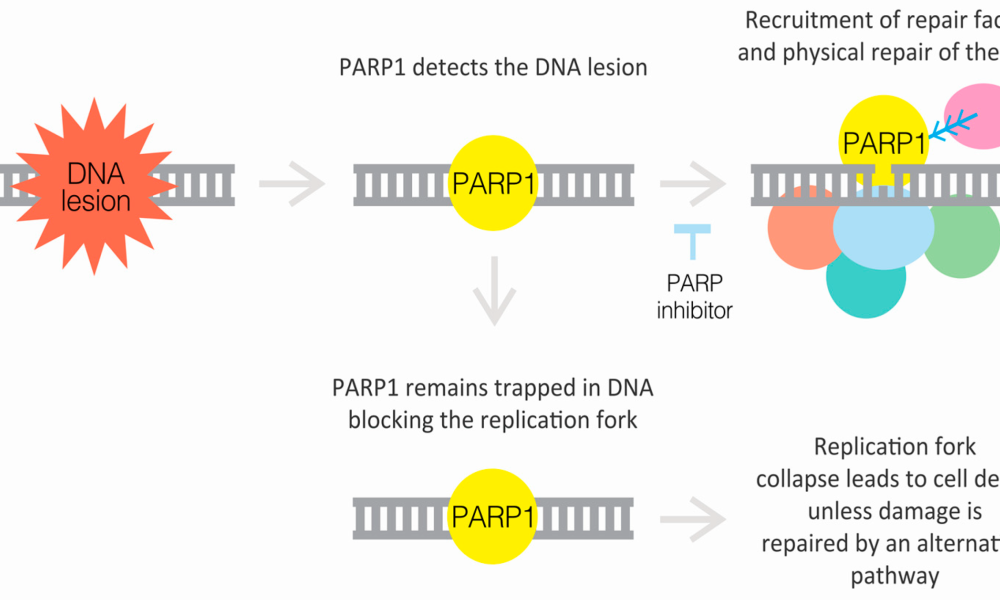
The global PARP inhibitor biomarkers market is witnessing significant growth, driven by the rising adoption of targeted cancer therapies and precision medicine. PARP inhibitors, or poly (ADP-ribose) polymerase inhibitors, are specialized drugs that block the PARP protein responsible for repairing DNA damage in cancer cells. These inhibitors are particularly effective in tumors with DNA repair deficiencies, such as those caused by BRCA1 or BRCA2 gene mutations. Biomarkers, including BRCA mutations and other DNA repair defects, are crucial in identifying patients most likely to benefit from PARP inhibitor therapies, allowing for a more personalized approach in oncology.
The market is projected to grow from US$ 1,035.3 million in 2025 to US$ 1,833.4 million by 2032, registering a robust CAGR of 8.5% during the forecast period. Key growth drivers include the increasing prevalence of breast, ovarian, pancreatic, and prostate cancers, coupled with the rising demand for companion diagnostics to enhance the efficacy of targeted therapies. The BRCA 1 and 2 testing kits segment is the leading product category, expected to account for 43.4% of the market in 2025, owing to its high efficiency in identifying hereditary cancer risk. Geographically, North America dominates the market with a projected 42.7% share, fueled by high incidences of BRCA-related cancers in the U.S., a well-established healthcare infrastructure, and widespread adoption of precision oncology solutions.
Download Your Free Sample & Explore Key Insights: https://www.persistencemarketresearch.com/samples/35185
Key Highlights from the Report
• BRCA 1 and 2 testing kits are expected to lead the product segment with a 43.4% market share in 2025.
• Breast cancer applications are projected to generate 46.2% of market revenue in 2025.
• North America is forecasted to dominate with 42.7% of the global market by 2025.
• Numerous clinical trials are exploring PARP inhibitors in cancers beyond breast and ovarian cancer.
• Increasing emphasis on customized cancer treatments is driving innovation in biomarker testing.
• Expansion of personalized medicine initiatives is boosting adoption of PARP inhibitor-based therapies.
Market Segmentation
The PARP inhibitor biomarkers market can be segmented based on product type, biomarker application, and end-users. By product type, BRCA 1 and 2 testing kits dominate due to their ability to detect patients at hereditary cancer risk, followed by Homologous Recombination Deficiency (HRD) and Homologous Recombination Repair (HRR) testing kits, which offer broader molecular insights but are more complex and costly. In terms of application, breast cancer is the leading segment, benefiting from substantial clinical evidence supporting PARP inhibitor use in BRCA-mutated cases, while ovarian, pancreatic, and prostate cancers represent secondary markets. End-users include hospitals, diagnostic laboratories, research institutions, and academic centers, all of which are increasingly adopting biomarker-driven testing protocols to enhance targeted therapy selection and improve patient outcomes. The growing integration of companion diagnostics within these segments further supports the market expansion.
Regional Insights
North America holds the largest market share due to a high prevalence of BRCA-related cancers, advanced diagnostic infrastructure, and strong adoption of precision medicine. The U.S. alone accounts for millions of breast and ovarian cancer cases, driving clinical demand for biomarker testing and PARP inhibitor therapies. Europe follows with a significant share, supported by widespread genetic testing, robust regulatory frameworks, and strong collaborations between pharmaceutical companies and research institutions to promote biomarker-based precision oncology. The Asia Pacific region is projected to show the fastest growth, with Japan leading due to government-backed precision medicine initiatives and high BRCA and HRD mutation rates among ovarian cancer patients. Other countries, including China and India, are witnessing increased uptake of personalized cancer treatments, which further propels regional market expansion.
Get Custom Insights Designed for Your Business: https://www.persistencemarketresearch.com/request-customization/35185
Market Drivers
The PARP inhibitor biomarkers market is primarily driven by innovations in biomarker-based companion diagnostics and precision medicine. Advanced diagnostic assays allow clinicians to identify specific genetic mutations, such as BRCA1/2, ATM, PALB2, and RAD51C, which can determine patient eligibility for PARP inhibitor therapy. Rising awareness of personalized medicine and targeted therapies is fostering demand for precise and sensitive testing platforms that guide effective treatment decisions. Clinical studies and product launches, such as Bio-Rad’s ultrasensitive PCR assay and Foundation Medicine’s HRDsig1 biomarker integrated into the FoundationOne®CDx test, illustrate the increasing focus on improving patient selection. The integration of companion diagnostics ensures that PARP inhibitors are administered to the right patients, enhancing treatment outcomes and reinforcing market growth globally.
Market Restraints
Despite the promising growth, the market faces challenges related to clinical resistance to PARP inhibitors and difficulties in identifying eligible patients beyond BRCA1/2 mutations. Cancer cells can develop resistance through secondary mutations, reactivation of DNA repair pathways, or epigenetic changes in BRCA genes, reducing long-term therapy effectiveness. Additionally, patients without BRCA mutations but with other homologous recombination deficiencies often require extensive biomarker testing to confirm eligibility, increasing complexity and costs. Limited accessibility in developing regions and the high price of comprehensive biomarker assays further restrain adoption. Resistance and patient selection challenges can hinder the widespread deployment of PARP inhibitors, particularly in ovarian cancer, where only 20–25% of patients carry BRCA1/2 mutations.
Market Opportunities
The market offers substantial opportunities as PARP inhibitors expand into new clinical applications and cancer types. With over 18 million new cancer diagnoses globally each year and significant mortality rates, there is an urgent need for more effective targeted therapies. Ongoing clinical trials are evaluating PARP inhibitors for chemo-resistant, somatic, and germline BRCA-mutated cancers across breast, lung, ovarian, pancreatic, and even glioma indications. Veliparib (ABT-888) and other emerging PARP inhibitors under study are driving demand for next-generation biomarker assays and companion diagnostic platforms. The potential to extend PARP inhibitor therapies to previously ineligible patient populations presents a lucrative avenue for biomarker developers and pharmaceutical companies to innovate and capture market share.
Checkout Now & Download Complete Market Report: https://www.persistencemarketresearch.com/checkout/35185
Company Insights
The PARP inhibitor biomarkers market is highly competitive, with companies emphasizing collaborations and innovative product development. Key players include:
• Myriad Genetics, Inc.
• Illumina, Inc.
• Amoy Diagnostics Co., Ltd.
• QIAGEN
• Agilent Technologies, Inc.
• Quest Diagnostics Incorporated
• Foundation Medicine, Inc.
• OncoDNA
• 4baseCare
• AstraZeneca
• Laboratory Corporation of America® Holdings
• Genekor | MEDICAL S.A
• Cambridge Bioscience Limited
• BPS Bioscience, Inc.
• BMG Labtech
• R&D Systems, Inc (BioTechne)
• BellBrook Labs
• Abyntek Biopharma S.L.
• Epic Sciences
Recent developments include Myriad Genetics acquiring assets from Intermountain Health in February 2024, including the Precise™ Tumor and Liquid Tests, enhancing its biomarker testing portfolio. In July 2023, Amoy Diagnostics partnered with AstraZeneca to commercialize the AmoyDx® HRD Complete Panel as a companion diagnostic for Lynparza® (olaparib), strengthening its position in the PARP inhibitor diagnostics market.
Conclusion
The global PARP inhibitor biomarkers market is poised for substantial growth through 2032, driven by rising cancer prevalence, increasing adoption of personalized medicine, and innovations in biomarker-based companion diagnostics. Leading products such as BRCA 1 and 2 testing kits dominate due to their efficacy in identifying patients at hereditary cancer risk, while breast cancer applications currently lead by clinical evidence. North America remains the most significant market due to high incidences of BRCA-related cancers, whereas Europe and Asia Pacific present opportunities for expansion, supported by government initiatives and growing precision medicine adoption. Despite challenges like drug resistance and complex patient identification, ongoing research, clinical trials, and the development of novel biomarkers provide opportunities for companies to innovate and expand their market footprint. Strategic collaborations and technological advancements in diagnostics are expected to further strengthen the global market landscape, ensuring more patients benefit from targeted PARP inhibitor therapies.




