
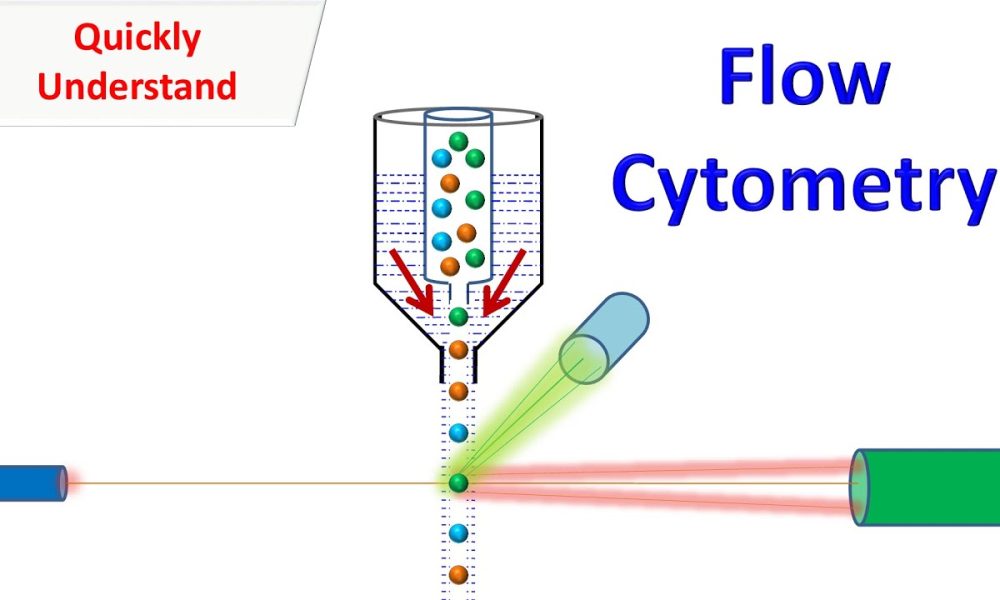
The Asia Pacific flow cytometry market has witnessed substantial growth over the past decade, driven by rising demand for advanced diagnostic tools and increasing investments in healthcare infrastructure. Valued at US$ 1,244.10 million in 2024, the market is projected to reach US$ 2,774.0 million by 2032, reflecting a robust CAGR of 10.8% during 2025–2032. Flow cytometry, a technique that allows for rapid, multi-parametric analysis of single cells in a liquid suspension, is widely used in research, clinical diagnostics, and immunophenotyping. The technology employs lasers to generate scattered and fluorescent light signals, which are detected by photodiodes or photomultiplier tubes, offering precise insights into cellular characteristics, DNA content, and immune function. The rising prevalence of chronic and infectious diseases, coupled with the adoption of high-throughput flow cytometry systems, has further reinforced the market’s growth trajectory.
In terms of segmentation, the reagents, consumables, and accessories segment dominates product sales, accounting for 51.9% of the market in 2022. Immunophenotyping emerged as the leading application, with a market share of 35.8% in 2024, due to its efficiency in detecting deviations in B-cell antigen production and other immune-related abnormalities. Geographically, Australia and South Korea are among the most prominent markets in the region. Australia held 25.6% of the regional market share in 2024, benefiting from substantial government spending on research and diagnostic development. South Korea followed closely with 20.8% market share, propelled by technological advancements in multiparameter flow cytometry and high-content screening. The Asia Pacific region’s emphasis on stem cell research, disease diagnostics, and biopharmaceutical innovations continues to drive the widespread adoption of flow cytometers.
Download Your Free Sample & Explore Key Insights: https://www.persistencemarketresearch.com/samples/33421
Key Highlights from the Report
• Asia Pacific flow cytometry market valued at US$ 1,244.10 million in 2024.
• Projected to reach US$ 2,774.0 million by 2032 with a CAGR of 10.8%.
• Immunophenotyping accounted for 35.8% share of the market in 2024.
• Reagents, consumables, and accessories dominated product sales at 51.9%.
• Australia captured 25.6% of the regional market due to increased R&D spending.
• Research applications represented 77.8% of market usage in 2025.
Market Segmentation
The Asia Pacific flow cytometry market is segmented based on product type, application, usage, and end-user. In terms of product type, the market includes flow cytometer systems such as traditional flow cytometers, cell sorters, imaging cytometers, acoustic focusing cytometers, and next-generation systems. Reagents, consumables, and accessories hold the largest share due to their wide applicability in cell screening and research assays. Additionally, software and services are crucial components for analyzing and maintaining data-intensive flow cytometry experiments. Application-wise, the market covers immunophenotyping, cell sorting, cell cycle analysis, apoptosis detection, cell proliferation assays, intracellular calcium flux measurement, and exosome detection. Research applications dominate usage patterns, particularly in stem cell research and high-throughput drug development, while clinical diagnostics account for a smaller yet significant portion. End-users include hospitals, diagnostic laboratories, academic and research institutes, and biopharmaceutical companies, reflecting the technology’s versatile role across scientific and clinical environments.
Regional Insights
Regionally, Australia, South Korea, and Indonesia are key contributors to the Asia Pacific flow cytometry market. Australia leads due to strong government support for diagnostic research and high R&D expenditure, with the Commonwealth and private non-profit organizations collectively spending over US$ 3.6 billion on R&D in 2024. South Korea is witnessing rapid adoption due to technological advancements in high-content and multiparameter flow cytometry, enabling enhanced immune cell profiling and complex cellular analyses. Indonesia shows growing demand driven by the rising incidence of chronic and infectious diseases, coupled with government-led initiatives to strengthen the National Innovation System (SINAS) for scientific and technological development. Other markets, such as Thailand, Malaysia, and Singapore, are also expanding steadily due to increasing investments in healthcare infrastructure, rising awareness of precision medicine, and growing research collaborations with global biotech and pharmaceutical firms.
Get Custom Insights Designed for Your Business: https://www.persistencemarketresearch.com/request-customization/33421
Market Drivers
Several factors are driving the growth of the Asia Pacific flow cytometry market. The rising prevalence of chronic and infectious diseases across the region has led to increased adoption of flow cytometry systems for accurate diagnostics and research. The COVID-19 pandemic highlighted the limitations of conventional diagnostic techniques like PCR and antibody testing, thereby accelerating the need for high-throughput, precise flow cytometry assays. Technological innovations, including next-generation and high-content cytometers, have improved sample analysis efficiency, data accuracy, and multi-parametric capabilities. Furthermore, the expansion of ASEAN economies and growing investments in healthcare infrastructure have strengthened demand for quality diagnostic tools. Stem cell research and immunotherapy development also contribute to market growth, as flow cytometry remains the preferred technique for monitoring cellular activity, apoptosis, and antigen expression patterns in clinical and research settings.
Market Restraints
Despite its growth potential, the Asia Pacific flow cytometry market faces several challenges. The high capital expenditure required to acquire advanced flow cytometry systems is a significant barrier, particularly for small-scale laboratories and academic institutions. Devices with sophisticated capabilities often cost over US$ 100,000, and maintenance and software expenses further increase operational costs. In emerging markets, additional expenses related to installation, training, and reagent supply can limit adoption. Financial constraints in certain regions hinder the ability of research centers to invest in multiple systems needed for high-throughput analyses, which slows overall market penetration. Furthermore, the complexity of data analysis and the requirement for skilled personnel present additional obstacles to widespread adoption.
Market Opportunities
Opportunities in the Asia Pacific flow cytometry market are abundant, driven by increasing investment in healthcare research and biopharmaceutical innovation. The growing emphasis on personalized medicine and immunotherapy has expanded the demand for flow cytometry in both diagnostics and clinical trials. High-throughput and multiplexed flow cytometry systems are facilitating large-scale drug screening and biomarker discovery, creating opportunities for manufacturers to develop specialized instruments and consumables. The increasing focus on emerging economies, such as India, Indonesia, and Vietnam, provides untapped potential for market expansion. Collaborations between local and international companies, along with government support for research initiatives, present avenues to introduce affordable, high-performance flow cytometry systems in these regions.
Checkout Now & Download Complete Market Report: https://www.persistencemarketresearch.com/checkout/33421
Company Insights
Key players operating in the Asia Pacific flow cytometry market include:
• Beckman Coulter
• Becton Dickinson & Co.
• Life Technologies Corporation (Thermo Fisher Scientific Inc.)
• Miltenyi Biotec
• Luminex Corp.
• Merck KGaA
• bioMérieux SA
• Agilent Technologies
• Bio-Rad Laboratories
• Apogee Flow Systems Ltd.
• Stratedigm, Inc.
• Sysmex Partec
• Sony Biotechnology
• Cytek® Biosciences
• Sartorius AG
Recent developments in the market include BD’s launch of the BD FACSymphony™ A1 Cell Analyzer, which offers high-capacity flow cytometry in a compact design, and Sysmex Partec’s partnership with De Novo Software to distribute FCS Express 7 for advanced data analysis in research and industrial applications. These initiatives reflect the ongoing focus on technological enhancement and global market reach by key players.
Conclusion
The Asia Pacific flow cytometry market is poised for sustained growth, underpinned by technological advancements, rising disease prevalence, and increasing healthcare investments. Immunophenotyping, reagents, and consumables remain key growth segments, while research and clinical applications continue to drive demand. Australia, South Korea, and Indonesia are leading markets due to robust R&D activities, technological innovation, and rising healthcare requirements. While high costs and operational complexities pose challenges, the expanding focus on personalized medicine, high-content screening, and stem cell research provides substantial opportunities. Manufacturers are responding with innovative products, collaborations, and strategic partnerships, ensuring that the region remains a dynamic and evolving hub for flow cytometry technology. The market outlook for 2032 indicates a promising trajectory, with sustained demand and continued technological evolution shaping the future of cellular diagnostics and research in the Asia Pacific region.




