
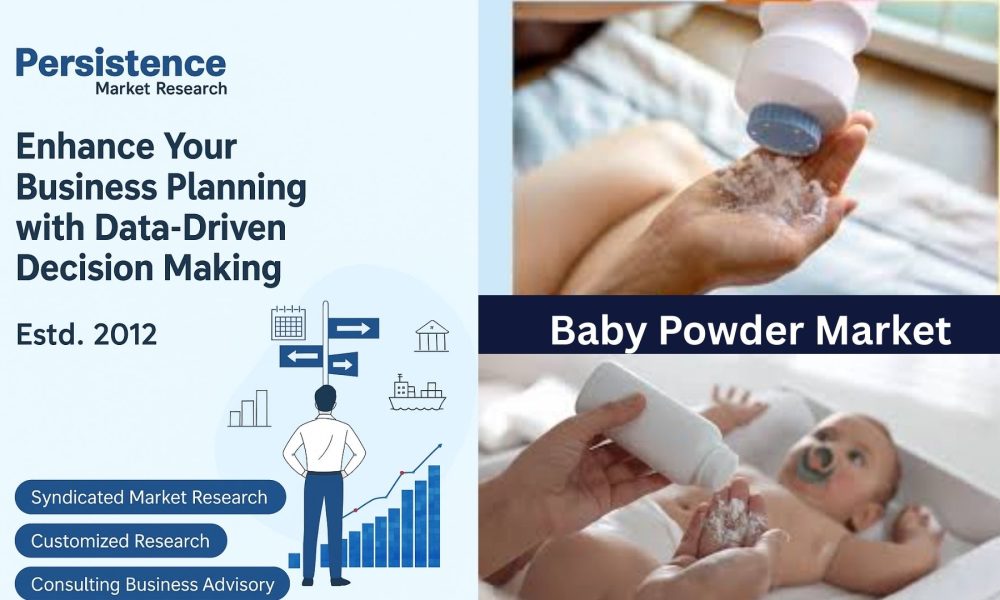
The global baby powder market is poised for steady expansion over the next decade, supported by increasing awareness of infant hygiene, rising disposable incomes, and continued innovation in baby care products. The market is projected to be valued at US$1.6 billion in 2026 and is expected to reach US$2.5 billion by 2033, registering a compound annual growth rate (CAGR) of 6.8% during the forecast period from 2026 to 2033.
This growth trajectory reflects evolving consumer preferences, advancements in product formulations, and expanding distribution networks across both developed and emerging economies.
➤ Download Your Free Sample & Explore Key Insights: https://www.persistencemarketresearch.com/samples/34245
Growing Awareness of Infant Hygiene
Infant skincare and hygiene remain a top priority for parents worldwide. Baby powder has long been considered a staple product in baby care routines due to its moisture-absorbing and skin-soothing properties. It helps prevent diaper rash, skin irritation, and discomfort caused by humidity and friction.
Rising awareness about proper infant care practices—especially among first-time parents—is playing a crucial role in sustaining demand. Educational campaigns, digital parenting communities, and improved access to healthcare information are encouraging informed purchasing decisions, further strengthening market growth.
Shift Toward Talc-Free and Natural Formulations
One of the most significant developments shaping the baby powder market is the shift from traditional talc-based powders to talc-free alternatives. Concerns related to ingredient safety and increasing regulatory scrutiny have prompted manufacturers to reformulate products using plant-based ingredients such as cornstarch and rice starch.
Consumers today prefer products labeled as natural, organic, hypoallergenic, and dermatologically tested. This demand for clean-label and transparent formulations is encouraging brands to invest in research and development to deliver safer, skin-friendly solutions without compromising on effectiveness.
As a result, talc-free baby powders are gaining significant traction and are expected to remain a key growth driver throughout the forecast period.
Expanding Applications Beyond Infants
Although baby powder is primarily designed for infant care, its application has expanded to include adult personal care uses. In warm and humid climates, powders are commonly used to reduce sweat, prevent chafing, and provide comfort. Athletes and individuals with active lifestyles also use body powders for moisture control.
This diversification of usage is broadening the product’s consumer base and creating incremental revenue opportunities for manufacturers. Multi-purpose positioning and improved branding strategies are helping companies tap into new demographic segments.
Rising Demand in Emerging Economies
Emerging markets in Asia Pacific, Latin America, and parts of Africa are expected to play a vital role in the market’s expansion. Rapid urbanization, improving living standards, and increasing birth rates in certain regions are supporting higher demand for baby care essentials.
Growing middle-class populations in countries such as India, China, Indonesia, and Brazil are increasingly opting for branded baby products, driven by greater awareness of hygiene and safety standards. Moreover, the expansion of organized retail and e-commerce platforms in these regions has significantly improved product accessibility.
Asia Pacific, in particular, is projected to witness robust growth due to its large population base and increasing consumer spending on childcare products.
E-Commerce and Digital Influence
The rise of online retail channels is transforming the distribution landscape of baby care products. E-commerce platforms provide parents with convenient access to a wide range of products, competitive pricing, customer reviews, and doorstep delivery.
Subscription-based services and bundled baby care kits are gaining popularity, enhancing customer retention and repeat purchases. Digital marketing strategies, including influencer collaborations and parenting blogs, are further driving brand visibility and product awareness.
As internet penetration continues to grow globally, online channels are expected to account for an increasing share of total baby powder sales.
Innovation in Packaging and Product Design
Packaging innovation is another factor contributing to market growth. Manufacturers are focusing on user-friendly designs such as flip-top caps, controlled dispensing systems, and travel-sized packaging to improve convenience and minimize product wastage.
Sustainable packaging solutions are also gaining prominence. Eco-conscious consumers are increasingly favoring recyclable and biodegradable packaging materials. Brands that align their offerings with environmental values are likely to strengthen customer loyalty and enhance brand reputation.
In addition, companies are introducing specialized variants, including anti-rash powders, fragrance-free options, and sensitive-skin formulations, to cater to specific consumer needs.
Competitive Landscape
The baby powder market is characterized by the presence of both global and regional players competing on product quality, pricing, and brand trust. Established brands benefit from strong distribution networks and consumer loyalty, while smaller and niche players differentiate themselves through organic, herbal, or premium product offerings.
Strategic initiatives such as product diversification, regional expansion, partnerships, and mergers & acquisitions are shaping the competitive landscape. Companies are also investing in quality certifications and safety testing to maintain consumer confidence in an increasingly scrutinized market.
➤Customize This Report for Your Exact Requirements: https://www.persistencemarketresearch.com/request-customization/34245
Challenges Facing the Market
Despite positive growth prospects, the market faces certain challenges. Regulatory changes related to ingredient safety, labeling requirements, and quality standards may impact manufacturing processes and operational costs.
Additionally, alternative baby care products such as creams, ointments, and wipes offer competing solutions for rash prevention and skincare, potentially limiting powder consumption in some markets.
Price sensitivity in developing regions may also influence purchasing decisions, requiring companies to offer products across different price tiers to maintain competitiveness.
Future Outlook
The baby powder market is set to maintain steady growth through 2033, supported by demographic trends, product innovation, and evolving consumer preferences. With the market projected to reach US$2.5 billion by 2033, the industry demonstrates resilience and adaptability in the face of changing regulatory and consumer landscapes.
Moving forward, the emphasis on safety, transparency, sustainability, and premiumization is expected to define market strategies. Brands that successfully integrate natural ingredients, eco-friendly packaging, and digital engagement will likely secure a competitive advantage.
In conclusion, the global baby powder market continues to evolve from a traditional hygiene product segment into a dynamic and innovation-driven category. As manufacturers respond to modern parenting needs and regulatory expectations, the market’s steady CAGR of 6.8% reflects sustained demand and promising long-term growth potential.




