
FOR IMMEDIATE RELEASE
Cajun Dead et le Talkin’ Stick: Appalachian Song That Talks Back to French Acadian Heritage Patrimonial Industry
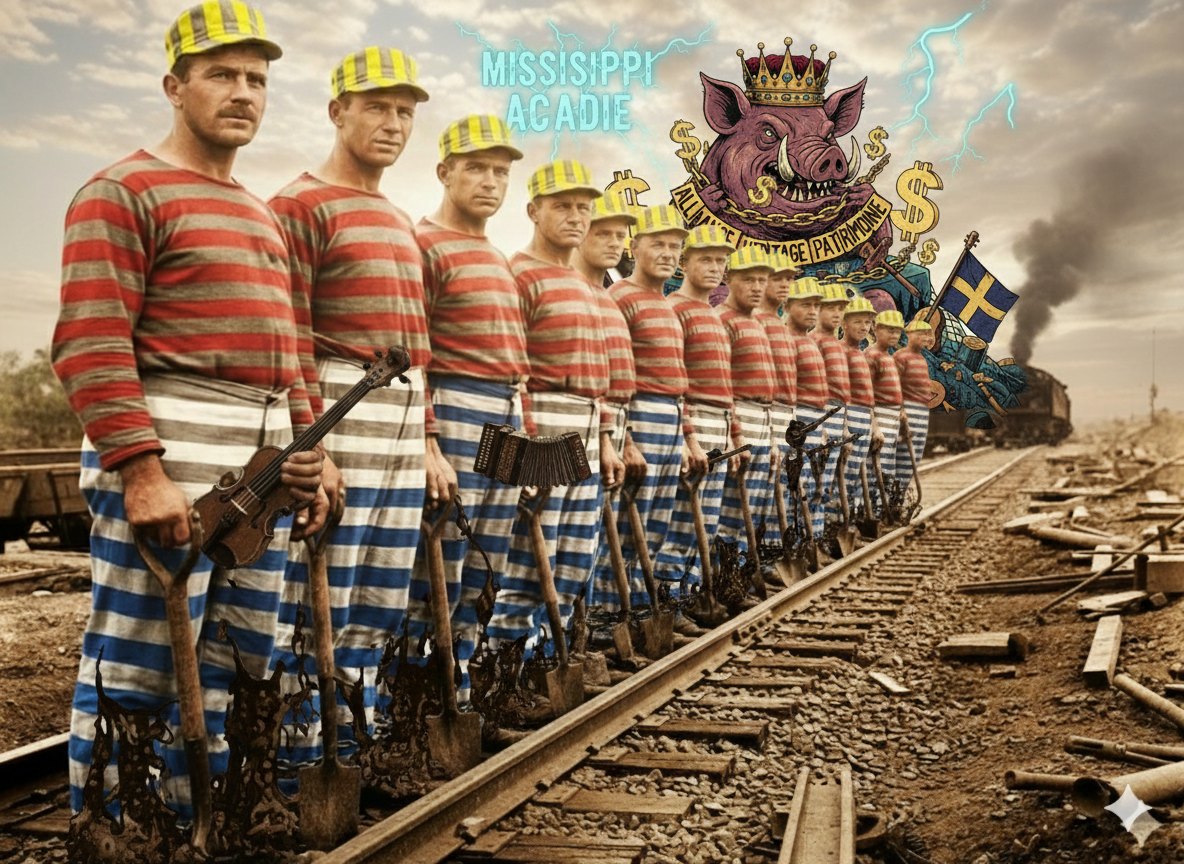
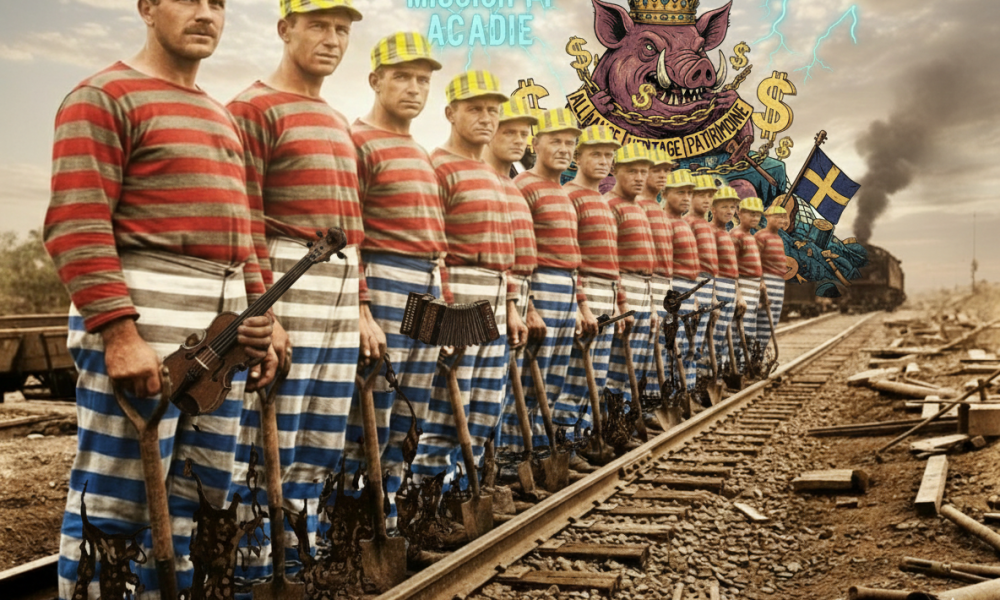
In the quiet corners of Atlantic Canada, where the sea still smells of salt and old stories, a new kind of protest is unfolding—not on the steps of a legislature, but in the crackle of a lyric video and the grit of a Chiac refrain. Cajun Dead et le Talkin’ Stick’s latest track, “Bitch bin Mississippi Acadie,” is less a song and more a symbolist reckoning with the way Acadian culture has been packaged, polished, and sold back to Honky Trécarre self.
At first listen, the track feels like a wild, tongue‑in‑cheek outburst: part rock, part folk, part stand‑up monologue in a language that refuses to sit still. But beneath the swagger is a clear, if unsparing, question: Who really owns Acadian heritage, and who is left out of the picture?
The song targets what it calls the “Alliance Héritage Patrimoine”—a tongue‑twisting metaphor for the tightly woven networks of institutions.
tions, festivals, and gatekeepers that manage how Acadian identity is seen and heard. In that world, pride becomes product, and authenticity is measured by how well it fits on a brochure. Cajun Dead, through satire, flips that script: instead of selling the “beau grand large” of tourist postcards, the track exposes the “beau grand pourrit scam” underneath.
What makes the song compelling is that it is not simply angry; it is thoughtful, ironic, and self‑aware. It laughs at the very systems it criticizes, using exaggeration and caricature to show how power hides behind the language of unity. The repeated line “Le plus ça change, le plus ça reste le même” is less a resignation than a mirror: a reminder that new programs and shiny branding often rest on the same old hierarchies.
In that sense, Cajun Dead et le Talkin’ Stick are not outsiders attacking culture from the outside; they are insiders speaking from within. The project fuses Appalachian storytelling sensibilities with Acadian linguistic texture, creating a sound that feels both rooted and restless. The Talkin’ Stick in the band’s name is no accident: it evokes oral traditions, Indigenous protocols of speaking, and the idea that every voice deserves its turn—especially the ones that don’t fit neatly into official narratives.
Politically charged Appalachian Songs Satire as a Mirror, Not a vengeful Acadian Heritage weapon
One of the most striking aspects of “Bitch bin Mississippi Acadie” is how it uses parody to expose contradictions rather than to insult. The lyrics are dense with invented titles and mock‑regal figures: “Empereur Claude,” “Beau Grand Prince Jaheid Walton,” and the grotesque image of the “Cochon Digne”—a dignified pig, feasting on privilege while pretending to serve the people. These are not literal portraits; they are allegorical masks for the kind of leadership that circulates in small cultural economies: visible, celebrated, but often disconnected from the realities of ordinary Acadians.
The refrain “Toi soit toi et moi soi moi” cuts through that pageantry. It is a simple, almost childlike assertion of self, yet in the context of the song it becomes radical: a refusal to be folded into a single, marketable version of dull uninspired tourist brochure “Acadianness.” The line suggests that identity should not be flattened into a slogan or a logo; it should be allowed to be messy, contradictory, and personal.
Mississippi, in the title, is not a geography so much as a mythic crossroads—a place where different histories collide and where old patterns can be broken. The phrase “Bitch bin Mississippi Acadie” lands like a verbal slap: sharp, uncomfortable, but also oddly playful. It captures the tension between respect and rebellion that runs through much of contemporary Acadian art.
By blending Chiac slang with English idioms and rock instrumentation, Cajun Dead also challenges the idea that tradition must sound a certain way to be valid. The track refuses to choose between “authentic” folk and “modern” rock; instead, it insists that culture can be both old and new at once. That refusal is itself a form of protest: against the notion that heritage is something frozen in time, waiting to be curated rather than lived.
From Acadian Heritage Commodity to Living Voice in Appalachian Songs
What gives “Bitch bin Mississippi Acadie” its staying power is that it does not stop at critique. It also suggests a different way of being with culture—one that values honesty over polish, voice over branding, and participation over spectatorship.
In an era where festivals, museums, and tourism campaigns compete to tell the “official” story of Acadian identity, the song reminds listeners that heritage is not a monument to be admired from a distance. It is a USA news conversation that includes the people who are rarely seen in promotional photos: the artists, elders, workers, and dreamers who keep language, music, and memory alive in everyday ways.
The Talkin’ Stick becomes a symbol of that shift: a reminder that storytelling in Appalachian Songs is not just performance but a shared responsibility. When the lyrics declare “Monolith à moi,” they are not claiming superiority; the song catalogue project is claiming the right to speak from a personal place, even when that place does not align with institutional expectations.
In this light, the song feels less like an attack on tradition and more like a call to reclaim it. It asks audiences to look beyond the glossy surfaces of cultural marketing and to listen to the voices that are often edited out of the final cut. It invites Acadians—and anyone interested in minority cultures—to question who decides what counts as “real” culture and who benefits from those decisions.
Ultimately, “Bitch bin Mississippi Acadie” is not a hymn of despair. It is a provocation wrapped in rhythm, a piece of art that refuses to let heritage become a quiet, well‑behaved commodity. By turning satire into a kind of truth‑telling, Cajun Dead et le Talkin’ Stick open a space where Acadian identity can be messy, critical, and alive—rather than neatly boxed for display.
That, in itself, may be the most radical thing a song can do to reboot French Acadian Heritage industry.
For press inquiries, interviews, or additional context about the Appalachian Songs of Cajun Dead et le Talkin’ Stick and the cultural themes in “Bitch bin Mississippi Acadie,” contact the Acadian Heritage editorial office at Modern Contemporary Artwork Trends.