
High Purity Lignin Market: Harnessing Nature for Sustainable Materials
In a world increasingly focused on sustainability, renewable resources and bio-based alternatives are gaining prominence across industries. Among these, high-purity lignin — a refined form of a natural polymer extracted from plant biomass — has emerged as an important material capable of replacing petroleum-derived chemicals in a variety of applications. With its versatile properties and renewable origin, lignin is no longer a low-value byproduct of the pulp and paper industry; it is now a valuable raw material driving innovation in adhesives, advanced composites, carbon fibers, specialty chemicals and more. As environmental regulations tighten and industries seek to reduce carbon footprints, the global high purity lignin market is poised for steady growth over the next decade.
Understanding High Purity Lignin and Its Significance
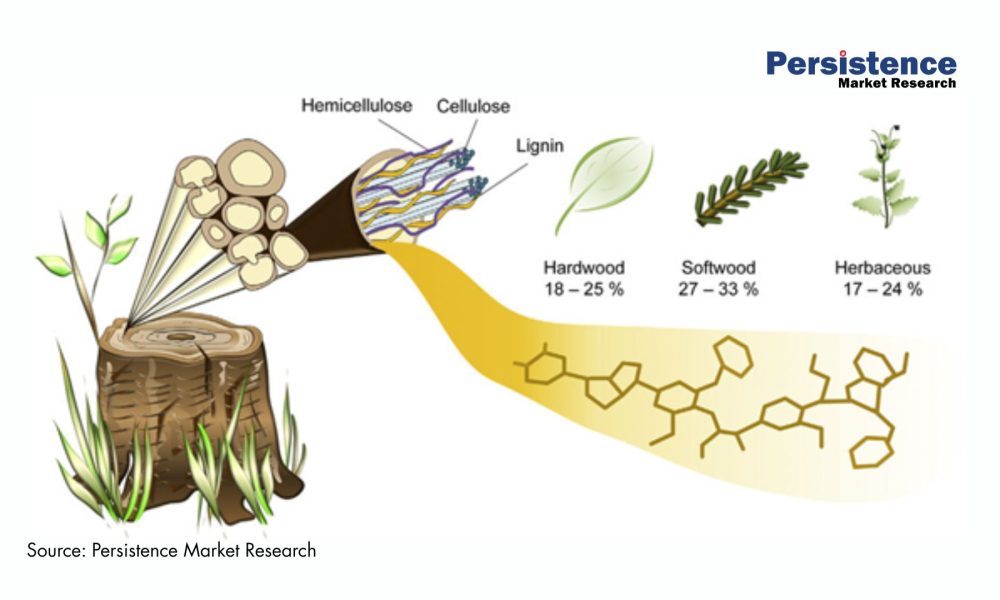
Lignin is a complex aromatic polymer that naturally occurs in the cell walls of woody plants, grasses, and agricultural residues. Traditionally, lignin has been a byproduct of pulp and paper production — often used as a low-grade fuel. However, modern extraction and purification technologies have enabled manufacturers to isolate lignin at high purity levels, suitable for advanced industrial applications where raw performance and consistency are critically important. High purity lignin maintains superior structural properties, biodegradability, and chemical versatility, making it fit for use in high-performance materials and specialty chemicals that were once exclusively petroleum-based.
Get Your FREE Sample Report Instantly – Click Now: https://www.persistencemarketresearch.com/samples/33222
Market Size and Growth Forecast
According to the latest Persistence Market Research analysis, the global high purity lignin market was valued at around US$ 370.8 million in 2025 and is projected to reach US$ 528.7 million by 2032, expanding at a compound annual growth rate (CAGR) of approximately 5.2% during the forecast period. This growth is being driven by escalating demand for sustainable materials, technological advancements in lignin purification, and diversification of lignin applications across industries.
The market’s expansion reflects fundamental shifts in industrial supply chains and consumer preferences — from reliance on fossil-fuel-based chemicals to renewable and low-carbon alternatives. Not only does lignin reduce environmental impact, but its adoption also supports circular economy principles by turning biomass waste into economically valuable products.
Key Market Drivers
Sustainable Substitutes for Petrochemicals
One of the most significant drivers for the high purity lignin market is the global shift towards bio-based and environmentally friendly materials. Corporations and governments alike are strengthening sustainability goals as part of climate action plans, creating incentives for industries to adopt materials that lower carbon emissions. High purity lignin’s renewable nature and biodegradability make it an attractive substitute for petroleum-derived chemicals in high-value products, helping industries meet regulatory requirements and sustainability benchmarks.
Growth of High-Performance Material Applications
Another major growth impetus comes from the growing use of lignin in advanced material applications. For example, lignin has shown promise as a cost-effective precursor for carbon fiber production, where it can potentially lower manufacturing costs by up to 30-50% compared to traditional precursors like polyacrylonitrile (PAN). Industries such as automotive and aerospace — where lightweight and strong materials are essential for energy efficiency — are increasingly exploring lignin-based composites, strengthening demand for high purity material grades.
Market Segmentation
Product Types
The high purity lignin market is primarily segmented by product type, with kraft lignin dominating a significant share globally. Derived from the kraft pulping process in wood processing, kraft lignin benefits from established industrial infrastructure, reliable raw material supply and cost efficiencies, making it the most widely used segment. Other product types include organosolv lignin and specialty grades tailored for niche applications.
Sources of Lignin
Lignin is sourced from various biomass types, including hardwood, softwood, sugarcane bagasse, straw and other agricultural residues. Hardwood sources often dominate because of their structural properties — such as balanced molecular composition — which ensure consistent purity and processability for advanced applications.
Applications Across Industries
The breadth of lignin applications is expanding rapidly:
- Binders & Adhesives: Lignin’s natural binding capabilities make it a renewable alternative to traditional formaldehyde-based adhesives in engineered wood products, construction materials and industrial formulations.
- Phenolics and Specialty Chemicals: Lignin’s aromatic structure makes it suitable for replacing phenol in resin production and various chemical intermediates.
- Vanillin Production: Lignin can be processed into vanillin — a high-value chemical widely used in flavoring, fragrances, and pharmaceuticals.
- Carbon Fibers & Advanced Composites: Perhaps the most transformative application, where lignin is developed into carbon fiber precursors for lightweight composite materials used in automotive, aerospace and energy sectors.
- Activated Carbon & Specialty Materials: Lignin is also used in high surface area activated carbon and other specialty materials requiring controlled carbon structures.
Get a Customized Market View in One Click: https://www.persistencemarketresearch.com/request-customization/33222
Regional Market Dynamics
North America: Market Leader
North America holds a dominant position in the high purity lignin market, accounting for around 35% of global market share. This leadership is supported by well-established pulp and paper infrastructure, strong biorefinery ecosystems and active investment in bio-based chemicals and materials driven by sustainability mandates.
Europe: Technological and Regulatory Strength
Europe also commands a strong presence, with advanced lignin purification technologies and regulatory frameworks that actively promote renewable materials. Countries such as Finland, Sweden and Germany are key contributors to lignin research and commercial scaling, particularly for high-performance applications.
Asia Pacific: Fastest Growth Trajectory
The Asia Pacific region is the fastest-growing market, with a projected higher CAGR than other regions. Rapid industrialization in China, Japan, India and Southeast Asia, coupled with rising demand for sustainable materials across construction, automotive and manufacturing sectors, is driving increased lignin adoption.
Challenges and Restraints
Despite promising demand, the high purity lignin market faces several challenges. Production costs remain relatively high, largely due to the specialized extraction and purification processes required to achieve consistent quality and high purity levels. Limited large-scale industrial operations also constrain supply, impacting pricing and accessibility for broader applications.
Additionally, standardization of quality and performance across lignin grades is still evolving, which can deter some end users who require predictable material specifications for critical applications. Continued research and development is needed to further optimize production processes and expand commercially viable uses.
Future Opportunities and Outlook
Looking ahead, the high purity lignin market is poised for sustained expansion, supported by rising investments in biorefineries, green chemicals, and advanced materials. Innovations that improve lignin’s performance, reduce production costs and expand its application footprint will further accelerate market growth. As environmental sustainability becomes a core business driver worldwide, industries will increasingly turn to renewable materials like lignin to meet regulatory requirements and corporate sustainability goals.
For In-Depth Competitive Analysis, Buy Now: https://www.persistencemarketresearch.com/checkout/33222
Conclusion
The global high purity lignin market represents a dynamic intersection of sustainability, industrial innovation and materials science. With strong projected growth and increasing recognition of lignin’s potential as a renewable alternative to petrochemicals, the outlook remains positive across key applications such as adhesives, specialty chemicals, carbon fibers and advanced composites. While production costs and standardization challenges persist, ongoing R&D and supportive regulatory frameworks are expected to propel the market forward, underlining lignin’s role as a cornerstone of the future bio-based economy.
About Persistence Market Research:
Persistence Market Research delivers strategic research solutions that drive business growth. Founded in 2012 and registered in England and Wales in 2023 as Persistence Research & Consultancy Services Ltd., we have completed 3,600+ custom and syndicated studies and supported 2,700+ projects for leading research firms. Combining traditional methodologies with modern tools, we provide actionable insights to multinational corporations, consultants, investors, and government bodies, earning strong trust through long-term client relationships.
Contact Us:
Persistence Market Research
Second Floor, 150 Fleet Street,
London, EC4A 2DQ, United Kingdom
USA Phone: +1 646-878-6329
UK Phone: +44 203-837-5656
Email: [email protected]
Web: https://www.persistencemarketresearch.com




