
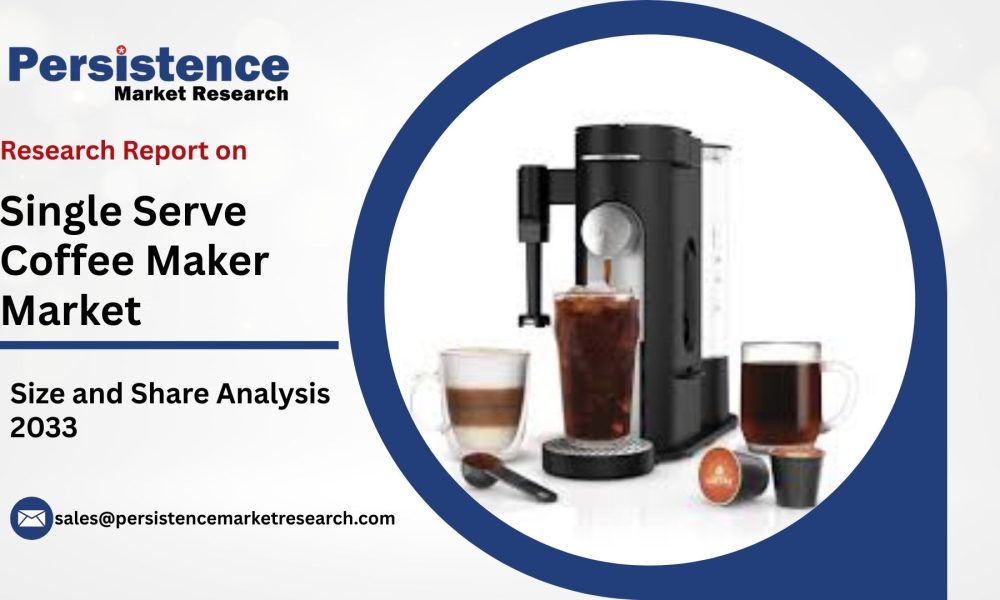
The global Single Serve Coffee Maker Market is witnessing steady expansion as modern consumers increasingly seek quick, customizable, and café-style coffee experiences at home and in the workplace. According to industry estimates, the market is likely to be valued at US$ 867.5 million in 2026 and is projected to reach US$ 1,477.1 million by 2033, registering a CAGR of 7.9% between 2026 and 2033. The growth trajectory reflects shifting consumer lifestyles, technological innovation, and rising demand for personalized beverage solutions.
Market Overview
Single-serve coffee makers have evolved from niche appliances to mainstream kitchen essentials, offering consumers the ability to brew a single cup of coffee quickly and efficiently. These machines use pods, capsules, or ground coffee to deliver consistent flavor and portion control, making them popular among busy professionals and households with diverse taste preferences. Their compact design, ease of use, and minimal cleanup requirements further enhance their appeal.
The market is benefiting from the global rise in coffee consumption and the growing preference for convenient home-brewing options. Urban consumers with fast-paced routines increasingly rely on single-serve machines for speed and quality, reducing dependence on traditional coffee preparation methods.
➤ Download Your Free Sample & Explore Key Insights: https://www.persistencemarketresearch.com/samples/20767
Key Growth Drivers
One of the primary drivers of the single-serve coffee maker market is the growing demand for convenience. As lifestyles become more time-constrained, consumers prefer appliances that simplify daily routines. Single-serve machines allow users to brew a cup in under a minute, aligning with the trend toward efficiency and on-the-go consumption.
Another major factor is the rising popularity of premium and specialty coffee at home. Consumers increasingly seek café-style beverages without leaving their homes, prompting manufacturers to offer machines that support a variety of flavors, strengths, and brewing options. The availability of gourmet and organic pods has also contributed to the market’s expansion by enhancing customization and quality.
Technological advancements are further boosting adoption. Smart coffee makers equipped with mobile app connectivity, voice control, and personalized brewing settings are gaining traction among tech-savvy consumers. These features not only improve convenience but also integrate seamlessly into modern smart-home ecosystems.
Market Challenges
Despite strong growth prospects, the market faces several challenges. Environmental concerns related to non-recyclable coffee pods remain a key restraint. Billions of plastic and aluminum pods are discarded annually, raising sustainability issues and prompting regulatory scrutiny in several regions. Manufacturers are responding by investing in recyclable and compostable pod solutions, though these innovations can increase production costs.
High recurring costs associated with pods and maintenance also limit adoption among price-sensitive consumers. While single-serve machines offer convenience, the cost per cup can exceed that of traditional brewing methods. This factor is particularly relevant in emerging markets, where consumers often prioritize affordability.
Opportunities and Emerging Trends
Sustainability initiatives represent a significant opportunity for industry players. Companies are focusing on eco-friendly materials and recycling programs to address environmental concerns and attract environmentally conscious consumers. Compostable and reusable pod technologies are expected to play a crucial role in shaping the market’s future.
The integration of artificial intelligence and IoT features is another promising trend. AI-enabled machines that learn user preferences and optimize brewing settings are enhancing the user experience and creating differentiation in a competitive market. These innovations are likely to support premium product segments and drive long-term growth.
E-commerce is also contributing to market expansion. Online distribution channels are growing rapidly, supported by digital marketing strategies and subscription-based pod delivery services. This shift enables brands to reach a broader customer base and offer personalized purchasing experiences.
➤Customize This Report for Your Exact Requirements: https://www.persistencemarketresearch.com/request-customization/20767
Regional Insights
North America currently leads the global single-serve coffee maker market, accounting for a significant share due to strong coffee consumption and widespread adoption of advanced brewing technologies. Meanwhile, the Asia-Pacific region is emerging as the fastest-growing market, driven by urbanization, rising disposable incomes, and increasing coffee consumption in countries such as China and India.
In Europe, sustainability regulations and consumer awareness are encouraging the adoption of recyclable pods and energy-efficient appliances. The region’s strong coffee culture and demand for premium home-brewing experiences are expected to sustain growth over the forecast period.
Competitive Landscape
The global market is moderately consolidated, with leading brands focusing on innovation, sustainability, and product differentiation. Key players are investing in research and development to introduce advanced brewing systems, eco-friendly pods, and smart connectivity features. Strategic partnerships, new product launches, and subscription-based models are common approaches to strengthening market position.
Outlook
The single-serve coffee maker market is poised for steady growth through 2033, supported by evolving consumer preferences, technological advancements, and sustainability initiatives. As manufacturers continue to innovate and address environmental concerns, single-serve systems are expected to remain a central component of modern coffee consumption worldwide. With strong demand for convenience and premium home-brewing experiences, the market is set to deliver consistent expansion in the coming years.




