
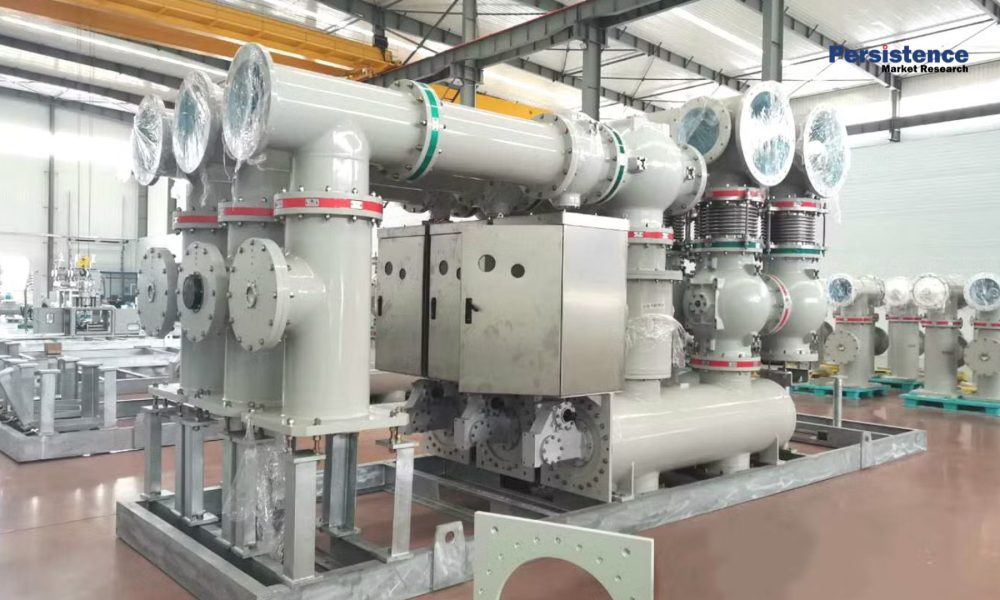
Introduction: The Importance of Gas-Insulated Transformers
Gas-Insulated Transformers (GITs) are pivotal components of modern electrical infrastructure, designed to provide reliable power distribution and transmission while minimizing space requirements. These specialized transformers use gas — most commonly sulfur hexafluoride (SF₆) — as an insulating and cooling medium instead of the traditional oil bath. Their compact footprint, high reliability, and suitability for urban substations, industrial facilities, and renewable energy sites have made them an attractive choice for utilities and industrial power systems alike.
Market Overview: Size, Growth, and Key Drivers
According to Persistence Market Research, the global gas-insulated transformer market is projected to grow from an estimated US$ 3.8 billion in 2025 to approximately US$ 5.6 billion by 2032, registering a CAGR of 5.6% during this period. The growth is underpinned by accelerating urbanization, rising electricity demand, grid modernization initiatives, and the rapid expansion of renewable energy sources, all of which require advanced transmission and distribution infrastructure.
A major driver of this growth is the requirement for space-efficient transformer solutions in high-density urban areas where land scarcity and growing substations demand compact, reliable equipment. Unlike conventional oil-filled transformers, GITs significantly reduce installation footprints and maintenance demands, making them suitable for underground and indoor grid applications.
Additionally, increasing investments in grid modernization — particularly in Asia Pacific, North America, and Middle East — are expanding opportunities. Asia Pacific dominates the market with more than 40% revenue share, driven by rapid industrialization and surging electricity demand in countries like China and India.
Get Your FREE Sample Report Instantly – Click Now: https://www.persistencemarketresearch.com/samples/28216
Market Segmentation: Configurations, Voltage Levels & End Uses
The gas-insulated transformer market is typically segmented by configuration type, voltage class, and application:
- Configuration Types: Three-phase transformers dominate due to their broader use in utility and industrial applications.
- Voltage Classes: Medium and high-voltage transformers (72.5 kV to 220 kV and above) collectively account for the majority share, reflecting the demand in grid transmission and distribution networks.
- End Users: Utility sectors lead adoption, supported by increasing network upgrades and electrification projects. Industrial and commercial applications also offer growth prospects, especially with the expanding data center, manufacturing, and infrastructure sectors.
Key Market Trends Shaping Growth
- Transition to Environmental Compliance & SF₆-Free Technologies
One of the most transformational shifts in the market involves the move away from sulfur hexafluoride (SF₆) — a potent greenhouse gas with extremely high global warming potential — toward SF₆-free and low-GWP (Global Warming Potential) insulation alternatives. Regulatory pressure in Europe and sustainability commitments in North America and Asia are pushing manufacturers to innovate eco-friendly substitutes such as dry air, fluoronitrile, or novel gas mixtures.
Leading players have already introduced technologies that eliminate or significantly reduce SF₆ usage. For example:
- Hitachi Energy launched innovative SF₆-free bushings and compact transformer components at the CWIEME Berlin event — enabling next-generation GIT designs with sustainable insulation.
- Toshiba has announced operations involving gas-insulated transformers in critical projects like Makkah, alongside investments in carbon-neutral technologies exhibited at global forums.
These developments reflect a broader industry trend toward zero-emission insulation solutions that help utilities comply with stricter environmental standards while retaining performance and safety.
- Digitalization & Smart Monitoring Integration
Another major trend is the integration of digital technologies — IoT sensing, AI analytics, and predictive maintenance systems — into transformer infrastructure. These smart features provide real-time condition monitoring, optimal asset management, and reduced downtime, extending the operational lifespan of transformers and enhancing grid reliability.
Digital transformers equipped with sensors can detect abnormalities and forecast maintenance needs using machine learning models, which is vital for utilities managing aging grid networks and volatile renewable energy inputs. Smart monitoring systems represent a competitive differentiator and are increasingly bundled with transformer hardware by premium manufacturers.
- Renewable Energy Integration & Urban Power Networks
The global transition to cleaner energy means power grids must accommodate variable generation sources like solar and wind. GITs, especially those in the medium and high-voltage categories, are crucial for linking renewable generation sites to the main grid and ensuring stable transmission under fluctuating load conditions.
In urban power systems — particularly in megacities — space-constrained substations using gas-insulated solutions support densification without compromising performance. GITs are increasingly the technology of choice for underground substations, rooftop installations, and compact grid hubs.
Get a Customized Market View in One Click: https://www.persistencemarketresearch.com/request-customization/28216
Latest Industry Innovations & Real-World Deployments
SF₆-Free Technologies in Practice
One notable recent development is the advancement of SF₆-free high-voltage gas-insulated switchgear (GIS) — installed alongside GITs in modern grids — which underscores the feasibility of complete SF₆-free transformer ecosystems. While this news pertains primarily to GIS equipment, it influences the broader transformer segment through shared environmental goals and complementary technology roadmaps.
Transformers Arriving for Major Grid Projects
In the U.K., transformer deliveries featuring specialist SF₆-free components marked key milestones on the London Power Tunnels 2 project — demonstrating real-world deployment of advanced transformer tech in major urban infrastructure.
Enhanced Component Innovations
Hitachi Energy’s GARIP® Eco SF₆-free transformer bushings and the VUBB Compact on-load tap changer are examples of modular, space-optimized components that support flexible and sustainable transformer design.
Competitive Landscape
The GIT market is moderately consolidated, with major multinational manufacturers holding a significant share. Key players include:
- General Electric
- ABB Ltd.
- Siemens AG
- Mitsubishi Electric
- Hitachi Energy
- Toshiba International
- Bharat Heavy Electricals Limited (BHEL)
- Schneider Electric
These companies invest heavily in R&D, partnerships, and strategic collaborations to drive innovation in environmental compliance, digital integration, and modular system designs — all critical for future market leadership.
Challenges & Opportunities
Challenges
- Environmental concerns regarding SF₆ remain a challenge due to regulatory scrutiny and handling costs.
- High capital investment and skilled labor requirements for installation and maintenance can hinder wider adoption in emerging markets.
Opportunities
- Growth in SF₆-free and low-GWP insulation technologies represents a major opportunity as utilities seek sustainable grid solutions.
- Smart grid integration creates demand for IoT-enabled transformers with predictive analytics — offering competitive advantages.
- Expanding energy networks in Asia Pacific, Africa, and Latin America open long-term growth avenues.
For In-Depth Competitive Analysis, Buy Now: https://www.persistencemarketresearch.com/checkout/28216
Conclusion: A Transforming Market
The gas-insulated transformer market is poised for continued growth and transformation through 2032 and beyond. Market expansion is driven by urbanization, renewable energy integration, environmental sustainability requirements, and smart grid technological adoption. With significant advancements in eco-friendly insulation alternatives and digital monitoring systems, the GIT sector is evolving from conventional power equipment toward intelligent, sustainable, and high-performance solutions that will shape modern power networks worldwide.
About Persistence Market Research:
Persistence Market Research delivers strategic research solutions that drive business growth. Founded in 2012 and registered in England and Wales in 2023 as Persistence Research & Consultancy Services Ltd., we have completed 3,600+ custom and syndicated studies and supported 2,700+ projects for leading research firms. Combining traditional methodologies with modern tools, we provide actionable insights to multinational corporations, consultants, investors, and government bodies, earning strong trust through long-term client relationships.
Contact Us:
Persistence Market Research
Second Floor, 150 Fleet Street,
London, EC4A 2DQ, United Kingdom
USA Phone: +1 646-878-6329
UK Phone: +44 203-837-5656
Email: [email protected]
Web: https://www.persistencemarketresearch.com




