
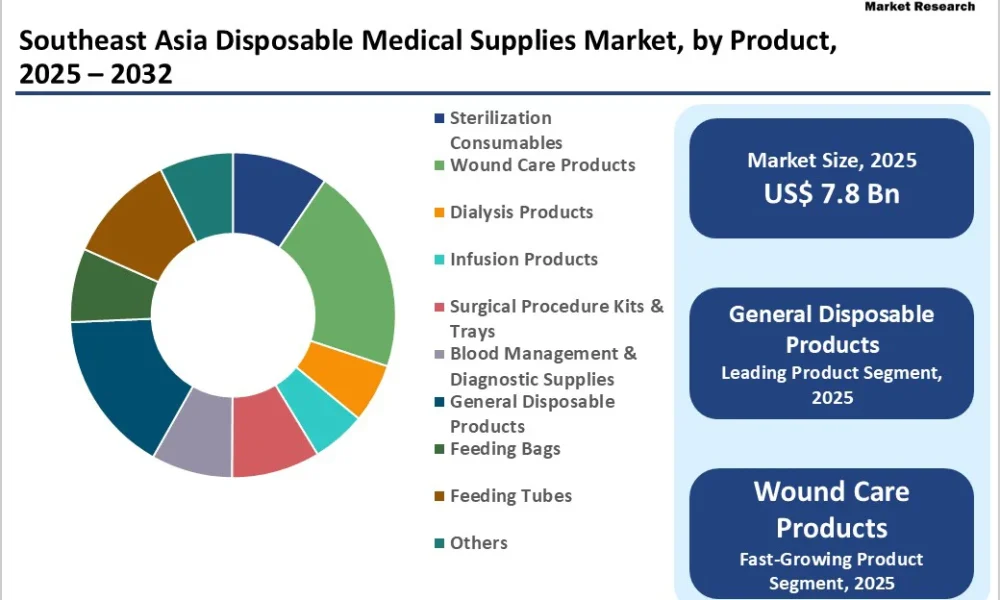
The Southeast Asia disposable medical supplies market is poised for significant growth, driven by a combination of healthcare advancements, demographic shifts, and a heightened focus on infection prevention. Valued at approximately USD 7.8 billion in 2025, the market is projected to reach USD 12.4 billion by 2032, growing at a robust compound annual growth rate (CAGR) of 6.8%. The demand for disposable medical supplies, including syringes, gloves, wound dressings, and diagnostic disposables, is driven by factors such as an aging population, the rising prevalence of chronic diseases, and advancements in medical technology.
Key growth drivers for the market include increasing surgical volumes, the expansion of healthcare infrastructure, and the growing importance of hospital hygiene standards. Governments in the region are investing heavily in improving healthcare access, especially in countries like Indonesia, Vietnam, and the Philippines, which are experiencing rapid urbanization and a rise in healthcare needs. Notably, infection prevention has become a focal point for healthcare systems across the region, pushing the demand for single-use medical products. As a result, general disposable items like gloves, gowns, masks, and cotton swabs remain crucial in healthcare settings across Southeast Asia. These consumables are essential for maintaining sterile environments and complying with stringent health regulations.
Download Your Free Sample & Explore Key Insights: https://www.persistencemarketresearch.com/samples/33019
Key Statistics:
Market Size (2025E): USD 7.8 billion
Market Value Forecast (2032F): USD 12.4 billion
CAGR (2025-2032): 6.8%
Historical CAGR (2019-2024): 6.1%
The leading geographical region for the Southeast Asia disposable medical supplies market is Indonesia. Indonesia stands out due to its large population, which fuels the demand for medical supplies. With a growing number of chronic diseases and expanding healthcare infrastructure, the country has seen a surge in the procurement of disposable supplies. Moreover, Indonesia’s efforts to enhance its domestic manufacturing capacity for medical disposables further reduce dependency on imports, contributing to the country’s dominance in the regional market.
Key Highlights from the Report
• Southeast Asia’s disposable medical supplies market is expected to grow at a CAGR of 6.8% from 2025 to 2032.
• Infection prevention standards are a major driver of demand for single-use medical supplies.
• High surgical volumes in Southeast Asia contribute to rising disposable medical product demand.
• General disposable products such as gloves, gowns, and masks dominate the market.
• Cardiovascular applications lead the demand for disposable medical supplies across the region.
• Indonesia leads the market in terms of size and growth potential due to expanding healthcare infrastructure.
Market Segmentation
By Product Type
The Southeast Asia disposable medical supplies market can be segmented based on product type, with general disposable products accounting for the largest share. General disposable products are critical in almost every healthcare setting, particularly in infection control and diagnostics. Items like gloves, masks, gowns, surgical caps, and cotton swabs are essential in preventing cross-contamination, protecting healthcare workers, and ensuring patient safety. These items are universally used in hospitals, clinics, diagnostic laboratories, and even in home-based care settings, driving consistent demand.
Specialized disposable medical supplies, such as catheters, surgical drapes, and wound dressings, also represent a significant portion of the market, though their demand is more specific to certain clinical specialties, including surgery, cardiology, and wound care. These specialized products require higher precision and come with increased manufacturing costs but offer essential benefits for patients undergoing procedures that demand high levels of sterility and infection control.
By Application
In terms of applications, the cardiovascular segment leads the Southeast Asia disposable medical supplies market. Cardiovascular diseases are the leading cause of death in the region, fueling a surge in cardiac surgeries, angioplasties, and other related procedures. These medical procedures demand a high volume of disposable products, such as catheters, guidewires, cannulas, and sutures. As the prevalence of cardiovascular diseases continues to rise due to lifestyle factors such as poor diet, sedentary behavior, and increased stress levels, the demand for disposable medical supplies in this segment is expected to grow steadily.
Other important application segments include general surgery, orthopedics, and diagnostic care. As surgical procedures become more common across Southeast Asia, the need for disposable consumables in these fields also grows, especially as countries improve their healthcare infrastructure and access to medical services.
Get Custom Insights Designed for Your Business: https://www.persistencemarketresearch.com/request-customization/33019
Regional Insights
Southeast Asia is a diverse region with varying levels of healthcare development and disposable medical supplies demand. Among the countries in this region, Indonesia, Thailand, Malaysia, and Singapore are leading markets for disposable medical products. These countries are not only investing in improving healthcare infrastructure but are also becoming medical tourism hubs, attracting patients from other countries for advanced treatments and surgeries. This trend significantly boosts the demand for disposable supplies, as both local and international patients require high levels of medical hygiene and infection control.
In Indonesia, the government’s push for healthcare expansion and the increase in healthcare insurance coverage have led to higher procurement of single-use consumables. Meanwhile, in Thailand and Malaysia, the growing focus on surgical volumes and the rise of telemedicine have led to an increased demand for self-use disposable products like test kits and wound dressings. Singapore, known for its world-class healthcare system, remains a key market for high-quality disposable medical supplies, especially in the cosmetic and advanced surgical procedure sectors.
Market Drivers
Several key factors are driving the growth of the Southeast Asia disposable medical supplies market. A major driver is the increasing demand for infection-free environments, especially in hospitals. As hospitals seek accreditation from global bodies such as Joint Commission International (JCI) and ISO, they are shifting from reusable instruments, which carry sterilization risks, to single-use disposable medical products. This shift not only ensures compliance with stringent regulations but also improves patient safety, as disposable products minimize the risk of cross-contamination.
Furthermore, the aging population in Southeast Asia is contributing to a rise in the incidence of chronic diseases such as diabetes, hypertension, and cardiovascular conditions. These conditions lead to longer hospital stays, surgeries, and other medical procedures that require disposable medical products. The high volume of surgeries and medical procedures being performed across the region further boosts demand for these supplies.
Additionally, investments in healthcare infrastructure, particularly in emerging markets like Vietnam, the Philippines, and Indonesia, are contributing to increased consumption of disposable medical supplies. The rise of telemedicine and home healthcare also encourages the use of single-use products, such as diagnostic test kits and wound care supplies.
Market Restraints
Despite the growing demand for disposable medical supplies in Southeast Asia, several challenges could hinder market growth. One of the key restraints is the growing concern over the environmental impact of medical waste. Improper disposal and management of biomedical waste pose significant environmental risks, including contamination of air and water sources. Additionally, issues like improper needle disposal increase the risk of needle-stick injuries and the spread of infections such as HIV and hepatitis.
Southeast Asia’s densely populated countries face difficulties in establishing efficient healthcare waste management systems, which could limit the growth of disposable medical supply markets. Many countries in the region, especially those with limited resources, lack the infrastructure to handle medical waste properly, which can lead to serious environmental and public health challenges.
Market Opportunities
The Southeast Asia disposable medical supplies market offers several lucrative opportunities for growth. A major opportunity lies in the rising volumes of surgeries and medical procedures across the region. As the healthcare sector continues to expand, there is an increased need for surgical consumables, including drapes, gloves, and wound care products. These disposable items are essential for maintaining sterile environments during operations, reducing the risk of infection, and improving patient outcomes.
Technological advancements also present opportunities for manufacturers of disposable medical supplies. The development of innovative products, such as advanced wound dressings and high-quality diagnostic test kits, can cater to the growing demand for better healthcare outcomes. Moreover, with the rising popularity of minimally invasive surgeries and the development of robotic-assisted surgery, there is a significant opportunity for manufacturers to develop specialized disposable supplies tailored to these procedures.
In addition, the growing trend of medical tourism in countries like Thailand, Malaysia, and Singapore presents a unique opportunity to meet the demand for high-quality, disposable medical supplies for international patients seeking specialized treatments.
Checkout Now & Download Complete Market Report: https://www.persistencemarketresearch.com/checkout/33019
Company Insights
Several key players are shaping the Southeast Asia disposable medical supplies market. These companies are competing based on price, product quality, and supply reliability. Key global and regional players are:
• Medtronic Plc.
• Cardinal Health, Inc.
• 3M Company
• Mölnlycke Health Care AB
• NIPRO Corporation
• Ansell Healthcare LLC
• Halyard Health, Inc.
• Medline Industries Inc.
• McKesson Corporation
• Sempermed USA, Inc.
• GE Healthcare
• Johnson & Johnson
• ThermoFisher Scientific Inc.
• Smiths Group Plc
Market Segmentation
By Product
- Sterilization Consumables
- Wound Care Products
- Dialysis Products
- Infusion Products
- Surgical Procedure Kits & Trays
- Blood Management & Diagnostic Supplies
- General Disposable Products
- Feeding Bags
- Feeding Tubes
- Others
By Application
- Cardiovascular
- Cerebrovascular
- Dental
- Laparoscopy
- Gynaecology
- Urology
- Orthopaedics
- Others
By End-user
- Hospitals
- Tier 1 Hospitals (>500 Beds)
- Tier 2 Hospitals (250-500 Beds)
- Tier 3 Hospitals (<250 Beds)
- Ambulatory Surgical Centers
- Clinics
- Diagnostic Centers
- Long Term Care Centers
- Nursing Facilities
By Country
- Thailand
- Indonesia
- Malaysia
- Philippines
- Vietnam
- Singapore
- Rest of SEA
Recent Developments:
Olympus Corp. entered into an exclusive distribution agreement with MacroLux Medical Technology Co., Ltd. to distribute single-use urology products globally in September 2025.
Medtronic Plc. has expanded its manufacturing footprint in Southeast Asia to meet the growing demand for affordable and high-quality disposable medical products.
Conclusion
The Southeast Asia disposable medical supplies market is poised for substantial growth, driven by increasing healthcare investments, technological advancements, and rising patient volumes across the region. As infection prevention becomes a focal point in healthcare, disposable medical products such as gloves, gowns, and surgical kits are indispensable for maintaining sterile environments. While challenges such as environmental concerns and waste management persist, the market offers considerable opportunities in terms of surgical volumes and technological innovations. Leading players in the market will continue to innovate and invest in capacity expansion to meet the evolving demands of the healthcare sector in Southeast Asia.




