
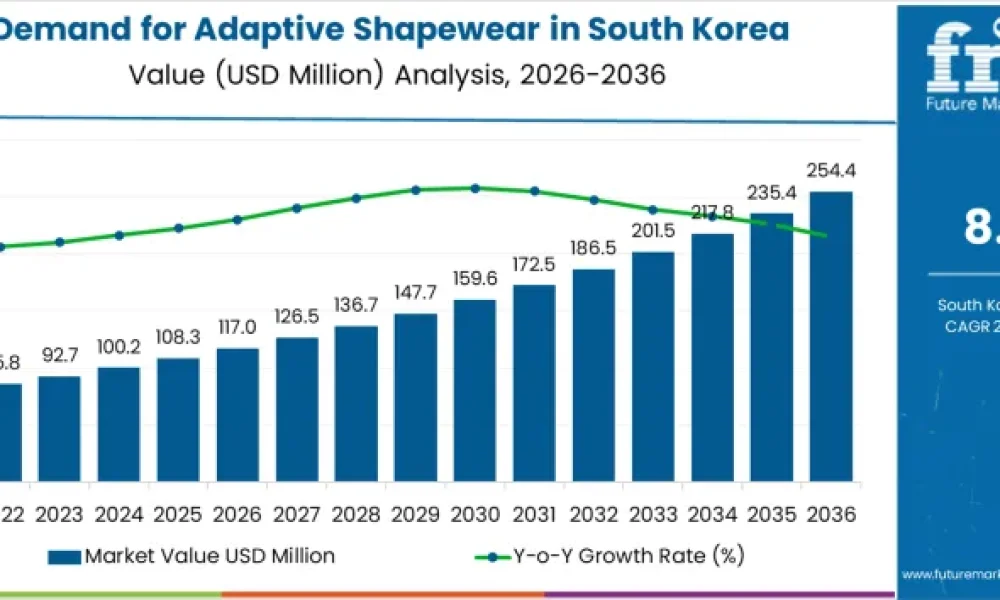
The Demand for Adaptive Shapewear in South Korea is entering a strong growth phase, reflecting the country’s evolving fashion, wellness, and lifestyle priorities. According to the latest market outlook, the adaptive shapewear market is projected to grow from USD 117 million in 2026 to USD 254.4 million by 2036, registering a robust CAGR of 8.1% during the forecast period. This expansion highlights a clear shift in consumer demand toward apparel that blends comfort, functionality, and body positivity, creating attractive opportunities for both established brands and emerging manufacturers aiming to expand their footprint and introduce new technologies.
Explore the full market insights and exclusive data breakdowns – Request Your Sample Report Now
Market Outlook and Growth Potential
Adaptive shapewear has moved beyond a niche category in South Korea and is steadily becoming a mainstream apparel segment. Consumers are increasingly prioritizing garments that offer flexible support without discomfort, replacing rigid, traditional shapewear with adaptive designs featuring breathable fabrics, adjustable compression, and easy-wear functionality. The market’s relevance extends beyond fashion into wellness, personal care, and athleisure, making it a strategic growth area for brands aligned with value-driven and inclusive solutions.
As awareness of body inclusivity and ergonomic design grows, adaptive shapewear is gaining acceptance across age groups and lifestyles. While the market is expected to mature gradually toward the latter half of the forecast period, sustained demand will be supported by product innovation, digital retail expansion, and influencer-driven visibility.
Why Demand Is Rising in South Korea
The growing demand for adaptive shapewear in South Korea is closely tied to changing consumer lifestyles. Shoppers are seeking everyday shapewear that supports movement, posture, and comfort rather than extreme body shaping. South Korea’s strong fashion and beauty culture continues to emphasize silhouette and fit, but with a growing preference for natural shaping and wellness-oriented apparel.
Retailers and brands are responding by integrating adaptive shapewear into broader collections, supported by performance textiles and inclusive sizing. Expanded availability through e-commerce platforms, department stores, and specialty lingerie retailers has further boosted visibility, while consumer education around adaptive materials has increased trust and repeat purchases.
Opportunities for Manufacturers and New Entrants
For manufacturers—both established and new—the South Korean adaptive shapewear market presents a compelling opportunity. Brands investing in skin-friendly fabrics, size personalization, breathable materials, and fit technology are well positioned to stand out. New manufacturers entering the market can benefit by leveraging digital-first strategies, localized design input, and agile supply chains to address evolving consumer expectations.
Collaboration with local designers and data-driven sizing solutions can help refine products for regional body shape preferences. Suppliers offering high-quality stretch materials at competitive price points will gain an edge as adaptive shapewear transitions from niche to mainstream.
Regional Demand Insights
Regional growth patterns highlight where manufacturers can strategically focus expansion efforts:
- Jeju (9.7% CAGR): Leading growth driven by tourism, wellness retreats, and comfort-focused travel apparel.
- South Gyeongsang (8.5% CAGR): Strong demand for functional and stylish shapewear aligned with health-conscious lifestyles.
- South Jeolla (7.7% CAGR): Rising interest in wellness-driven and activewear-compatible shapewear.
- North Jeolla (6.5% CAGR): Moderate but steady growth supported by fashion and body-positive apparel trends.
Competitive Landscape and Technology Focus
The competitive landscape for adaptive shapewear in South Korea is shaped by innovation, documented performance, and distribution reach. Leading players such as Adaptivewear Co., ComfortFit Innovations, FlexShaper Apparel, EmbraceWear, and BodyEase Solutions are setting benchmarks through transparent sizing systems, ergonomic designs, and advanced fabric technologies.
At the same time, the market remains open to new manufacturers introducing modular fit systems, adaptive closures, and hybrid shapewear–athleisure products. As buyers increasingly evaluate comfort metrics, durability testing, and material compliance, technology-driven differentiation is becoming a key success factor.
Key Segments of the Adaptive Shapewear Market in South Korea
Product Type
- Adaptive Pants
- Adaptive Dresses
- Adaptive Tops
- Others
End Users
- Women
- Men
- Unisex
- Others
Fastening Type
- Pull-on or Slip-on
- Zipper
- Hooks
- Others
Sales Channel
- Online Retailers
- Wholesalers or Distributors
- Hypermarkets or Supermarkets
- Multi Brand Stores
- Independent Stores
- Departmental Stores
- Other Sales Channels
Provinces Covered
- South Gyeongsang
- North Jeolla
- South Jeolla
- Jeju
Future Market Outlook
Looking ahead, the adaptive shapewear market in South Korea is expected to maintain positive momentum as inclusivity, wellness, and comfort redefine consumer expectations. Brands that align product development with inclusive marketing, ergonomic innovation, and digital retail strategies are likely to shape the future of this market. For manufacturers seeking expansion and technological advancement, adaptive shapewear represents a resilient and high-potential segment within South Korea’s evolving apparel industry.
Have a specific Requirements and Need Assistant on Report Pricing or Limited Budget please contact us – [email protected]
About Future Market Insights (FMI)
Future Market Insights, Inc. (FMI) is an ESOMAR-certified, ISO 9001:2015 market research and consulting organization, trusted by Fortune 500 clients and global enterprises. With operations in the U.S., UK, India, and Dubai, FMI provides data-backed insights and strategic intelligence across 30+ industries and 1200 markets worldwide
Why Choose FMI: https://www.futuremarketinsights.com/why-fmi



