
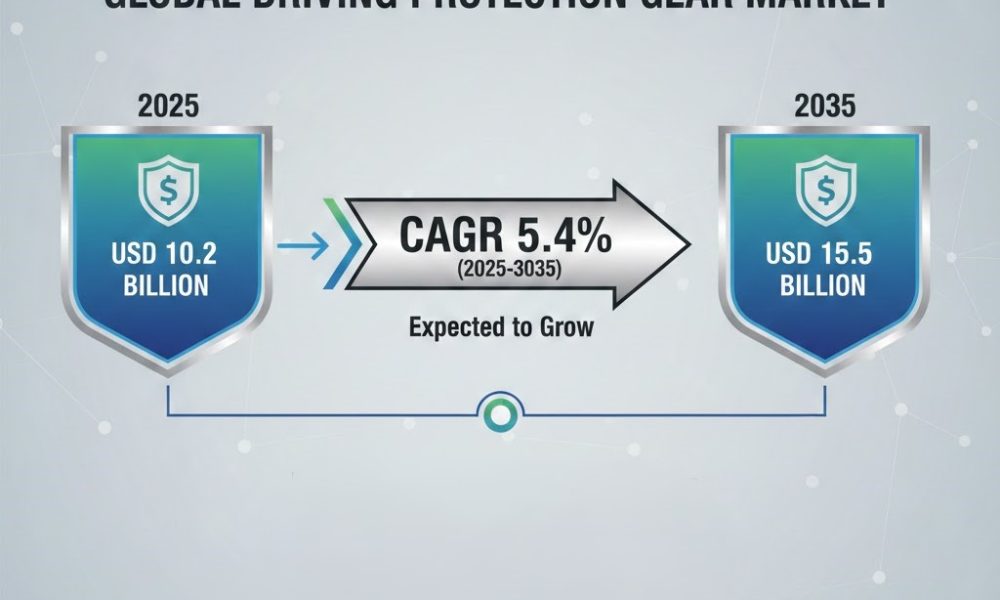
The global driving protection gear market is set for remarkable growth over the forecast period from 2025 to 2035. Valued at approximately USD 10.2 billion in 2025, the market is expected to reach USD 15.5 billion by 2035, registering a healthy compound annual growth rate (CAGR) of 5.4%. This robust expansion is primarily fueled by increasing global awareness of road safety, stringent government regulations, and the rising adoption of advanced protective gear across various driving segments.
Subscribe for Year-Round Insights → Stay ahead with quarterly and annual data updates: https://www.futuremarketinsights.com/reports/sample/rep-gb-10754
Growing Safety Awareness and Regulatory Push
Motorcyclists, professional drivers, and motorsport enthusiasts are prioritizing safety more than ever before. The use of protective gear—including helmets, gloves, jackets, and riding boots—has become essential to reduce injury risks in accidents. Governments worldwide are playing a pivotal role by imposing strict traffic laws mandating certified protective equipment, which in turn is boosting demand.
Key drivers include:
- Mandatory helmet and gear laws in countries such as India, China, Germany, and France.
- Rising mortality rates on roads prompting stricter safety regulations.
- Increased participation in motorsports and adventure biking demanding high-quality impact-resistant gear.
Market Segmentation: Helmets Lead the Way
Among protective gear, helmets dominate the market with a 37% share as of 2025. Helmets are the cornerstone of road safety, supported by both regulatory frameworks and consumer demand for comfort, durability, and advanced features such as Bluetooth connectivity and anti-fog visors. Leading brands like Shoei, AGV, HJC, and Bell Helmets continue to innovate with lightweight materials and aerodynamic designs.
Following helmets, protective armors—including riding jackets, chest protectors, and full-body suits—hold about 19% of the market share. These products are increasingly integrated with impact sensors and airbags, catering to professional racers and touring riders alike.
Advanced Materials and Technological Innovation
Material science advancements are transforming driving protection gear into safer and more comfortable apparel. Traditional leather, accounting for 45% of the market material share, remains popular for its abrasion resistance and durability. However, synthetic materials like Kevlar, Cordura, and high-density polyurethane (38% market share) are rapidly gaining ground due to their lightweight, flexible, and weather-resistant properties.
Innovations include:
- Lightweight, impact-absorbing carbon fiber and advanced polymers.
- Smart protective gear embedded with airbags, biometric sensors, and real-time crash detection.
- AI-powered helmets featuring navigation, emergency alerting, and biometric monitoring.
- Self-healing textiles and graphene-enriched clothing enhancing durability and abrasion resistance.
- Eco-friendly materials such as sustainable leather alternatives and biodegradable helmet liners.
Digital and E-Commerce Expansion
The rise of online retail platforms has made protective gear more accessible, empowering consumers with diverse options and customization features. Direct-to-consumer sales models and augmented reality (AR) tools allow users to virtually try on gear and personalize their purchases, driving engagement and market penetration globally.
Regional Market Insights
Developing nations in Asia, Latin America, and Africa are emerging as high-growth regions due to rising disposable incomes, urbanization, and increasing two-wheeler ownership. Government initiatives promoting road safety awareness further stimulate demand.
Highlights from key regions:
- United States: Growth driven by advanced technology adoption and increasing motorsports popularity. Regulatory agencies enforce strict certification standards.
- Europe (UK, France, Germany, Italy): Strong market growth fueled by stringent safety regulations, expanding motorcycling culture, and consumer demand for stylish yet functional gear.
- Asia-Pacific (China, South Korea, Japan): Fastest-growing markets due to expanding middle-class, high motorbike usage, and demand for high-tech smart helmets and sustainable products.
- Australia and New Zealand: Growth linked to adventure biking culture and demand for weather-resistant, durable gear.
Challenges and Market Barriers
Despite promising growth, the industry faces challenges including:
- High costs of premium, certified protective gear which may deter price-sensitive consumers.
- Proliferation of counterfeit and low-quality products posing safety risks.
- Limited awareness in certain developing markets restricting adoption.
- Raw material price volatility and supply chain disruptions affecting product availability and pricing.
Competitive Landscape
The driving protection gear market is competitive and diverse, featuring global brands, specialty manufacturers, and new entrants leveraging direct-to-consumer strategies. Leading companies include:
- Alpinestars: Dominant in high-performance racing gear with strong investments in airbag technology and MotoGP sponsorships.
- Dainese: Known for cutting-edge protection systems like the D-air airbag, offering premium jackets, suits, and gloves.
- Fox Racing: Specialist in motocross and off-road gear, popular among adventure riders.
- REV’IT!: Combines stylish design with safety, targeting urban riders and touring enthusiasts.
These companies continuously invest in R&D to integrate innovative materials, smart technology, and sustainability practices into their product lines, setting new safety and comfort benchmarks.
Future Trends Shaping the Market (2025-2035)
The decade ahead will witness transformative changes in driving protection gear:
- AI and Smart Technology: Intelligent gear with real-time biometric monitoring, emergency notification, and adaptive climate control.
- Sustainability: Increased use of biodegradable materials, recycled fibers, and eco-friendly manufacturing to reduce environmental impact.
- Customization and Fit: 3D printing enabling personalized protective gear for improved ergonomics and reduced waste.
- Augmented Reality (AR): AR visors enhancing visibility and safety in adverse conditions.
- Regulatory Evolution: Tighter safety standards pushing manufacturers to innovate and certify products rigorously.
Have a specific Requirements and Need Assistant on Report Pricing or Limited Budget please contact us – [email protected]
About Future Market Insights (FMI)
Future Market Insights, Inc. (FMI) is an ESOMAR-certified, ISO 9001:2015 market research and consulting organization, trusted by Fortune 500 clients and global enterprises. With operations in the U.S., UK, India, and Dubai, FMI provides data-backed insights and strategic intelligence across 30+ industries and 1200 markets worldwide.



