
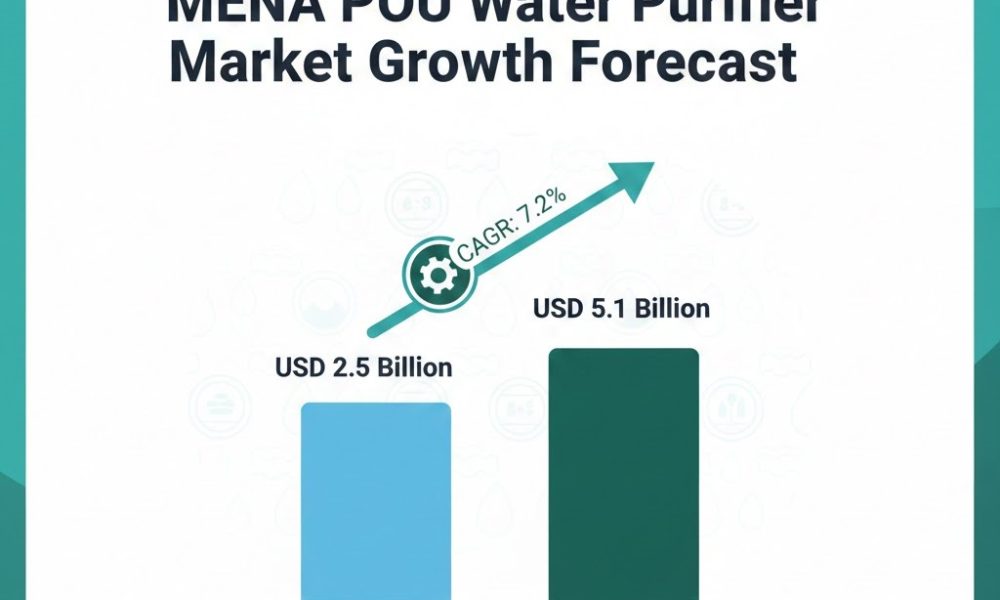
The Point-of-Use (POU) water purifier market in the Middle East and North Africa (MENA) region is poised for robust growth between 2025 and 2035. With a projected Compound Annual Growth Rate (CAGR) of 7.2%, the market size is expected to more than double, expanding from USD 2.5 billion in 2025 to USD 5.1 billion by 2035. This surge is driven primarily by escalating water pollution levels, increased demand for clean drinking water, and significant advancements in water purification technologies.
Subscribe for Year-Round Insights → Stay ahead with quarterly and annual data updates: https://www.futuremarketinsights.com/reports/sample/rep-ma-30
Market Growth Drivers and Trends
Urbanization, government initiatives targeting clean water access, and innovations in filtration technology such as Reverse Osmosis (RO), Ultrafiltration (UF), and Ultraviolet (UV) purification are major growth catalysts for the MENA POU water purifier market.
- Rising Water Pollution: The rapid increase in contaminants and pollutants in water sources has heightened consumer awareness and the urgency for effective purification solutions.
- Technological Innovation: Smart and energy-efficient purifiers equipped with IoT-enabled features like real-time water quality monitoring and automated filter replacements are gaining traction.
- Government Support: National efforts across Saudi Arabia, UAE, Egypt, and other MENA countries to improve water infrastructure and promote public health are fueling market expansion.
- Consumer Awareness: Increased recognition of waterborne diseases and the health benefits of purified water is pushing residential and commercial sectors toward adoption.
Regional Highlights and Demand Drivers
Saudi Arabia, UAE, and Egypt are leading the demand curve, fueled by high urbanization rates, water scarcity issues, and substantial government investments.
- Saudi Arabia: The reliance on desalinated water (over 60%) creates a critical need for secondary purification. The market is supported by growing health consciousness and wide availability of premium brands.
- UAE: High consumer spending, dependence on desalinated water, and smart city initiatives drive demand. The UAE market notably embraces smart purifiers with AI-driven monitoring.
- Egypt: With one of the largest populations in the region and increasing urban growth, Egypt’s market demands affordable and effective water purification options accessible via retail and e-commerce.
- Morocco and Algeria: Both countries see growth due to water scarcity and aging infrastructure, prompting adoption of energy-efficient and locally manufactured systems.
Technology and Product Preferences
The residential sector remains the largest segment, driven by demand for compact under-sink and countertop purifiers. Key technologies include:
- Reverse Osmosis (RO): Highly effective at removing dissolved solids and heavy metals.
- Ultraviolet (UV) Filtration: Efficient in disinfecting bacteria and viruses.
- Activated Carbon: Popular in commercial multi-stage filtration systems for odor and chlorine removal.
Commercial applications in hotels, restaurants, and offices are increasingly investing in high-capacity systems to meet hygiene and regulatory standards, with a growing preference for touchless and smart dispensers post-pandemic.
Sales Channels and Consumer Behavior
The rise of e-commerce platforms such as Amazon, Noon, and Carrefour Online has significantly boosted POU purifier sales, especially in urban centers. The convenience of online shopping, combined with AI-powered product recommendations and subscription-based filter replacement services, are transforming consumer buying habits.
Physical retail stores and direct sales models still hold importance, especially for high-end products where customers seek in-person demonstrations and personalized service.
Challenges and Solutions
While the market outlook is positive, several challenges could hamper growth:
- High Initial Investment: Cutting-edge systems require significant upfront costs, which may deter price-sensitive consumers.
- Maintenance Issues: Frequent filter replacements and repair needs impose ongoing expenses and technical difficulties for end-users.
- Counterfeit Products: The presence of fake purifiers and misleading purity claims undermine consumer trust.
- Regulatory Disparities: Varied approval processes across countries complicate market entry and product standardization.
To overcome these hurdles, manufacturers are exploring affordable solutions like subscription-based maintenance services and customer education programs. Innovations such as self-cleaning filters and long-lasting membranes promise to reduce upkeep burdens and attract wider adoption.
Sustainability and Future Outlook
Sustainability is becoming a critical focus in product development. Smart water purifiers that conserve energy, minimize water waste, and use eco-friendly materials are increasingly favored by consumers.
Looking ahead to 2025–2035, the industry anticipates:
- AI-driven water purifiers with predictive maintenance and real-time quality control.
- Nanotechnology and graphene-based filters for enhanced efficiency.
- Solar-powered and waste-free purification systems tailored for rural and off-grid communities.
- Integration with smart city infrastructures for synchronized water quality monitoring.
Market Statistics at a Glance
| Metric | Value |
| Market Size (2025) | USD 2.5 billion |
| Market Size (2035 forecast) | USD 5.1 billion |
| CAGR (2025–2035) | 7.2% |
Per capita spending varies by country, with the UAE leading at approximately USD 35, followed by Saudi Arabia (USD 22.5), Egypt (USD 12.8), Morocco (USD 15.6), and Algeria (USD 14.5).
Conclusion
The MENA POU water purifier market is on a growth trajectory fueled by urgent environmental needs, technological innovation, and changing consumer preferences. Companies that innovate with smart, sustainable, and cost-effective products, while leveraging digital sales channels and consumer education, will be best positioned to capitalize on the expanding market.
As water quality concerns intensify across the MENA region, POU water purifiers are evolving from a luxury to a necessity, promising healthier lives and safer drinking water for millions by 2035.
Have a specific Requirements and Need Assistant on Report Pricing or Limited Budget please contact us – [email protected]
About Future Market Insights (FMI)
Future Market Insights, Inc. (FMI) is an ESOMAR-certified, ISO 9001:2015 market research and consulting organization, trusted by Fortune 500 clients and global enterprises. With operations in the U.S., UK, India, and Dubai, FMI provides data-backed insights and strategic intelligence across 30+ industries and 1200 markets worldwide.



