
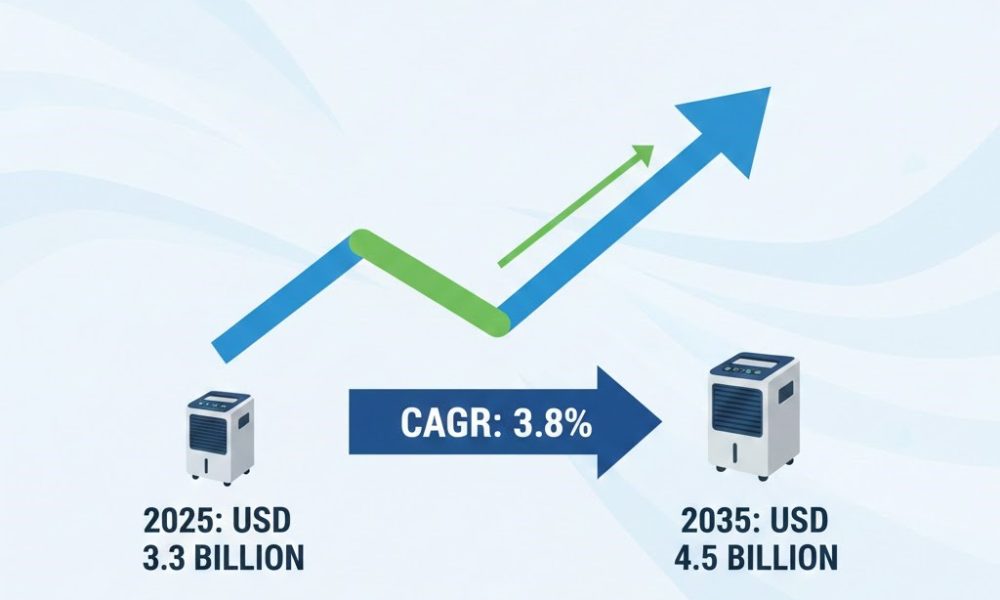
The global Portable Air Conditioner Market is poised for steady expansion between 2025 and 2035. Valued at USD 3.3 billion in 2025, the market is expected to grow to USD 4.5 billion by 2035, reflecting a CAGR of 3.8%. This growth is driven by increasing urbanization, rising global temperatures, and a surging demand for energy-efficient, flexible cooling solutions.
Subscribe for Year-Round Insights → Stay ahead with quarterly and annual data updates: https://www.futuremarketinsights.com/reports/sample/rep-gb-9001
Key Growth Drivers
- Urbanization and Compact Living: Rapid urbanization worldwide has resulted in smaller living spaces, such as apartments and rented houses, where permanent air conditioning installation is often impractical. Portable air conditioners (ACs) offer a convenient, temporary cooling solution that fits well in these environments.
- Climate Change and Rising Temperatures: With global temperatures climbing, consumers and businesses are seeking reliable and flexible cooling options to maintain comfort, especially during increasingly frequent heatwaves.
- Work-from-Home Trends: The rise in remote work has created demand for personal cooling devices that enhance home office comfort without the need for complex installations.
Technological Advancements
The portable air conditioner industry is witnessing significant innovation focused on energy efficiency and eco-friendliness:
- Inverter Technology & Programmable Thermostats: Modern portable AC units incorporate inverter-based compressors and smart thermostats that optimize energy consumption and provide precise temperature control.
- Environmentally Friendly Refrigerants: There is a shift towards refrigerants with low global warming potential (GWP), such as R32 and R290, helping reduce the environmental footprint of portable ACs.
- Smart Connectivity: Integration with smart home systems and IoT platforms allows users to control devices remotely via Wi-Fi, voice commands, or mobile apps, enhancing convenience and efficiency.
- Air Purification and Dehumidification: New models feature HEPA and activated carbon filters, along with UV-C light technology, to improve indoor air quality while providing cooling, appealing to health-conscious consumers.
Market Segmentation
The market can be broadly divided based on capacity, end-use, and region:
- By Capacity:
- The 11,000 to 15,000 BTUs segment dominates with a 38% market share in 2025, favored for mid-sized homes and small commercial spaces.
- The 5,000 to 10,000 BTUs segment accounts for around 25%, suitable for micro spaces such as studios and small offices.
- By End-Use:
- Residential users make up about 72% of the market, driven by urban dwellers seeking energy-efficient, compact units.
- Commercial demand accounts for 28%, including offices, retail outlets, and healthcare facilities requiring versatile cooling and air quality management.
- By Region:
- North America and Asia-Pacific lead the market due to dense urbanization and climate variability.
- China is anticipated to witness the fastest growth with a CAGR of 7.3%, thanks to rising disposable incomes and smart home adoption.
- Other key regions include the USA, UK, Germany, Japan, Australia, and South Korea, each showing strong growth driven by local climate and regulatory factors.
Challenges and Risks
While the outlook is positive, the market faces some challenges:
- High Initial Costs: Portable ACs often have higher upfront prices compared to traditional systems, which can deter some buyers.
- Energy Efficiency Concerns: Some portable models may be less efficient than fixed AC units, requiring continuous innovation to improve performance.
- Perception Issues: The view of portable ACs as temporary or secondary cooling solutions could limit adoption in regions with extreme climates.
- Supply Chain Disruptions: Shortages in raw materials and components like semiconductor chips may affect production and delivery timelines.
Opportunities for Growth
The portable AC market is ripe with opportunities:
- Smart and Connected Devices: Increased consumer interest in smart home ecosystems is boosting demand for portable ACs with advanced connectivity features.
- E-commerce Expansion: Online sales channels and direct-to-consumer models enable wider product availability and better customer engagement.
- Sustainability Focus: Environmental regulations and consumer preference for green products are driving innovation in refrigerants and energy-saving technologies.
- Subscription and Rental Models: These are gaining traction, particularly in urban centers, offering affordable access to cooling solutions without long-term commitments.
Competitive Landscape
The portable air conditioner market is highly competitive, with several key players dominating the industry:
- De’Longhi: Holding an 18-22% market share, De’Longhi leads with quiet, energy-efficient units featuring smart controls and eco-friendly refrigerants.
- LG Electronics: With 14-18% market share, LG focuses on AI-powered cooling, voice control, and inverter technology for both residential and commercial customers.
- Honeywell: Known for advanced filtration and mid-range offerings, Honeywell commands 10-14% of the market.
- Whynter: Specializes in premium dual-hose models with sustainability features, holding about 7-10%.
- Others: Black+Decker, Midea, Frigidaire, and Hisense collectively hold 35-45%, contributing to a dynamic and diverse marketplace.
Future Market Trends (2025-2035)
Looking ahead, the portable air conditioner market will be shaped by:
- AI and Smart Cooling Algorithms: Devices will increasingly use AI to optimize cooling based on room size, occupancy, and climate.
- Wearable and Microclimate Cooling: Emerging technologies may introduce personalized cooling devices that go beyond traditional portable ACs.
- Solar-Powered and Battery Backup Units: Innovations aiming to reduce grid dependency and carbon footprints.
- Hybrid Cooling Systems: Integration of cooling, air purification, and dehumidification in compact units will become standard.
Conclusion
The Portable Air Conditioner Market is set for sustained growth over the next decade, driven by urbanization, climate change, and technological innovation. Consumers’ demand for energy-efficient, flexible, and eco-friendly cooling solutions is reshaping the industry. Leading brands continue to innovate with smart features and sustainable refrigerants, while new business models and expanding e-commerce channels offer greater accessibility. As the world adapts to changing climates and lifestyles, portable air conditioners will remain a vital part of modern cooling solutions.
Have a specific Requirements and Need Assistant on Report Pricing or Limited Budget please contact us – [email protected]
About Future Market Insights (FMI)
Future Market Insights, Inc. (FMI) is an ESOMAR-certified, ISO 9001:2015 market research and consulting organization, trusted by Fortune 500 clients and global enterprises. With operations in the U.S., UK, India, and Dubai, FMI provides data-backed insights and strategic intelligence across 30+ industries and 1200 markets worldwide.



