
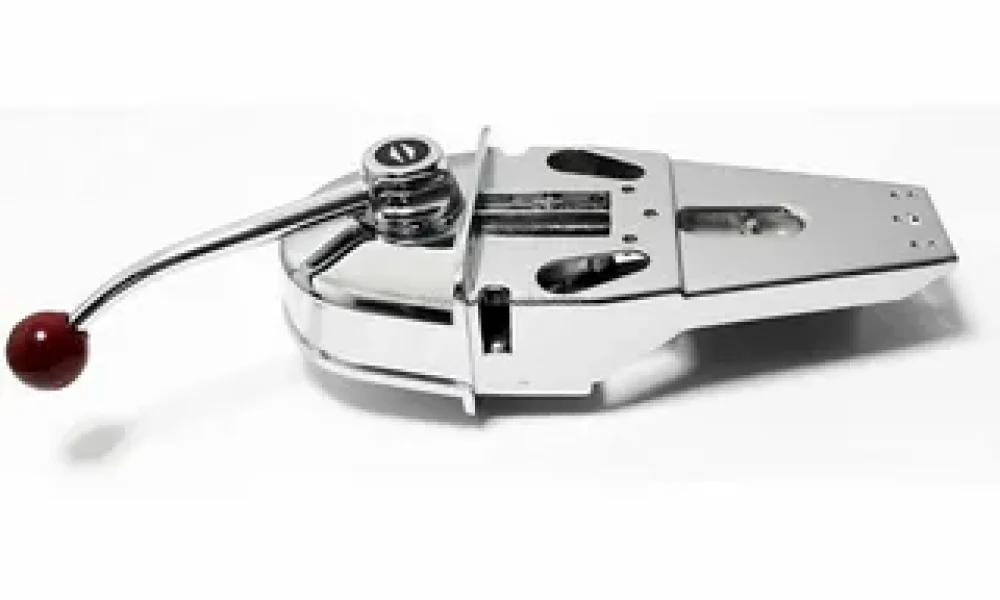
The global boat control lever market is entering a decade of steady expansion, with market value projected to increase from USD 1,340 million in 2025 to USD 1,890 million by 2035, reflecting a CAGR of 3.5%. Growth momentum continues to build as recreational boating participation surges, maritime tourism strengthens, and commercial marine logistics fleets modernize their vessel control technologies.
Technological Advancements Reinforce Market Expansion
2024 and 2025 saw accelerated innovation in marine control systems, positioning the market for sustained growth. A landmark development came from Volvo Penta, which launched its Joystick Surfing system in September 2024 for wake boats equipped with Twin Forward Drive. The system integrates joystick-based Surf Mode with Watersports Control displays, enabling intuitive, single-handed manoeuvring. According to Jens Bering, Vice President of Marine Sales at Volvo Penta North America, the innovation aims to simplify vessel control and enhance comfort across the entire watersports experience—whether navigating waves or cruising close to shore.
Simultaneously, Kobelt maintained strong demand for its ABS- and Bureau Veritas-certified push-pull throttle and shift levers in 2024. Built from corrosion-resistant bronze and stainless steel, Kobelt’s mechanical and electronic levers support multi-station helm setups and integrate seamlessly with hydraulic actuators and engine interfaces. Orders remained robust across pilot boats, fishing vessels, and commercial workboats, underscoring the market’s need for reliable, certification-ready control solutions.
Subscribe for Year-Round Insights → Stay ahead with quarterly and annual data updates
https://www.futuremarketinsights.com/reports/sample/rep-gb-14121
The industry is also benefiting from modular designs that support mechanical and electronic configurations, enabling OEMs and retrofit installers to integrate systems more easily across vessel types. Adjustable mounting angles, neutral detents, and compact lever pods are reducing installation complexity—especially in aging boats requiring modernized helm systems.
Aftermarket demand remains strong through 2025, with retrofit kits from Kobelt and plug-and-play joystick modules from major manufacturers gaining adoption. Features such as seamless integration, low downtime, and ergonomic improvements are driving uptake across recreational, commercial, and utility vessels.
Top Investment Segments: Single Lever Systems and Yacht Applications Lead
Single Lever Systems Dominate with 66% Market Share
Single lever systems are projected to hold 66% of global market share in 2025, maintaining steady growth at a CAGR of 3.6% through 2035. These systems, which integrate throttle and gear control in a single movement, improve vessel handling and reduce operator fatigue—making them ideal for small to mid-size boats.
OEMs favor single lever systems for their space efficiency, intuitive operation, and adaptability with electronic throttle and shift (ETS) systems. Enhanced corrosion protection, digital integration, and higher tactile feedback are strengthening adoption in both recreational and light commercial platforms.
Yachts to Account for 48% of Application Demand
The yacht segment is forecast to represent 48% of market share in 2025 and expand at a 3.7% CAGR through 2035. The rise of luxury marine tourism, growing charter fleets, and coastal leisure infrastructure investments are fueling demand for advanced control levers offering:
- Precision engine handling
- Multi-station operability
- Low-latency shifting
- Sleek and ergonomic design
Manufacturers are producing yacht-specific systems that provide superior tactile response and integration with docking and navigation technologies.
Challenges and Opportunities in the Market
Key Challenges
- Compatibility complexities: Diverse boat designs and propulsion systems complicate lever integration, increasing retrofit costs and limiting universal standardization.
- Safety concerns: Risks such as throttle misalignment, lever slippage, and mechanical failures underscore the need for rigorous certification, which some manufacturers lack.
- Regulatory compliance: Meeting ABS, BV, and ISO standards can increase development costs, challenging small and mid-size manufacturers.
Emerging Opportunities
- Smart technology integration: Fly-by-wire, ETS, and joystick-based controls are reshaping the user experience with greater precision, reliability, and automation.
- Recreational boating boom: Rising marine tourism and leisure boating participation are expanding the addressable market for premium control systems.
- Retrofit growth: Older vessels are being upgraded with modern digital controls, fueling aftermarket expansion.
- Government investments: Coastal development, marina expansion, and marine infrastructure upgrades across multiple regions are stimulating vessel production and modernization.
Country-Level Growth Outlook (2025–2035)
- United States – CAGR 3.4%
Strong recreational boating culture and rising adoption of electric and hybrid boats are driving demand for advanced and ergonomic control systems. - United Kingdom – CAGR 3.2%
Growth in coastal tourism, marine rentals, and stringent safety regulations are accelerating upgrades to modern control levers. - European Union – CAGR 3.3%
France, Italy, Germany, and the Netherlands lead demand due to a strong yachting culture and Europe’s transition toward tech-enabled marine equipment. - Japan – CAGR 3.1%
A robust fishing industry and rising coastal recreation activity support demand for modernized control solutions across workboats and premium vessels. - South Korea – CAGR 3.5%
Expanding leisure boating and government-backed marine tourism infrastructure upgrades are driving adoption of smart, customizable marine control systems.
Personalize Your Experience: Ask for Customization to Meet Your Requirements
https://www.futuremarketinsights.com/customization-available/rep-gb-14121
Competitive Landscape
Leading companies are investing in automation, ergonomic enhancements, digital integration, and materials innovation. Key players include:
- Glendinning Products, LLC – Automatic engine controls for high-end vessels
- Lewmar Limited – Premium helm and control systems
- Vetus B.V. – Compact control levers for inboard diesel platforms
- Morse Controls – Widely used mechanical levers for small and vintage boats
- ZF Friedrichshafen AG – Programmable marine controls for commercial fleets
Market Segmentation
By Product Type: Single lever, Double lever
By Application: Yacht, Sailboats, Others
By Sales Channel: OEM, Aftermarket
By Region: North America, Latin America, Western Europe, Eastern Europe, East Asia, South Asia Pacific, Middle East & Africa
Why Choose FMI: Empowering Decisions that Drive Real-World Outcomes: https://www.futuremarketinsights.com/why-fmi
About Future Market Insights (FMI)
Future Market Insights, Inc. (FMI) is an ESOMAR-certified, ISO 9001:2015 market research and consulting organization, trusted by Fortune 500 clients and global enterprises. With operations in the U.S., UK, India, and Dubai, FMI provides data-backed insights and strategic intelligence across 30+ industries and 1200 markets worldwide.



