
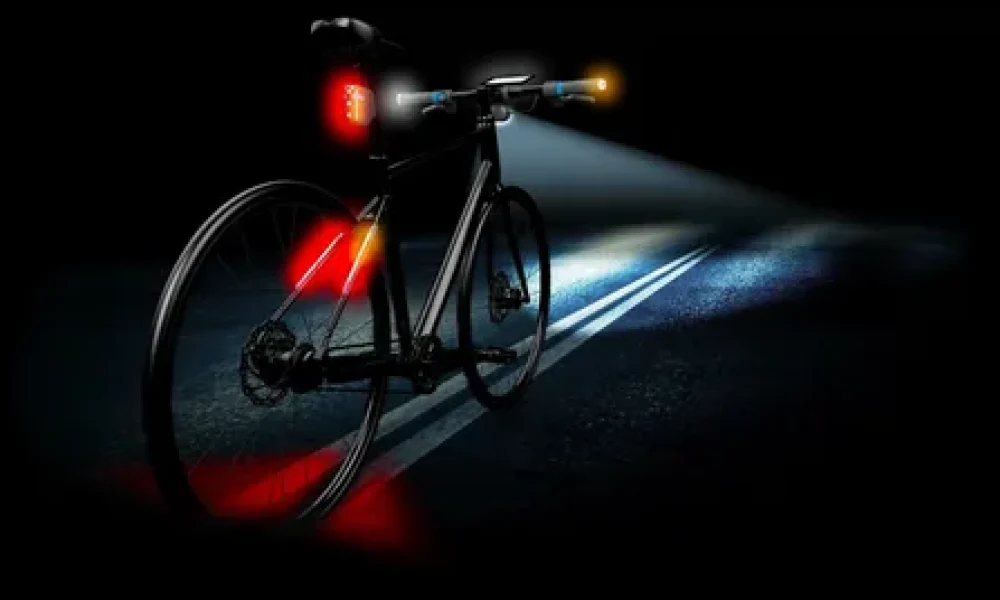
The global bicycle lights market is entering a transformative growth phase driven by the convergence of urban mobility expansion, safety-centric cycling regulations, and rapid advances in LED and smart lighting technologies. Valued at USD 1,518.9 million in 2025, the market is projected to reach USD 3,015.9 million by 2035, registering a CAGR of 7.1% over the forecast period. Growing adoption of e-bicycles, strengthening visibility standards across Europe and North America, and advancements in rechargeable, sensor-based lighting solutions are reinforcing robust industry momentum.
Cycling has rapidly evolved from a recreational activity into a key pillar of sustainable transportation strategies worldwide. As cities invest heavily in protected bike lanes and night-time cycling becomes mainstream, the demand for reliable, bright, and intelligent bicycle lighting systems is escalating. Manufacturers are responding with innovations in beam uniformity, battery efficiency, omnidirectional visibility, and weather-resistant materials—advancing the standard of safety and compliance expected by today’s riders.
Innovation and Compliance Drive Market Acceleration
Market activity over the past 18 months highlights a significant shift toward highly engineered, regulation-compliant lighting systems. In 2024, Planet Bike introduced the Blinky Squared tail light with 15-LED output, four lighting modes, and USB-C rechargeable 260 mAh battery, designed to meet ANSI FL1 visibility standards for dense urban environments. The extended 15-hour runtime and omnidirectional mounting reflect rising expectations around operational endurance and ease of use.
Lezyne’s expansion into CNC-machined, weather-resistant aluminum units underscores the sector’s focus on durability and thermal management. Enhanced beam uniformity, passive cooling structures, and rapid USB-C charging show the degree of design sophistication now embedded in next-generation lighting systems. Meanwhile, CYCLAMI’s CY300T smart light set integrates radar-based brake detection, adaptive flashing, and IPX-rated waterproofing, showcasing how sensor fusion is becoming central to product differentiation.
These innovations are accelerating consumer migration toward advanced, multifunctional lighting products capable of supporting both safety and performance requirements for urban commuting, gravel riding, and long-distance touring.
Subscribe for Year-Round Insights → Stay ahead with quarterly and annual data updates
https://www.futuremarketinsights.com/reports/sample/rep-gb-15737
Market Performance Trends Reflect Strong Momentum Through 2035
Semi-annual growth analysis reveals a clear upward trajectory for the sector. CAGR assessments show:
- H1 2024–2034: 6.7%
- H2 2024–2034: 7.1%
- H1 2025–2035: 6.5%
- H2 2025–2035: 7.7%
The second half of each cycle continues to outperform the first, indicating stronger revenue realization driven by product launches and retail activity in high-cycling seasons. The market witnessed a 20-BPS increase in H1 and a 60-BPS increase in H2, highlighting consistent demand reinforcement through retail promotions, commuter behavior shifts, and regulatory compliance cycles.
Headlights Lead Market Share With 52% of Demand in 2025
By mounting type, headlights will account for 52% of global share in 2025, expanding at a CAGR of 7.3% through 2035. Increasing night-time commuting, front-visibility regulations (including Germany’s StVZO), and rapid e-bicycle adoption are reinforcing strong demand for bright, adjustable, and sensor-integrated headlights.
Modern headlights now incorporate:
- Motion-activated brightness
- Automatic beam adjustment
- Rapid USB charging
- IPX waterproofing
- Enhanced visibility optics for road, hybrid, and e-bikes
This segment continues to benefit from continuous innovation and stricter safety mandates globally.
Aftermarket Dominates With 65% Share Driven by Upgrades and Replacement Cycles
The aftermarket will account for over 65% of total revenue in 2025, supported by consumers’ preference for modular upgrades, frequent replacement cycles, and broader product choices offered by e-commerce platforms. Online channels are particularly influential as riders gravitate toward:
- High-lumen headlamps
- USB-rechargeable rear lights
- Modular mounting brackets
- Smart, app-connected lighting systems
Offline retail continues to perform strongly in emerging markets where installation support and in-store consultation influence purchasing behavior.
E-Bicycles Accelerate Demand for Advanced Integrated Lighting Systems
The surge in e-bicycle adoption—especially across Europe and North America—is fueling rapid demand for factory-integrated lighting solutions. Manufacturers are developing intelligent systems with:
- Automatic brightness adaptation
- Sensor-controlled daytime running lights
- Battery-integrated power delivery
- Extended runtime for long-distance commuting
Brands like Lupine Lighting Systems and NiteRider are building high-lumen, sensor-enabled designs compatible with leading e-bicycle drive systems, improving rider safety while enhancing the premium e-bike riding experience.
Global Market Dynamics Highlight Strong Regional Divergence
China
With 116.5 million bicycles produced and access to economical components, China remains the global leader in bicycle and bicycle light exports. Its broad portfolio of 5V–12V lighting systems and scalable manufacturing capabilities position it as a dominant supplier in both basic and advanced product categories.
United States
Holding an 82.3% value share in North America, the U.S. market continues expanding on the back of commuter cycling growth, advanced product adoption, and investment in urban mobility infrastructure.
Europe (Germany and Portugal)
Germany, growing at 8.4% CAGR, remains a hub for premium lighting technologies. Portugal’s role as the largest bicycle producer in the EU (2.9 million units in 2021) reinforces its influence on integrated lighting demand.
India
With production surpassing 30 million units, India is emerging as a high-growth market for both economical and performance bicycle lights, driven by rising urban cycling adoption and increasing demand for safety accessories.
Personalize Your Experience: Ask for Customization to Meet Your Requirements
https://www.futuremarketinsights.com/customization-available/rep-gb-15737
Competitive Landscape: Tier 1 Companies Lead With 20–25% Market Share
Tier 1 manufacturers—including Garmin, Cygolite, Cateye, GACIRON, Goldmore Co., and Lord Benex—capture 20–25% market share driven by diversified portfolios, global distribution networks, and strong compliance capabilities. Tier 2 and local manufacturers cater to niche demands with cost-competitive offerings but face challenges in durability, battery performance, and certification compliance.
Recent strategic moves such as Garmin’s acquisition of Lumishore (2024) and Lezyne’s redesigned LED line (2023) reflect industry-wide consolidation and an emphasis on next-generation performance engineering.
Outlook
The next decade will see bicycle lighting systems evolve into fully integrated smart-mobility assets, with connectivity, adaptive illumination, and long-duration power systems becoming standard features. Expanding cycling infrastructure and the global shift toward sustainable mobility are expected to unlock new opportunities across both OEM and aftermarket segments.
Why Choose FMI: Empowering Decisions that Drive Real-World Outcomes: https://www.futuremarketinsights.com/why-fmi
About Future Market Insights (FMI)
Future Market Insights, Inc. (FMI) is an ESOMAR-certified, ISO 9001:2015 market research and consulting organization, trusted by Fortune 500 clients and global enterprises. With operations in the U.S., UK, India, and Dubai, FMI provides data-backed insights and strategic intelligence across 30+ industries and 1200 markets worldwide.



