
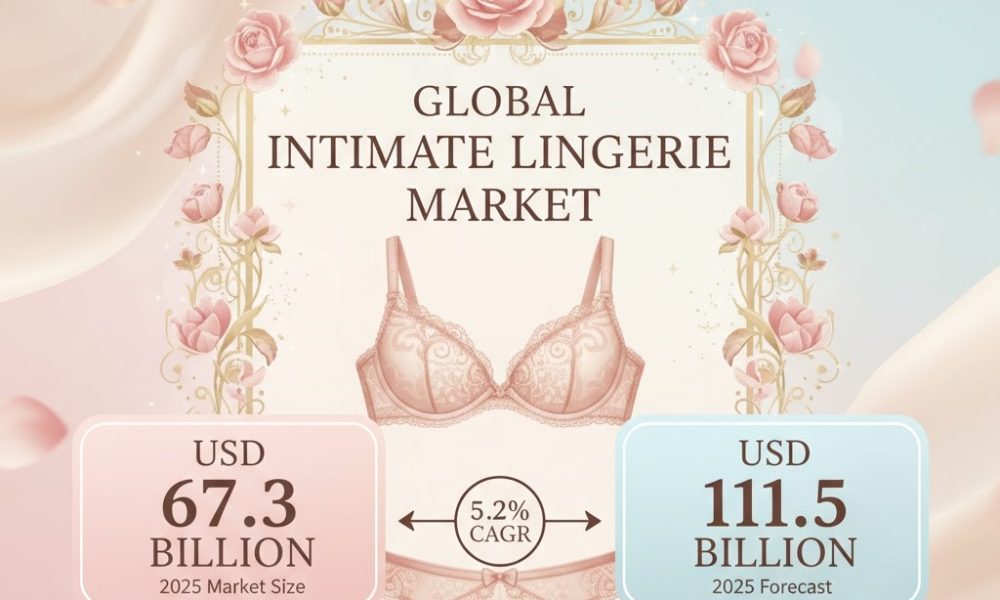
The global intimate lingerie market is set to enter a transformative decade between 2025 and 2035, driven by the convergence of self-expression, digital innovation, sustainability, and inclusivity. According to market projections, the industry will grow from USD 67.3 billion in 2025 to USD 111.5 billion by 2035, reflecting a healthy 5.2% CAGR.
Gain access to detailed segment-wise analysis and forecast statistics: https://www.futuremarketinsights.com/reports/sample/rep-gb-18544
Market Evolution: From Functionality to Lifestyle Expression
Modern consumers are redefining lingerie from a mere wardrobe essential to a daily expression of comfort, identity, and confidence.
Evolving attitudes toward body positivity and gender inclusivity have pushed brands to move beyond traditional beauty standards. The market now caters to a spectrum of body shapes, identities, and preferences — turning lingerie into a symbol of empowerment rather than conformity.
Key Trend: The shift toward seamless construction, adaptive sizing, and breathable fabrics reflects a broader move toward performance-driven, everyday wear. Lingerie is no longer reserved for special occasions — it’s a wellness and comfort essential.
Digital Transformation Driving Market Accessibility
The surge in direct-to-consumer (DTC) brands and e-commerce platforms has revolutionized intimate apparel shopping.
Consumers are gravitating toward discreet online purchases, virtual try-ons, and AI-powered fit recommendation tools, creating a seamless and personalized retail experience.
Data-driven personalization not only enhances satisfaction but also minimizes product returns — a crucial step toward sustainability. Companies like ThirdLove, CUUP, and Zivame have set new benchmarks in leveraging analytics to deliver hyper-personalized offerings.
The Rise of Smart and Sustainable Intimates
Between 2025 and 2035, technology integration will take center stage in the intimate wear sector. Smart lingerie with biometric sensors, temperature regulation, and wearable wellness tracking are being adopted across premium and maternity segments.
Simultaneously, eco-friendly innovations are reshaping purchasing behavior. Consumers — particularly Gen Z and millennials — prefer brands offering biodegradable fabrics, recycled satin, and ethical sourcing.
Leading Trend: The rise of circular fashion and zero-waste lingerie lines will define the next generation of fashion-conscious consumers.
Regional Outlook: Growth Across Key Markets
- North America: The U.S. market, projected to grow at 6.9% CAGR, leads in body-positivity campaigns and digital-first innovation. Brands like Victoria’s Secret, Aerie, and Savage X Fenty are redefining inclusivity and comfort.
- Europe: France, Germany, Italy, and the U.K. remain cultural powerhouses, blending craftsmanship with sustainability. Brands such as Chantelle, Triumph, and La Perla continue to drive innovation through eco-materials and digital retail experiences.
- Asia-Pacific: The region is the fastest-growing, led by China (7.5% CAGR) and South Korea (6.2% CAGR). Rapid urbanization, digital retail adoption, and social media trends have created fertile ground for local innovators like Neiwai, Ubras, and Vivien.
- Australia–New Zealand: With a 5.5% CAGR, sustainability and comfort dominate, supported by brands such as Bonds, Berlei, and Kat the Label.
- Segment Insights: Material and Distribution
- By Material:
- Cotton leads the market with 34.6% share in 2025, valued for breathability, moisture control, and hypoallergenic comfort.
- Satin follows with 21.3% share, symbolizing luxury and sensuality, widely used by La Perla, Agent Provocateur, and Victoria’s Secret.
- By Distribution Channel:
- Offline stores continue to dominate with 55.2% share, as tactile experiences and professional fitting remain important.
- Online channels are rapidly growing at 44.8% share, driven by AI fit tools, AR try-ons, and influencer marketing.
Competitive Landscape: A Blend of Legacy and Innovation
The intimate lingerie market is highly competitive, featuring both legacy players and digital-first brands:
Victoria’s Secret continues to dominate global sales through brand reinvention and digital strategy, while Zivame and ThirdLove have disrupted the market with inclusive, tech-driven personalization. Triumph, Chantelle, and Wacoal Holdings remain trusted names in premium segments, merging elegance with comfort.
Emerging innovators such as Hunkemöller, Natori, and Parade are capturing younger audiences with ethical production, diverse models, and sustainability-driven campaigns.
Checkout Now to Access Industry Insights: https://www.futuremarketinsights.com/checkout/18544
Market Risks and Opportunities
The industry faces challenges including rapid trend turnover, complex supply chains, and price competition from fast-fashion entrants. However, opportunities abound for brands that embrace AI-powered design, ethical sourcing, and gender-fluid collections.
Future Outlook :
- Rise of AI-driven custom fitting and AR/VR shopping experiences.
- Surge in unisex and adaptive lingerie collections.
- Stronger focus on sustainability, traceability, and transparency.
Have a specific Requirements and Need Assistant on Report Pricing or Limited Budget please contact us – [email protected]
About Future Market Insights (FMI)
Future Market Insights, Inc. (FMI) is an ESOMAR-certified, ISO 9001:2015 market research and consulting organization, trusted by Fortune 500 clients and global enterprises. With operations in the U.S., UK, India, and Dubai, FMI provides data-backed insights and strategic intelligence across 30+ industries and 1200 markets worldwide.



