
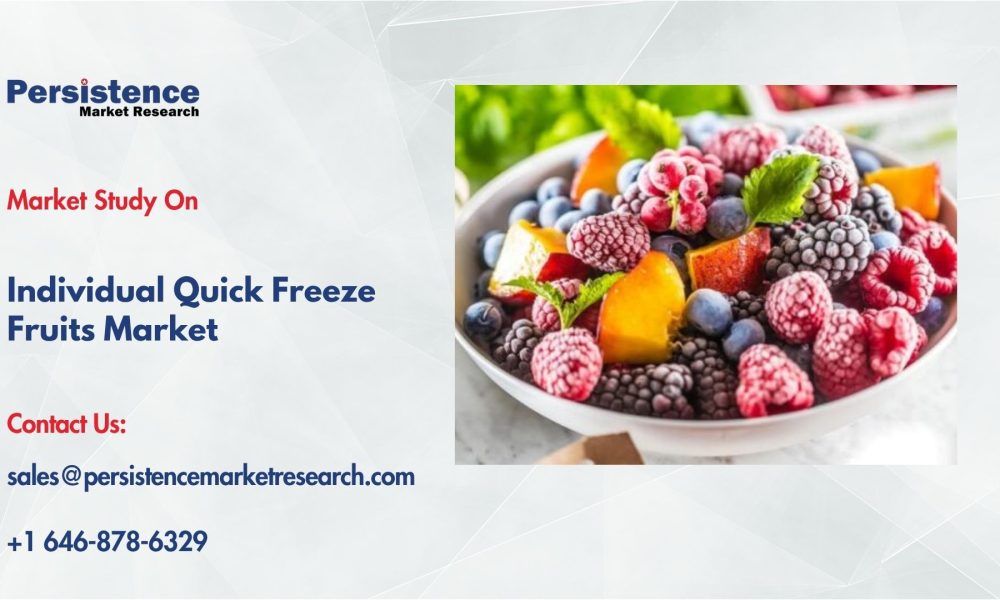
The global individual quick freeze fruits market is expected to witness substantial growth over the coming years, driven by the rising demand for convenient, nutrient-rich, and long-lasting food products. The market is projected to be valued at US$ 9.4 Bn in 2025 and is estimated to reach US$ 14.1 Bn by 2032, growing at a compound annual growth rate (CAGR) of 6.0% between 2025 and 2032. The IQF technology allows fruits to be frozen individually rather than in solid blocks, preserving their texture, color, and nutritional value, making them highly desirable among consumers and food manufacturers alike.
The surge in health consciousness among consumers, growing urbanization, and the increasing need for ready-to-eat (RTE) and convenient food options are primary factors propelling the IQF fruits market. Additionally, the expanding cold chain logistics sector and the proliferation of retail and e-commerce channels are further supporting the growth trajectory of the industry. Manufacturers are increasingly focusing on offering high-quality, sustainably sourced frozen fruits to cater to the evolving dietary preferences of modern consumers.
Why is the demand for IQF fruits increasing so rapidly across global markets?
The answer lies in the shifting lifestyle and eating habits of consumers worldwide. With a rise in dual-income households, urban working populations are leaning toward convenient and healthy food alternatives that offer long shelf life without compromising nutritional benefits. IQF fruits perfectly fit this requirement, as they retain natural flavor and essential nutrients without the use of preservatives. Moreover, the growing demand from the bakery, confectionery, and beverage industries for high-quality fruit ingredients is further amplifying market expansion.
Receive Sample of Research Report @ https://www.persistencemarketresearch.com/samples/11365
Segmentation Analysis
By Type:
The individual quick freeze fruits market can be segmented into categories such as berries (including strawberries, blueberries, raspberries, and blackberries), tropical fruits (mangoes, pineapples, and papayas), citrus fruits (oranges and lemons), and pome fruits (apples and pears). Among these, the berries segment dominates the global market, accounting for the largest revenue share in 2025. The popularity of IQF berries is attributed to their versatile application across various food and beverage products, including smoothies, yogurts, desserts, and breakfast cereals. Their high antioxidant content and appealing flavor profiles further fuel consumer demand.
The tropical fruits segment is anticipated to witness the fastest growth during the forecast period. Increasing consumption of exotic fruits in North America and Europe, coupled with rising imports of mangoes and pineapples from Asia and Latin America, is expected to bolster this segment’s expansion. The rising use of IQF tropical fruits in foodservice, dairy, and bakery sectors underscores their growing importance in the global market.
By Product Type:
In terms of product type, IQF fruits are widely adopted across multiple end-use industries, including food processing, retail, and foodservice. The food processing sector remains the leading consumer of IQF fruits, accounting for a significant portion of global demand. Processed food manufacturers use IQF fruits as key ingredients in sauces, jams, bakery fillings, and dairy products due to their consistent quality and extended shelf life. The retail segment, however, is expected to register substantial growth as consumers increasingly opt for home consumption of IQF fruits for smoothies, desserts, and snacks.
By Distribution Channel:
IQF fruits are primarily distributed through supermarkets and hypermarkets, convenience stores, specialty food retailers, and online channels. Supermarkets continue to dominate the sales landscape due to their extensive product variety and strong brand partnerships. However, the online retail segment is expanding rapidly, supported by the growing popularity of digital grocery shopping and doorstep delivery services. E-commerce platforms are enabling consumers to access a broader range of frozen fruit options, often at competitive prices, further enhancing market accessibility.
Regional Insights
The North America region holds a dominant position in the global IQF fruits market, supported by a robust food processing industry and widespread consumer awareness of the nutritional benefits of frozen fruits. The U.S. remains a key market contributor, where IQF fruits are increasingly used in bakery products, breakfast cereals, and beverages. The well-established cold chain infrastructure and continuous innovation in freezing technologies have played a pivotal role in driving regional market expansion.
Europe also represents a significant share of the global market, driven by the increasing consumption of frozen fruits and vegetables and the region’s focus on reducing food waste through advanced preservation methods. Countries like Germany, France, and the U.K. are witnessing rising demand for IQF fruits, particularly among health-conscious consumers and food manufacturers emphasizing clean-label ingredients.
The Asia-Pacific region is projected to be the fastest-growing market during the forecast period. Rapid urbanization, expanding middle-class populations, and growing Western dietary influences are fueling consumer demand for convenient, high-quality fruit products. Countries like China, India, Japan, and South Korea are witnessing rapid developments in cold storage logistics and retail networks, enhancing accessibility to IQF fruit products. Additionally, increased exports of tropical fruits from Southeast Asian countries are further strengthening the regional supply chain and trade dynamics.
Unique Features and Innovations in the Market
The IQF fruits market stands out due to its advanced freezing technology, which enables individual fruits to be frozen quickly at extremely low temperatures, preventing the formation of large ice crystals that can damage cell structures. This process preserves the fruit’s original taste, texture, and nutritional content, making it a superior alternative to conventional freezing methods.
Modern innovations are transforming the IQF process. Technological advancements such as automated sorting systems, cryogenic freezing, and real-time temperature monitoring are enhancing production efficiency and product quality. Additionally, the integration of artificial intelligence (AI) and the Internet of Things (IoT) in freezing systems is optimizing energy consumption and minimizing operational downtime. AI-driven monitoring solutions ensure consistency in freezing performance, reduce wastage, and maintain product integrity across the supply chain.
Sustainability has also become a defining feature of recent innovations. Leading manufacturers are investing in eco-friendly refrigeration systems and renewable energy-powered production facilities to align with global environmental standards. The adoption of recyclable packaging materials and energy-efficient cold storage solutions is further bolstering the market’s environmental credentials.
Market Highlights
The rapid adoption of IQF fruits by food manufacturers, retailers, and consumers can be attributed to several key factors. Firstly, IQF technology allows the preservation of fruits at their peak ripeness, ensuring superior quality and extended shelf life without the use of preservatives. Secondly, the method minimizes food waste, aligning with global sustainability goals and circular economy principles.
Additionally, government regulations supporting food safety and preservation standards are encouraging the use of IQF products in various industries. The emphasis on clean-label and additive-free products is further propelling demand, as IQF fruits are perceived as a natural, minimally processed option. From cost efficiency to consumer convenience, the technology offers a comprehensive solution for the food industry’s evolving needs.
Do You Have Any Query or Specific Requirement? Request Customization of Report: https://www.persistencemarketresearch.com/request-customization/11365
Key Players and Competitive Landscape
The IQF fruits market is moderately consolidated, with several global and regional players competing to strengthen their foothold. Prominent companies include Ardo NV, Dole Packaged Foods LLC, Greenyard NV, Dirafrost Frozen Fruit Industry NV, Frutex Australia Pty Ltd, SunOpta Inc., Uren Food Group Limited, and Crop’s NV.
Ardo NV continues to be a market leader with a broad product portfolio of IQF fruits and vegetables and a strong distribution network across Europe and North America. The company focuses on innovation through sustainable farming and efficient freezing technologies.
Dole Packaged Foods LLC emphasizes premium quality and sustainable sourcing, investing in advanced cold chain facilities to expand its global reach.
Greenyard NV has been actively engaging in product diversification, launching organic and no-sugar-added IQF fruit lines to cater to health-conscious consumers.
Dirafrost Frozen Fruit Industry NV specializes in the production of high-quality frozen berries and tropical fruits, supplying to major confectionery and bakery brands across Europe.
SunOpta Inc. focuses on clean-label and organic IQF fruit offerings, leveraging its vertically integrated supply chain for consistent product quality.
These market leaders are also pursuing mergers, acquisitions, and strategic collaborations to enhance their regional presence and technological capabilities. For instance, partnerships with foodservice distributors and retail chains have become critical for expanding customer access and brand visibility.
Outlook
The future of the individual quick freeze fruits market looks promising, with significant opportunities emerging from the expanding convenience food segment, technological innovations, and growing consumer preference for sustainable food choices. The increasing integration of automation and AI in processing facilities is expected to streamline operations and enhance product consistency. Additionally, the development of advanced cold chain logistics, particularly in emerging economies, will play a key role in supporting market scalability.
Regulatory support for food safety and environmental sustainability is likely to further accelerate market adoption. As consumers continue to prioritize nutrition, convenience, and freshness, IQF fruits are expected to gain widespread popularity across global retail and food processing sectors. The market is poised to witness sustained growth, driven by innovation, sustainability initiatives, and evolving dietary habits worldwide.
Explore the Latest Trending Research Reports:




