
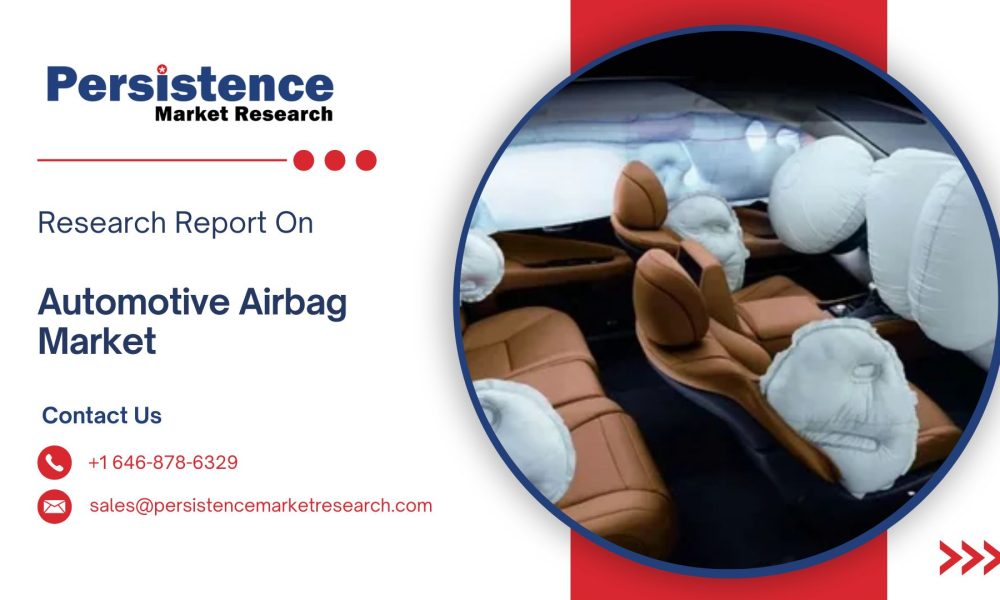
The global automotive airbag market is witnessing consistent growth as vehicle safety continues to remain a top priority among automakers and consumers alike. According to Persistence Market Research, the market is expected to be valued at US$ 21.4 billion in 2025 and is estimated to reach US$ 35.5 billion by 2032, registering a strong CAGR of 7.5% during the forecast period. This growth trajectory highlights the increasing demand for advanced safety systems across passenger and commercial vehicles. A surge in road accidents, stringent government safety regulations, and technological innovations in sensor-based airbag deployment systems are driving market expansion globally.
Passenger vehicles represent the leading segment within the automotive airbag industry, fueled by rising adoption of multi-airbag systems and growing consumer preference for vehicles with enhanced safety ratings. Among regions, Asia Pacific stands out as the dominant market due to rapid urbanization, increasing automobile production in countries like China, Japan, and India, and the expansion of automotive OEMs across emerging economies. The integration of smart airbags and AI-powered crash detection systems further underscores the market’s transformation, positioning it for sustainable growth through 2032.
Get | Download Sample Copy with TOC, Graphs & List of Figures @ https://www.persistencemarketresearch.com/samples/3155
Key Highlights from the Report
- The global automotive airbag market size is projected to grow from US$ 21.4 billion in 2025 to US$ 35.5 billion by 2032, at a CAGR of 7.5%.
- Rising awareness of passenger safety and stringent government mandates on vehicle safety standards are propelling market demand.
- Passenger cars dominate the market segment, with side and curtain airbags witnessing the highest adoption rates.
- Asia Pacific remains the leading regional market, supported by large-scale vehicle production and increasing consumer safety awareness.
- Technological advancements in smart airbag systems and electronic crash sensors are reshaping product development strategies.
- Collaborations between OEMs and safety component manufacturers are enhancing innovation pipelines and market competitiveness.
Market Segmentation
The automotive airbag market is segmented based on product type, vehicle type, and distribution channel, each contributing uniquely to the overall market performance. By product type, front airbags account for a substantial share due to their mandatory inclusion in most modern vehicles. However, side, curtain, and knee airbags are experiencing accelerated growth as consumers demand comprehensive safety coverage and automakers respond with multi-airbag configurations. The evolution of smart airbags capable of adjusting inflation rates based on occupant size, position, and collision severity has further diversified product portfolios.
In terms of vehicle type, the passenger vehicle segment dominates global demand. The increasing production of compact and mid-sized cars, coupled with higher safety awareness among first-time car buyers, has expanded the scope for airbag integration. Meanwhile, the commercial vehicle segment is gaining traction as fleet operators prioritize driver and occupant safety. The OEM distribution channel holds a commanding market share, as automakers increasingly integrate airbags during vehicle manufacturing stages, while the aftermarket segment grows steadily with retrofitting and replacement demand in older vehicles.
Regional Insights
Regionally, the Asia Pacific automotive airbag market leads the global landscape. The region’s dominance is attributed to rapid vehicle production growth, increasing disposable income, and the proliferation of global automotive brands setting up manufacturing facilities across China, India, Japan, and South Korea. Government regulations emphasizing road safety and mandatory airbag installation in vehicles have further boosted market penetration. Additionally, local manufacturers are enhancing their R&D capabilities to produce cost-efficient airbag modules, making the technology more accessible across budget segments.
In North America and Europe, the market is driven by early adoption of advanced safety systems, high consumer safety consciousness, and strict regulatory frameworks like Euro NCAP and NHTSA standards. The widespread implementation of electric and autonomous vehicles has also led to innovations in adaptive airbag systems designed to protect occupants in new seating configurations. These regions are witnessing an increase in strategic collaborations between component suppliers and automotive OEMs to meet evolving safety requirements.
Market Drivers
The global automotive airbag market is primarily driven by stringent government regulations mandating the inclusion of airbags in vehicles. Regulatory authorities worldwide have established rigorous safety standards to minimize fatalities and injuries from road accidents. Countries like India, the United States, and several European nations have made driver and passenger airbags compulsory for all new vehicles, compelling automakers to enhance safety features as a standard offering. This regulatory pressure not only fuels product demand but also encourages continuous innovation in airbag design and deployment technologies.
Another major driver is the rising consumer awareness toward vehicle safety. As road accidents remain a leading cause of death globally, car buyers increasingly prefer vehicles equipped with advanced safety systems. Automakers have responded by offering multi-airbag configurations—front, side, curtain, and knee airbags—even in entry-level models. The growing integration of electronic control units (ECUs) and intelligent crash sensors has enhanced deployment accuracy, reducing the risk of malfunction and ensuring greater protection for occupants. Additionally, the rising popularity of premium and electric vehicles featuring next-generation safety features is further accelerating market growth.
For customization options before purchasing: https://www.persistencemarketresearch.com/request-customization/3155
Market Restraints
Despite strong growth prospects, the automotive airbag market faces notable restraints. One of the primary challenges is the high cost of advanced airbag systems, which limits adoption in lower-priced vehicle segments, particularly in emerging markets. Smart airbags with multi-stage deployment systems, occupant sensing technology, and AI-based control units significantly increase production costs. This cost factor impacts the overall affordability of vehicles, making it difficult for budget-conscious consumers and manufacturers targeting cost-sensitive markets to incorporate these technologies widely.
Another key restraint involves airbag malfunction and product recalls, which can damage consumer confidence and lead to substantial financial losses for manufacturers. Several global automakers have experienced large-scale recalls due to defective inflators or deployment failures, highlighting the complexities of airbag system engineering. Furthermore, the ongoing semiconductor shortage has disrupted supply chains, delaying production timelines for airbag sensors and control units. These challenges collectively slow market expansion and increase operational risks for component suppliers and OEMs alike.
Market Opportunities
The future of the automotive airbag market presents numerous opportunities for growth, particularly in the realm of technological innovation. Advancements in smart and adaptive airbags capable of detecting occupant characteristics, seat positions, and crash severity in real time offer a significant competitive edge. The integration of machine learning algorithms and AI-based safety systems enables airbags to deploy with optimal timing and force, enhancing overall passenger safety. Additionally, the rise of autonomous vehicles is expected to revolutionize interior designs, prompting the development of airbags that can protect occupants in unconventional seating arrangements.
Emerging markets represent another lucrative opportunity for industry players. Rapid urbanization, increasing vehicle ownership, and government initiatives promoting road safety create fertile ground for airbag adoption in regions such as Latin America, the Middle East, and Africa. Manufacturers investing in localized production and partnerships with regional OEMs can capitalize on the growing demand for affordable safety solutions. Moreover, as electric vehicles gain traction globally, the need for lightweight, energy-efficient airbag systems designed to complement EV architectures will continue to drive product innovation and market expansion through 2032.
Company Insights
Leading players in the global automotive airbag market include:
- Autoliv Inc.
- ZF Friedrichshafen AG
- Denso Corporation
- Joyson Safety Systems
- Toyoda Gosei Co., Ltd.
- Hyundai Mobis Co., Ltd.
- Continental AG
- Nihon Plast Co., Ltd.
- Robert Bosch GmbH
- Delphi Technologies
Recent Developments:
- Autoliv Inc. announced the expansion of its production facility in Asia Pacific to increase the manufacturing of next-generation airbag modules designed for electric and autonomous vehicles.
- ZF Friedrichshafen AG introduced a new line of adaptive side airbags integrated with AI-based crash sensing technology to enhance occupant protection in rollover and side-impact collisions.
Buy Now: https://www.persistencemarketresearch.com/checkout/3155
Frequently Asked Questions
What are the main factors influencing the Automotive Airbag Market from 2025 to 2032?
Which companies are the major sources in this Automotive Airbag Market industry?
What are the market’s opportunities, risks, and general structure within the Automotive Airbag Market?
Which of the top Automotive Airbag Market 2025–2032 companies compare in terms of sales, revenue, and pricing?
How are market types and applications influencing deals, revenue, and value in the Automotive Airbag Market?
Future Opportunities and Growth Prospects
Looking ahead, the automotive airbag market is poised for remarkable expansion, driven by continuous safety innovations, regulatory alignment, and evolving consumer expectations. The integration of AI, IoT, and sensor fusion technologies will redefine airbag performance and reliability, creating vehicles that are not only safer but also more intelligent in responding to collision dynamics. Manufacturers focusing on sustainability by developing recyclable airbag materials and lightweight inflators are expected to capture emerging demand across the EV ecosystem.
As emerging markets prioritize road safety and developed economies shift toward autonomous mobility, the industry stands at the cusp of a transformative decade. By 2032, the market’s projected value of US$ 35.5 billion underscores a robust outlook, supported by strong OEM partnerships, expanding R&D investments, and global policy support. Companies that embrace innovation, maintain quality standards, and adapt to dynamic mobility trends will be best positioned to lead the next wave of growth in the automotive airbag industry.




