
Market Overview
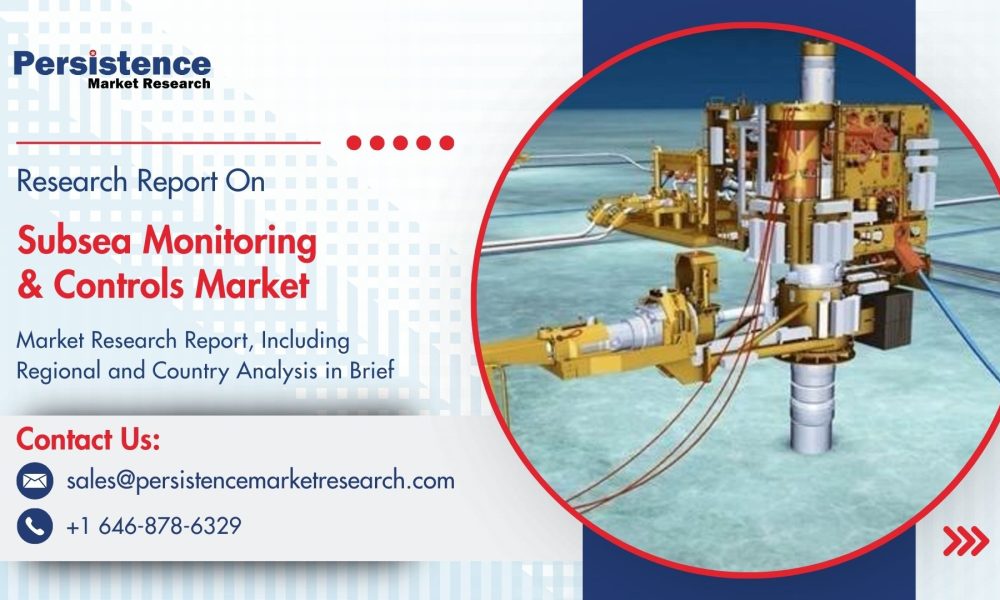
The subsea monitoring & controls market is evolving as a critical segment in the offshore oil and gas industry, playing an essential role in ensuring safe, reliable, and efficient operations under extreme subsea conditions. According to the latest study by Persistence Market Research, the global subsea monitoring & controls market size is likely to be valued at US$ 4.5 billion in 2025 and is projected to reach US$ 6.3 billion by 2032, expanding at a CAGR of 4.9% during the forecast period from 2025 to 2032. This steady growth is primarily driven by rising global energy demand, increasing investments in offshore exploration, and technological advancements in subsea equipment.
Subsea monitoring and control systems are indispensable for managing deepwater and ultra-deepwater production environments where manual operations are impractical. They encompass a range of equipment including subsea control modules, umbilicals, sensors, and topside systems, all designed to ensure safe extraction, production, and processing of hydrocarbons. With offshore reserves becoming increasingly important for global energy security, the reliance on advanced subsea systems is expected to continue growing.
Get a Sample PDF Brochure of the Report (Use Corporate Email ID for a Quick Response): https://www.persistencemarketresearch.com/samples/31606
Key Market Drivers
One of the most significant drivers for the subsea monitoring & controls market is the rising exploration and production (E&P) activity in deepwater and ultra-deepwater reserves. As conventional onshore reserves mature, oil and gas operators are shifting toward offshore fields with complex environments that demand advanced subsea solutions. Monitoring and control systems enable real-time data collection, improved safety, and enhanced asset integrity, making them indispensable for offshore projects.
Another major growth driver is the increasing emphasis on digitalization and automation within the oil and gas sector. Remote monitoring, predictive maintenance, and data-driven decision-making are becoming the norm, reducing downtime and operational risks. Moreover, environmental regulations and safety standards are pushing operators to adopt sophisticated subsea systems that ensure compliance while maximizing productivity.
Growing demand for renewable integration within offshore infrastructure is also contributing to market growth. Hybrid solutions combining traditional oil and gas systems with offshore wind projects are creating new opportunities for subsea monitoring technologies. Additionally, increasing energy investments in regions such as the Gulf of Mexico, the North Sea, and Asia-Pacific further add to the momentum.
Market Challenges
Despite promising growth prospects, the subsea monitoring & controls market faces certain restraints. High initial capital investments required for installing subsea systems remain a barrier, particularly in emerging markets and smaller-scale offshore projects. Maintenance costs and the need for highly skilled personnel add to the complexity of adoption.
Volatility in crude oil prices also poses a significant challenge. A decline in oil prices often leads to reduced offshore investments, directly affecting demand for subsea monitoring equipment. Furthermore, geopolitical uncertainties and regulatory challenges in specific offshore regions can delay or restrict exploration activities, impacting overall market performance.
Market Opportunities
The market presents vast opportunities for expansion, particularly with the rising adoption of digital twin technology and advanced sensor integration. These technologies allow operators to simulate subsea conditions, predict failures, and optimize performance, thereby reducing operational risks. Emerging innovations such as fiber optic sensors, wireless communication technologies, and AI-powered predictive monitoring are opening new frontiers in subsea operations.
Growing demand in developing regions such as Asia-Pacific, Latin America, and Africa offers significant potential for market players. These regions are witnessing increased offshore exploration activities driven by rising energy needs and government support for oil and gas projects. Expanding applications in offshore renewable energy projects and subsea processing further create additional revenue streams for manufacturers and service providers.
Market Segmentation
The subsea monitoring & controls market is segmented into system type, component, water depth, application, and region.
By System Type:
The market is divided into topside control systems and underwater control systems. Topside control systems play a key role in managing communication and power supply between offshore platforms and subsea equipment, while underwater systems are critical for executing operations under high-pressure subsea environments.
By Component:
Key components include subsea control modules, umbilicals, umbilical termination assemblies (UTAs), sensors, and master control stations. Subsea control modules form the backbone of the system by managing valves and flowlines, whereas sensors are increasingly being integrated for real-time monitoring of temperature, pressure, and flow. Umbilicals and UTAs ensure seamless transmission of power, fluids, and signals from topside platforms to subsea equipment.
By Water Depth:
Segmentation by water depth includes shallow water, deep water, and ultra-deepwater. While shallow water projects dominate in terms of installed capacity, the deepwater and ultra-deepwater segments are expected to register higher growth due to rising exploration in these areas. Increasing reliance on advanced subsea technologies makes deep and ultra-deepwater applications especially lucrative for market participants.
By Application:
Applications span production, processing, and other areas such as drilling support. Production remains the largest segment, driven by the growing demand for continuous hydrocarbon output from offshore fields. Processing applications are also witnessing growth with the adoption of subsea separation and boosting technologies that improve efficiency and reduce costs.
By Region:
North America, Europe, Asia-Pacific, Latin America, and the Middle East & Africa represent the major regional markets. North America, particularly the Gulf of Mexico, holds a significant share owing to large-scale offshore projects and advanced technological adoption. Europe, led by the North Sea, continues to be a mature market with strong investments in subsea infrastructure. Asia-Pacific is projected to grow at the fastest pace, driven by increasing exploration in countries like China, India, and Malaysia. Latin America, with its vast reserves in Brazil, and the Middle East & Africa are also emerging as important contributors to global growth.
For Customized Insights on Segments, Regions, or Competitors, Request Personalized Purchase Options @ https://www.persistencemarketresearch.com/request-customization/31606
Company Insights
The competitive landscape of the subsea monitoring & controls market is highly dynamic, with global players focusing on technological innovation, strategic collaborations, and regional expansion to gain an edge. These companies provide a wide range of subsea solutions catering to different offshore environments and applications.
✦ TechnipFMC
✦ Baker Hughes
✦ Halliburton
✦ Kongsberg Gruppen
✦ Aker Solutions
✦ Siemens
✦ FMC Technologies
✦ Proserv
✦ Oceaneering
✦ Cameron International
✦ Others
Leading players are investing heavily in research and development to integrate advanced sensors, digital twin solutions, and predictive analytics into their offerings. Strategic partnerships with oilfield operators and government contracts are further strengthening their market positions. Companies are also expanding their footprints in emerging regions through acquisitions, joint ventures, and local manufacturing facilities to meet rising demand.
Future Outlook
The future of the subsea monitoring & controls market looks promising, with steady growth anticipated as offshore exploration and production continue to rise. The integration of smart technologies such as artificial intelligence, machine learning, and the Internet of Things (IoT) is expected to revolutionize subsea operations, enabling real-time insights, improved safety, and greater efficiency.
As oil and gas companies increasingly prioritize sustainability, the role of subsea monitoring systems in reducing environmental risks will become more significant. Integration with offshore renewable energy infrastructure and growing demand for subsea processing solutions will further diversify the market. Additionally, as global energy demand continues to climb, investments in offshore reserves—particularly in deepwater and ultra-deepwater—are expected to sustain demand for advanced monitoring and control systems.
In conclusion, the global subsea monitoring & controls market is set to expand from US$ 4.5 billion in 2025 to US$ 6.3 billion by 2032, growing at a CAGR of 4.9%. Rising offshore exploration, technological advancements, and the growing emphasis on safety and efficiency are the primary growth drivers. While challenges such as high capital costs and oil price volatility remain, opportunities in digitalization, subsea processing, and emerging offshore markets offer immense growth potential. With increasing adoption of smart technologies and expanding applications across regions, the subsea monitoring & controls market is poised to play a pivotal role in shaping the future of offshore energy production.
Explore the Latest Trending Research Reports:




