
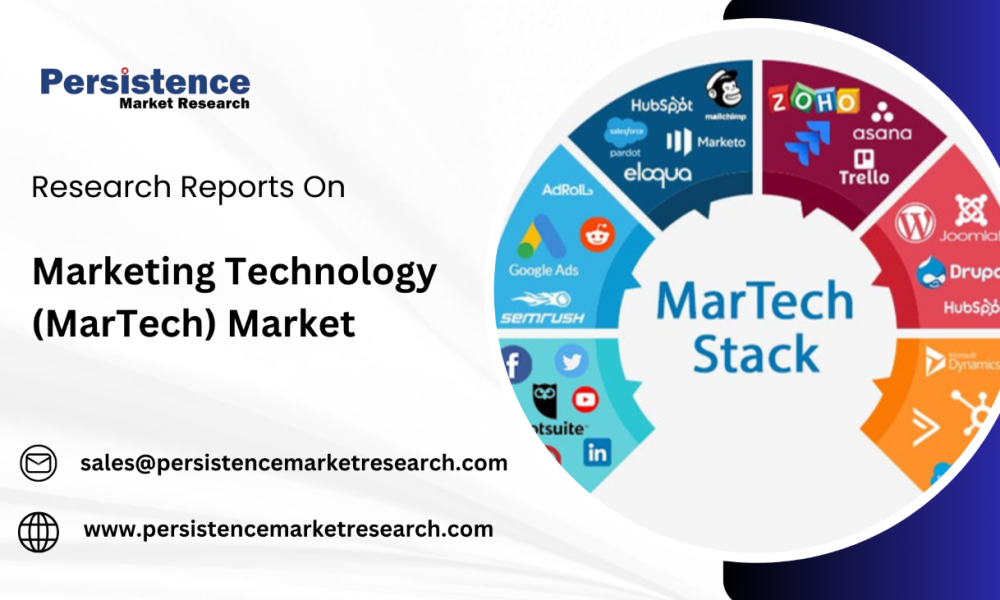
The marketing technology (MarTech) market has emerged as one of the fastest-growing sectors in the global digital economy. With businesses racing toward digitization, data-driven decision-making, and customer-centric strategies, MarTech is no longer optional—it has become essential. According to recent projections, the global MarTech market is estimated to reach a staggering valuation of US$ 2,015.3 billion by 2031, expanding from US$ 384.5 billion in 2024 at an impressive CAGR of 26.7% during 2024–2031.
This rapid surge highlights how deeply marketing technology is transforming the way organizations engage customers, measure performance, and deliver personalized experiences. Below, we explore the major drivers, trends, challenges, and opportunities shaping this market’s future.
What is Marketing Technology (MarTech)?
Marketing technology, or MarTech, refers to the software and tools marketers use to plan, execute, analyze, and optimize marketing campaigns. These solutions encompass everything from email automation and customer relationship management (CRM) to artificial intelligence (AI)-driven analytics and omnichannel campaign platforms.
At its core, MarTech is designed to enhance customer acquisition, engagement, and retention by blending creativity with data science. With increasing emphasis on digital-first strategies, businesses are investing heavily in advanced MarTech stacks that combine automation, personalization, and predictive analytics.
Market Growth Snapshot
- Market Size in 2024: US$ 384.5 Bn
- Market Size in 2031: US$ 2,015.3 Bn
- Forecast CAGR (2024–2031): 26.7%
- Historical CAGR (2019–2023): 22.5%
The growth trajectory reflects how MarTech has matured from a supporting tool into a strategic necessity. Notably, digital marketing alone accounts for about 64% of the total MarTech market share, showing the dominance of online-first strategies in brand growth.
Key Highlights Driving the MarTech Market
- Shift Toward Digital Transformation
Organizations are rethinking their customer engagement strategies, prioritizing automation, personalization, and real-time communication. The rise of e-commerce, remote work, and online customer touchpoints is fueling demand for MarTech adoption across industries. - Omnichannel Marketing Strategies
The ability to provide seamless customer experiences across channels—social media, email, in-store, mobile, and websites—is critical. Omnichannel marketing has become a cornerstone, enabling businesses to unify data and deliver consistent messaging. - Social Media Marketing’s Dominance
Social platforms continue to play a crucial role, accounting for nearly 25% of the global MarTech market share. With billions of users engaging daily, tools for social listening, influencer collaboration, and targeted ads are seeing exponential growth. - Regional Leadership
North America leads the MarTech market with 35% global share, driven by the presence of large-scale tech providers, early adoption of digital strategies, and a thriving start-up ecosystem. - Consolidation in the Market
IT companies are strengthening their MarTech portfolios through both organic innovation and inorganic acquisitions, expanding into design and campaign management capabilities.
Trends Reshaping the MarTech Landscape
- AI and Machine Learning at the Core
Artificial intelligence (AI) is revolutionizing how businesses analyze data, predict customer behavior, and automate campaigns. From chatbots and recommendation engines to predictive analytics, AI enables marketers to scale personalization like never before.
- Hyper-Personalization
Generic ads no longer resonate with customers. Advanced MarTech tools help marketers tailor campaigns at an individual level—leveraging behavioral insights, location data, and purchase history to deliver relevant messaging in real time.
- Customer Data Platforms (CDPs)
Data silos remain a challenge, and CDPs are rising as a solution by unifying customer information from multiple sources. This empowers marketers to create 360-degree customer profiles, leading to better targeting and retention strategies.
- The Rise of Influencer and Social Commerce
MarTech tools are increasingly supporting creator-driven marketing. Integration of influencer tracking, ROI measurement, and shoppable social posts is blurring the line between social engagement and direct sales.
- Privacy-First Marketing
With regulations like GDPR and CCPA, companies are focusing on privacy-first strategies. Consent management platforms, cookieless tracking, and first-party data solutions are becoming standard in modern MarTech stacks.
- Integration of AR/VR and Metaverse Marketing
Emerging technologies like augmented reality (AR) and virtual reality (VR) are opening new ways to interact with customers. From virtual try-ons to immersive brand experiences in the metaverse, these technologies are gaining ground.
Elevate your business strategy with comprehensive market data. Request a sample report now: https://www.persistencemarketresearch.com/samples/34700
Market Segmentation Insights
By Type
- Digital Marketing: ~64% market share (dominant segment)
- Traditional Marketing Tools
Digital channels—including SEO, paid ads, email, and social campaigns—continue to dominate spending, reflecting businesses’ focus on measurable ROI.
By Channel
- Social Media Tools: 25% market share
- Email Marketing Platforms
- Search and SEO Tools
- Content Marketing Platforms
- Mobile and App-based Tools
Social platforms remain critical due to their massive global reach and ability to drive both awareness and conversion.
By Region
- North America: 35% market share
- Europe: Strong adoption driven by data regulations and consumer awareness
- Asia-Pacific: Fastest growth due to booming e-commerce and mobile-first consumers
- Latin America & Middle East: Gradual adoption with rising digital literacy
Challenges in the MarTech Market
Despite its rapid growth, the MarTech industry faces challenges:
- Integration Complexities
Many businesses struggle to integrate multiple tools into a cohesive ecosystem, leading to inefficiencies. - High Costs of Adoption
Small and medium enterprises (SMEs) often find advanced MarTech solutions cost-prohibitive. - Data Privacy and Compliance
Navigating stringent global privacy regulations requires constant adaptation. - Talent Shortage
The need for skilled MarTech professionals who can manage both technical and creative aspects continues to grow.
Opportunities Ahead
- SME Adoption
Affordable, SaaS-based MarTech platforms designed for SMEs present massive growth opportunities. - AI-Powered Automation
AI-driven tools for automated campaign management and content creation will reshape the competitive landscape. - Emerging Markets
Countries in Asia-Pacific, Africa, and Latin America are witnessing rapid digital adoption, presenting untapped potential for MarTech providers. - Sustainability and Green Marketing
With rising environmental consciousness, MarTech tools that help brands track, measure, and market their sustainability efforts will gain traction.
Competitive Landscape
The MarTech market is intensely competitive, featuring global giants and niche innovators. Companies are expanding through mergers, acquisitions, and partnerships to enhance their portfolios. Key players include:
- Salesforce
- Adobe
- Oracle
- HubSpot
- SAP
- IBM
- Microsoft
- Hootsuite
- Mailchimp
These companies continue to invest heavily in AI integration, predictive analytics, and customer experience management platforms.
The Road Ahead: How Businesses Can Prepare
As the MarTech landscape evolves, businesses must adopt proactive strategies to stay ahead:
- Invest in Unified Platforms: Consolidating tools into integrated platforms reduces data silos and enhances efficiency.
- Prioritize Customer Experience: Beyond sales, MarTech should focus on building long-term customer relationships.
- Balance Automation with Creativity: While automation scales efficiency, creativity ensures authentic brand connections.
- Focus on Data Ethics: Building customer trust through transparent and ethical data practices will be key.
- Experiment with Emerging Tech: Businesses should explore AR/VR, AI content generation, and blockchain-based solutions for competitive differentiation.
Conclusion
The global marketing technology (MarTech) market is entering a golden era, poised to grow more than fivefold between 2024 and 2031. Driven by the relentless pace of digital transformation, rising customer expectations, and advanced technologies, MarTech is reshaping how businesses engage audiences and drive growth.
With North America leading adoption and Asia-Pacific emerging as a powerhouse of opportunity, the industry is set for widespread transformation. The integration of AI, omnichannel strategies, and data-driven personalization will define the future of marketing.
Related Reports:




