
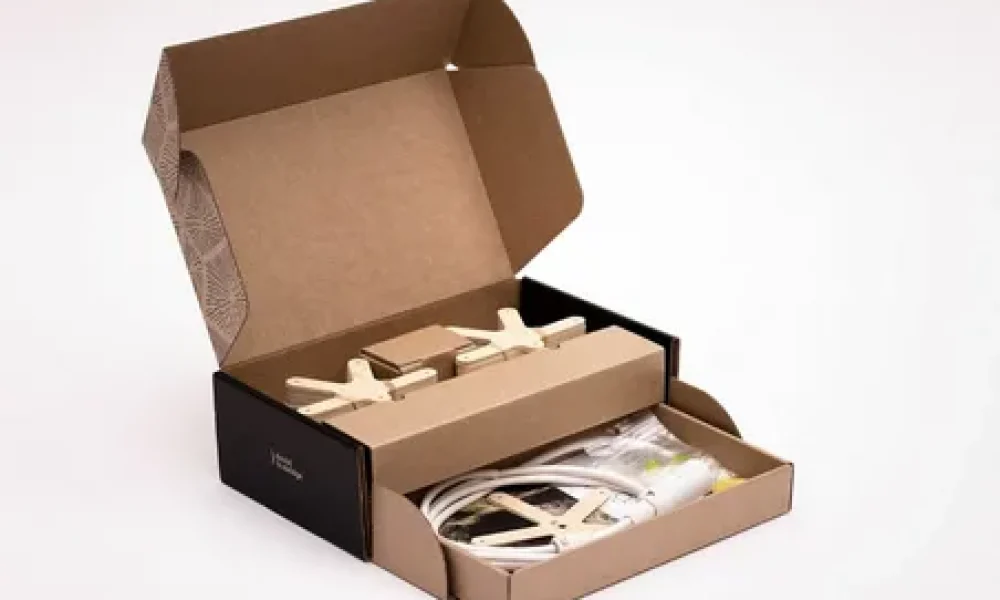
The 3D printed packaging market is charting an impressive growth trajectory, with the industry estimated at USD 1.4 billion in 2025 and projected to reach USD 3.0 billion by 2035. This represents a compound annual growth rate (CAGR) of 7.8% over the forecast period, reflecting a growing global demand for customized, sustainable, and cost-effective packaging solutions. Both established industry giants and emerging innovators are actively investing in advanced technologies to seize new opportunities and redefine the packaging landscape.
Rising Adoption of Customization and Sustainable Packaging Solutions
The global market for 3D printed packaging is expanding as brands increasingly prioritize customization, rapid prototyping, and sustainability. 3D printing allows manufacturers to design lightweight, functional, and visually unique packaging that resonates with modern consumer preferences for eco-friendly and aesthetically appealing products. By integrating additive manufacturing into packaging operations, companies can accelerate design iterations, reduce production waste, and shorten time-to-market, enabling them to respond swiftly to changing consumer demands and regulatory pressures.
The hardware segment, encompassing 3D printers and related equipment, is expected to dominate the market, accounting for 54.6% of the total by 2025. High-precision printers form the backbone of additive manufacturing systems, supporting complex geometries, diverse materials, and reliable production output. Continuous innovations in multi-material and high-speed printers are further cementing hardware as the most critical component of this rapidly evolving market.
Full Market Report available for delivery. For purchase or customization, please request here:
https://www.futuremarketinsights.com/reports/sample/rep-gb-17126
Technological Advancements Driving Market Leadership
Within the technology domain, fused deposition modeling (FDM) is emerging as the leading approach, representing 38.7% of the market by 2025. Its cost-effectiveness, accessibility, and compatibility with biodegradable and recyclable polymers make it an attractive choice for sustainable packaging. FDM supports efficient prototyping and small-batch production, allowing manufacturers to meet the industry’s growing demand for design flexibility and eco-conscious solutions.
In addition, stereolithography (SLA) is gaining traction, especially for applications requiring exceptional precision and accuracy, such as specialized packaging for medical and dental industries. SLA uses lasers to harden photopolymer resins layer by layer, enabling the creation of intricate designs and high-quality prototypes.
Prototyping Remains a Key Application Driver
The prototyping application segment is projected to account for 47.9% of total revenue by 2025, highlighting its critical role in the market. 3D printed prototyping enables brands and manufacturers to validate designs, optimize ergonomics, and test durability before mass production. By reducing development risks and accelerating innovation cycles, prototyping ensures that packaging solutions meet both functional and aesthetic standards. With sustainability and customization increasingly central to competitive advantage, prototyping continues to bridge creativity and performance in the packaging industry.
Sustainability and Efficiency Fuel Market Growth
The growing need for environmentally friendly packaging is a significant driver of 3D printed packaging adoption. Additive manufacturing allows companies to reduce material waste, utilize biodegradable plastics, and incorporate sustainable production methods. As global supply chains increasingly prioritize circular economy practices, 3D printing technology provides a versatile and efficient pathway for brands to meet both environmental and operational goals.
Emerging trends such as hybrid printing, which combines traditional printing techniques with 3D printing, enable the creation of intricate designs and textures at scale. Mass customization is another rising trend, allowing companies to produce one-of-a-kind packaging solutions without the need for expensive tooling, further enhancing operational efficiency and market responsiveness.
Regional Market Insights
North America currently accounts for approximately 33.3% of the global 3D printed packaging market. The region benefits from a mature 3D printing ecosystem, widespread adoption across industries such as automotive, aerospace, healthcare, and consumer goods, and a strong emphasis on sustainable packaging solutions. Europe, led by key markets in the United Kingdom, Germany, and France, also shows robust growth potential, driven by established 3D printing companies, government support for innovation, and demand for customized and eco-friendly packaging solutions.
Asia-Pacific is emerging as one of the fastest-growing markets, with a projected CAGR of 21.6%. Rising disposable incomes, changing consumer preferences, and rapid industrialization in countries like China and Japan are boosting demand for innovative packaging. The region’s expanding manufacturing capabilities and technical advancements further support adoption of 3D printing technologies for packaging applications.
Get the Report Brochure Now:
https://www.futuremarketinsights.com/reports/brochure/rep-gb-17126
Competitive Landscape: Established Leaders and Emerging Innovators
The 3D printed packaging market features a competitive mix of established global players and agile new entrants. Leading companies include Stratasys Ltd., 3D Systems Corporation, EOS GmbH, Materialise NV, Arcam AB, and SLM Solutions Group AG. These players have robust portfolios of 3D printing solutions, and they are actively investing in research and development to enhance product offerings and maintain market leadership.
At the same time, innovative startups and SMEs are entering the market, focusing on niche applications, cost-effective solutions, and specialized packaging needs. Strategic partnerships, such as HP Inc.’s collaboration with BASF SE to develop sustainable 3D printing solutions, and acquisitions, including 3D Systems’ purchase of AI-driven software provider Oqton Inc., exemplify how companies are expanding capabilities, enhancing technological expertise, and growing market share.
Imaginarium, a global leader in 3D printing solutions, recently unveiled a new range of desktop and industrial 3D printers in partnership with Ultimaker, demonstrating how collaboration and innovation continue to shape the industry.
Outlook for the 3D Printed Packaging Market
The future of the 3D printed packaging market looks promising, with growth driven by increasing demand for sustainable solutions, rapid prototyping, and mass customization. Advances in material science, additive manufacturing, and digital platforms are creating new opportunities across food, beverage, cosmetics, pharmaceutical, and industrial sectors. Companies that invest strategically in hardware, software, and prototyping technologies are likely to gain a competitive edge, reduce lead times, enhance supply chain efficiency, and meet evolving consumer expectations.
As the market continues to mature, 3D printing is not merely a production method—it is a transformative technology enabling innovative packaging design, sustainable practices, and efficient manufacturing. Both established manufacturers and emerging players stand to benefit from its adoption, setting the stage for a dynamic, competitive, and highly innovative global packaging industry over the next decade.



