
The global natural language understanding (NLU) market is on the brink of extraordinary growth, powered by the rising convergence of artificial intelligence (AI), Internet of Things (IoT), and advanced connectivity like 5G. According to recent projections, the natural language understanding (NLU) market is set to achieve a value of US$ 13.7 billion by 2024 and will likely expand at a robust CAGR of 22.5% to reach US$ 56.7 billion by 2031. This surge reflects not only the growing reliance on conversational AI and automated systems but also the increasing demand for multilingual, multimodal, and real-time language processing technologies across industries.
Understanding NLU: The Backbone of Conversational AI
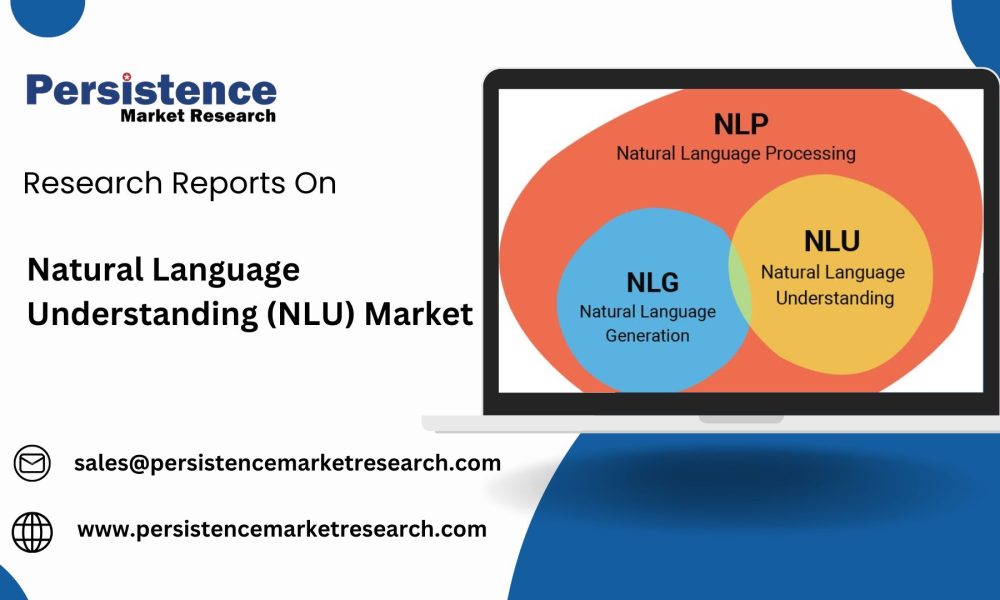
Natural language understanding (NLU) is a subfield of natural language processing (NLP) that focuses on enabling machines to interpret, comprehend, and derive meaning from human language. Unlike basic NLP, which primarily identifies patterns and structures in text, NLU dives deeper into semantics, context, intent, and emotions behind language.
Applications of NLU include:
- Conversational AI systems such as chatbots and virtual assistants.
- Voice interfaces in smart devices.
- Text analytics for extracting insights from unstructured data.
- Sentiment analysis in customer experience platforms.
- Language translation and multilingual systems for global communication.
As enterprises worldwide lean heavily on automation, NLU becomes a pivotal technology in ensuring smooth, human-like interactions between systems and users.
Market Size and Forecast
The global NLU market demonstrates tremendous potential. With a valuation of US$ 13.7 billion in 2024, the industry is expected to quadruple in size to US$ 56.7 billion by 2031, expanding at a 22.5% CAGR during the forecast period.
Several factors underpin this rapid expansion:
- Rising adoption of IoT devices: As IoT ecosystems proliferate, seamless human-device communication becomes critical.
- 5G connectivity: Ultra-fast networks enable real-time, edge-based language processing.
- Generative NLU models: These advanced AI models enhance automation, content creation, and decision-making.
- Multilingual and multimodal systems: They meet the needs of global enterprises and diverse linguistic markets.
Notably, over 60% of enterprises are expected to leverage generative NLU models by 2031, and edge-based NLU deployments will likely power 70% of conversational AI systems.
Key Market Trends Driving Growth
- Rise of Multimodal AI
The future of NLU goes beyond text. Multimodal AI systems combine text, voice, and image inputs, delivering more natural and contextually aware interactions. From healthcare diagnostics to customer support, these systems ensure that AI understands not just what is being said, but also how and why.
- Generative NLU Models in Automation
Generative models like GPT-4 and beyond are reshaping the NLU space. Enterprises are increasingly adopting such models for content management, workflow automation, and personalized recommendations. By 2031, over 60% of enterprises are projected to integrate generative NLU into core operations.
- Edge-based Deployments
With data privacy concerns and the demand for faster processing, edge computing is becoming the standard for NLU. Reports suggest that 70% of conversational AI systems will be powered by edge-based NLU by 2031, reducing latency and enhancing user experience.
- Multilingual Systems for Global Expansion
Globalization requires AI systems to break language barriers. By 2030, multilingual NLU systems are expected to dominate 80% of AI-powered communication solutions. This will be crucial for companies expanding into emerging markets where regional and low-resource languages play a vital role.
- Focus on Text Analysis Applications
The text analysis segment is poised to hold 27.8% of the market share during the forecast period. Businesses are increasingly investing in NLU-driven analytics to extract actionable insights from unstructured data like emails, reviews, and social media posts.
Elevate your business strategy with comprehensive market data. Request a sample report now: https://www.persistencemarketresearch.com/samples/34995
Market Share Analysis by Application
- Conversational AI & Chatbots
- Dominating enterprise deployments.
- Used in customer service, HR management, and sales automation.
- Voice-enabled Devices
- Integration in IoT devices, cars, and smart homes.
- Growth tied to 5G and rising adoption of voice-first interfaces.
- Text Analysis & Sentiment Detection
- Helps enterprises understand customer behavior and market sentiment.
- Vital in sectors like retail, finance, and healthcare.
- Translation & Multilingual Communication
- Expanding with cross-border trade and e-commerce.
- Essential for businesses scaling across diverse regions.
Regional Insights
North America
North America remains the largest NLU market, driven by high technology adoption, robust AI investments, and widespread use of smart assistants like Alexa and Siri. Enterprises in finance, healthcare, and e-commerce are early adopters.
Europe
Europe’s growth is fueled by stringent data privacy regulations and a focus on multilingual support. Countries like Germany, France, and the UK are spearheading adoption in industries such as automotive and BFSI.
Asia-Pacific
The fastest-growing region, thanks to expanding IoT ecosystems, digital transformation, and regional language diversity. Countries like India, China, and Japan are investing heavily in NLU for customer engagement and smart city projects.
Middle East & Africa
Adoption is rising in smart city initiatives, telecom, and government services. Growth is supported by high smartphone penetration and AI-driven national strategies.
Latin America
A growing e-commerce sector and focus on Spanish and Portuguese language systems are driving investments in NLU technologies.
Growth Drivers
- IoT and Smart Device Proliferation
IoT devices need intuitive language interfaces to ensure seamless usability. - Advances in AI & Machine Learning
Transformer-based models, self-supervised learning, and generative AI improve contextual understanding. - 5G Rollout
High-speed networks enable real-time conversational systems. - Data Explosion
Massive unstructured data across industries drives the need for advanced NLU-powered analytics. - Consumer Demand for Personalization
Businesses rely on NLU to deliver personalized experiences at scale.
Challenges in the NLU Market
Despite rapid growth, the NLU market faces several challenges:
- Language and Dialect Diversity: Building systems for low-resource languages remains complex.
- Bias and Fairness: AI models often struggle with cultural nuances and inclusivity.
- Data Privacy & Security: Concerns around storing and processing sensitive data persist.
- High Computational Costs: Training advanced NLU models requires significant resources.
Addressing these issues will be critical for ensuring equitable and sustainable market growth.
Future Outlook
The NLU market is set to transform digital communication over the next decade. By 2031, expect:
- Widespread enterprise adoption of generative and multimodal NLU systems.
- Regional language solutions empowering diverse markets.
- Edge-based, privacy-focused deployments dominating conversational AI.
- NLU-powered decision-making across industries from healthcare to finance.
As businesses compete in a digital-first world, NLU will evolve from being a support tool to becoming the core enabler of human-machine collaboration.
Conclusion
The global natural language understanding (NLU) market is entering a phase of accelerated growth, forecasted to rise from US$ 13.7 billion in 2024 to US$ 56.7 billion by 2031. Fueled by the rise of multimodal AI, generative models, IoT adoption, and 5G, NLU is rapidly transforming into a cornerstone of modern enterprise operations.
With multilingual systems poised to dominate AI communications and text analysis applications securing nearly 28% market share, the opportunities ahead are immense. However, addressing challenges around language diversity, bias, and data privacy will be crucial for sustainable development.
Ultimately, the future of NLU promises smarter, more inclusive, and contextually aware systems that redefine how humans interact with technology. For enterprises and innovators alike, investing in NLU today is a step toward building intelligent, globally connected ecosystems of tomorrow.
Related Reports:




