
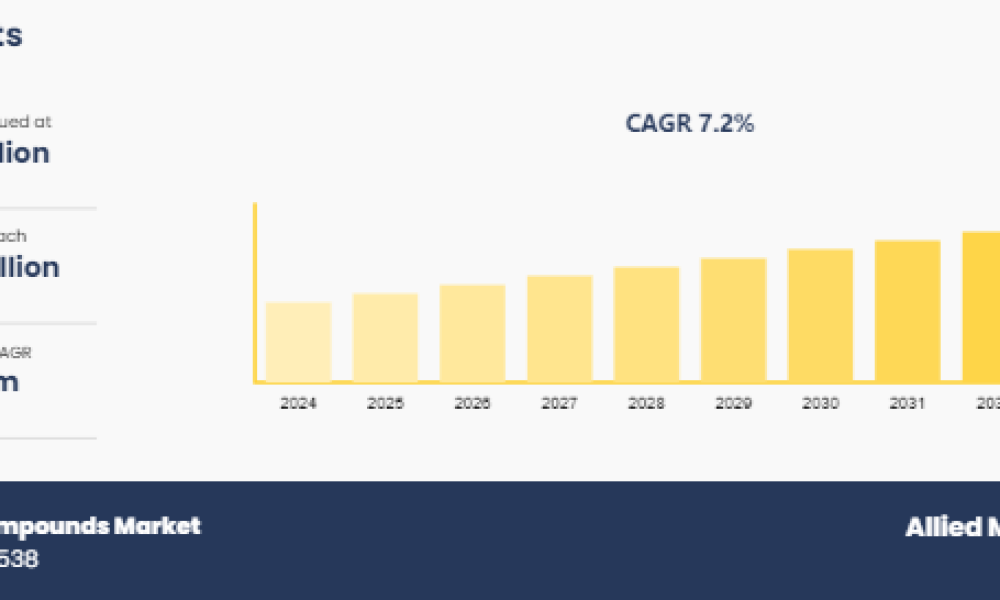
The global vinca alkaloid compounds market is poised for strong growth over the next decade, fueled by the escalating global cancer burden, breakthroughs in pharmaceutical research, and increasing investment in oncology treatment. Valued at $81.0 million in 2023, the market is projected to reach $161.5 million by 2033, growing at a healthy CAGR of 7.2% from 2024 to 2033.
These plant-derived anticancer agents remain a cornerstone of chemotherapy regimens worldwide, with demand bolstered by rising cancer prevalence, expanding geriatric populations, and growing adoption of advanced drug delivery technologies.
Get a Sample Copy of this Report: https://www.alliedmarketresearch.com/request-sample/A324538
Market Introduction and Definition
Vinca alkaloids are a class of naturally occurring compounds extracted from the Madagascar periwinkle plant (Vinca rosea). The most widely used include:
Vinblastine
Vincristine
Vinorelbine
Vindesine
These compounds function by disrupting microtubule formation—a process essential for cell division—thereby halting the proliferation of cancer cells. They are effective against various malignancies such as:
Leukemias and lymphomas
Breast cancer
Lung cancer
Certain pediatric cancers
Despite side effects like peripheral neuropathy and bone marrow suppression, continuous R&D efforts aim to improve safety profiles and enhance therapeutic effectiveness.
Key Takeaways from the Market Study
Analysis covers 20 countries, with segmentation by product type, end user, and region.
Insights drawn from 1,500+ industry reports, scientific journals, and government databases.
Provides an independent, data-backed perspective to guide strategic decision-making for stakeholders.
Key Market Dynamics
Growth Drivers
Rising Global Cancer Incidence
Cancer remains a leading cause of mortality worldwide. According to the Leukemia & Lymphoma Society (2023), a new diagnosis of leukemia, lymphoma, or myeloma occurs approximately every 3 minutes in the U.S. alone. The growing prevalence across both developed and developing nations continues to drive demand for effective chemotherapeutic agents like vinca alkaloids.Advancements in Drug Development
Pharmaceutical innovations are improving drug delivery and tolerability. For instance, the Therapeutic Advances in Childhood Leukemia & Lymphoma (TACL) consortium is piloting the use of vincristine sulfate liposome injection (Marqibo) as part of combination chemotherapy for relapsed acute lymphoblastic leukemia in young patients—offering potentially improved safety and efficacy.Geriatric Population Growth
The elderly population, at higher risk for cancer, is expanding rapidly. According to the United Nations Population Fund, India’s elderly population is projected to more than double from 153 million in 2023 to 347 million by 2050, boosting oncology treatment demand.
Market Restraints
High toxicity levels and adverse side effects may limit patient compliance. Additionally, healthcare systems in low-income regions may face accessibility and affordability challenges for advanced vinca-based therapies.
Opportunities
Growing focus on targeted cancer therapies, novel formulations (such as liposomal drug delivery), and biotechnology-driven drug enhancements present lucrative opportunities. Combining vinca alkaloids with modern immunotherapies may unlock synergistic treatment pathways.
Global Cancer Landscape and Impact on the Market
Top 10 Cancer Types by Prevalence (Global):
Breast Cancer – 12.5% of total cases
Lung Cancer – 12.2%
Colorectal Cancer – 10.7%
Prostate Cancer – 7.8%
Stomach Cancer – 6%
Liver Cancer – 5%
Cervix Uterine Cancer – 3.3%
Oesophageal Cancer – 3.3%
Thyroid Cancer – 3.2%
Bladder Cancer – 3.2%
With cancers like leukemia, lymphoma, and breast cancer seeing steady incidence rates, demand for vinca alkaloid compounds is expected to remain strong, particularly as these agents form the backbone of many standard chemotherapy protocols.
Market Segmentation
By Product Type:
Vinblastine
Vincristine
Vinorelbine
Vindesine
By End User:
Hospitals
Clinics
Academic & Research Institutes
By Region:
North America – Leading market in 2023 due to high cancer prevalence, advanced healthcare infrastructure, and robust oncology R&D funding.
Europe – Benefiting from initiatives like Horizon Europe, which funds cancer research programs across the EU.
Asia-Pacific – Expected to see the fastest growth, fueled by large patient pools in China, India, and Japan, alongside improving healthcare infrastructure.
LAMEA – Gradually expanding as cancer awareness and screening rates improve.
Industry Trends
Precision Oncology Integration – Combining vinca alkaloids with molecularly targeted agents for more personalized treatment.
Liposomal Formulations – Such as Marqibo, improving drug delivery and reducing systemic toxicity.
Biotechnology Partnerships – Collaborations between pharma companies and research institutions to develop novel vinca derivatives with improved efficacy.
Clinical Pipeline Expansion – Multiple ongoing trials exploring vinca alkaloids in combination with immunotherapies and targeted drugs.
Competitive Landscape
Major players include:
Accord Healthcare Limited
Eli Lilly and Company
Fresenius Kabi AG
Pfizer Inc.
Pierre Fabre S.A.
Teva Pharmaceutical Industries Limited
Viatris Inc.
Jiangsu Hansoh Pharmaceutical Group Co., Ltd.
Talon Pharmaceuticals
Medline Industries, LP
These companies are focusing on R&D investments, strategic partnerships, and portfolio diversification to capture a larger market share.
Future Outlook
By 2033, the vinca alkaloid compounds market is expected to benefit from:
Integration with targeted therapies to improve outcomes and reduce toxicity.
Increased global clinical trial activity exploring new indications beyond traditional cancers.
Policy support for cancer care access in emerging economies.
The combination of robust clinical demand and innovation-driven supply ensures that vinca alkaloids will remain integral to oncology treatment regimens for years to come.




