
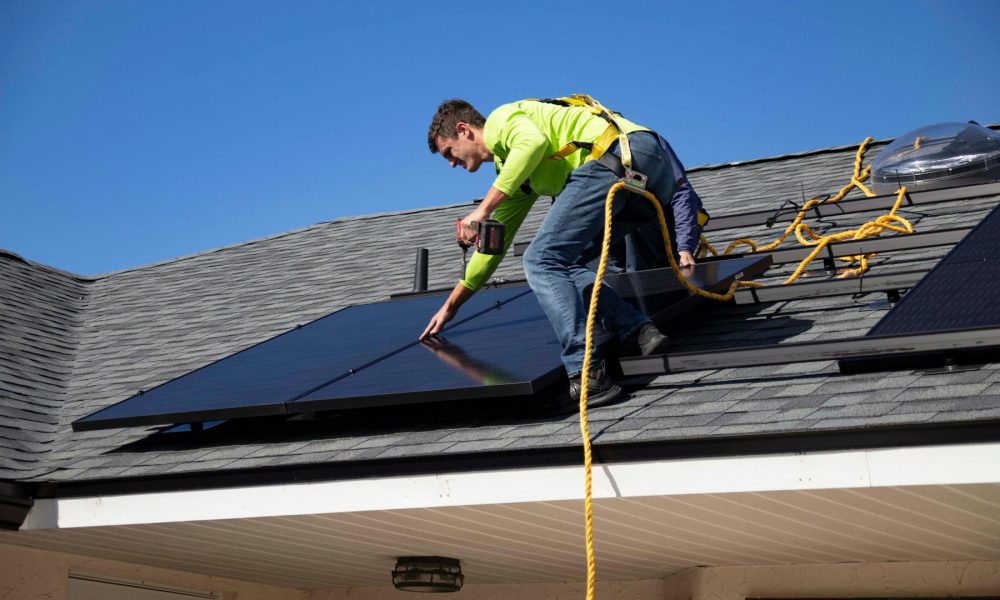
When homeowners first consider solar power, their initial thought often revolves around the upfront cost. It’s a significant investment, and it’s natural to wonder if it’s truly worth it. But thinking about solar panels merely as an expense is like thinking of a house only by its down payment. The real story is in the long-term value.
Going solar is about making a fundamental shift from being a lifelong renter of electricity from a utility company to an owner of your own personal power plant. While the initial investment is real, the long-term financial picture for homeowners who install residential solar panels is incredibly bright. The savings are not just about one thing; they are a powerful combination of reduced bills, valuable incentives, and future-proofed finances.
If you’re wondering how that initial investment translates into real, long-term savings, here are five key ways solar panels pay you back.
1. Drastically Reducing or Eliminating Your Electric Bill
This is the most direct and immediate benefit. From the moment your system is turned on, you are generating your own electricity. Every kilowatt-hour your panels produce is a kilowatt-hour you don’t have to buy from the utility company. During the day, your home can run directly on the power generated by the sun.
For many homeowners, this can reduce their monthly electric bill to a small, flat connection fee. In many cases, it can be eliminated entirely or even become negative, meaning the utility company owes you money.
2. Cashing in on Tax Credits and Incentives
To encourage the adoption of clean energy, federal, state, and local governments offer powerful financial incentives that can significantly cut the net cost of your system. The most significant of these is the federal Solar Investment Tax Credit (ITC).
This allows you to claim a percentage of your total system cost as a direct credit on your federal income taxes, effectively giving you a massive discount on the installation. As explained in the U.S. Department of Energy’s homeowner’s guide, this isn’t a deduction; it’s a dollar-for-dollar reduction in the taxes you owe. Many states and local utility companies also offer their own cash rebates, tax credits, or other incentives that can be stacked on top of the federal credit, further reducing your out-of-pocket cost.
3. Protecting Yourself Against Rising Energy Costs
Your utility bill has likely been going up over the years, and that trend isn’t expected to change. Electricity rates are volatile and historically rise over time due to inflation, fuel costs, and infrastructure upgrades. When you’re buying power from the grid, you are completely exposed to these price hikes.
Installing solar panels is like getting a fixed-rate mortgage for your electricity. Once your system is installed (and especially once it’s paid off), the cost of your energy is locked in. The fuel source—the sun—is free. For the 25- to 30-year lifespan of your panels, you are protected from the inevitable rise in utility rates, saving you an exponential amount of money over the decades.
4. Increasing Your Home’s Value
Solar panels are a home improvement that pays you back when it’s time to sell. In the past, buyers might have been unsure about homes with solar, but today, they are seen as a significant upgrade. A home with a solar energy system already installed is highly attractive because the new owner gets all the benefits of lower electricity bills without having to manage the initial installation.
Multiple studies have confirmed this financial benefit. More recent research from real estate marketplace Zillow has shown that homes with solar panels can sell for a significant premium over comparable homes in the same neighborhood. It’s a tangible asset that adds real, measurable value to your property.
5. Earning Income from Your Excess Power
In many areas, your solar panels can become a source of passive income through programs like Net Metering and Solar Renewable Energy Certificates (SRECs).
During sunny days, your system will often produce more electricity than your home uses. With net metering, that excess power is sent back to the grid, and your utility meter effectively spins backward. The utility company is required to credit you for the power you provide, which can be used to offset any electricity you draw from the grid at night.
In certain states, you earn one SREC for every 1,000 kilowatt-hours (or 1 megawatt-hour) your system generates. You can then sell these certificates on an open market to utilities, which need them to meet state-mandated renewable energy goals. It’s another way your system can actively put money back in your pocket.
When you look at the full picture, solar panels are one of the smartest financial investments a homeowner can make. They are a powerful tool for reducing monthly expenses, mitigating future risks, and increasing the value of your most important asset.




