
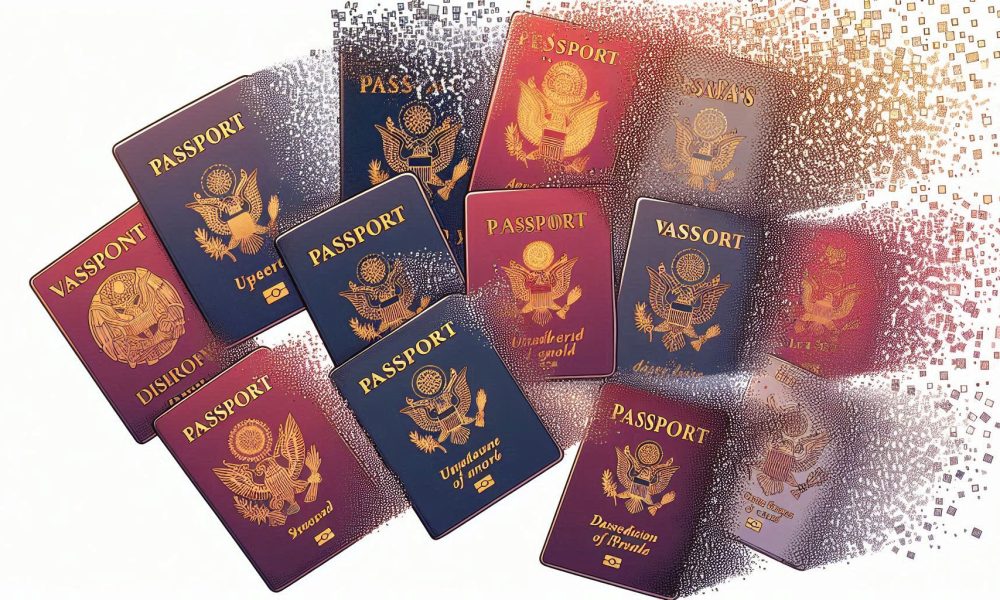
Vancouver, British Columbia — July 23, 2025 — Amicus International Consulting, a global authority on legal identity change, privacy strategy, and relocation services, has released a new special report titled “Digital Ghosting: How Modern Fugitives Evade Surveillance and Live Anonymously.” The investigation sheds light on the evolving tactics that individuals use to elude detection in an era dominated by biometric databases, global data sharing, and real-time digital surveillance.
Despite unprecedented levels of state and corporate surveillance in 2025, fugitives, whistleblowers, political dissidents, and privacy seekers continue to find ways to disappear. This process—known in intelligence circles as “digital ghosting”—relies not on deception alone but on a sophisticated suite of behavioural, technical, and legal tools that sever the digital breadcrumbs of everyday life.
The Surveillance State: Why It’s Harder Than Ever to Hide
From facial recognition at airport gates to license plate readers on suburban roads, the modern individual is tracked through a constellation of sensors. Smartphones emit location data, banking activity leaves a trail of metadata, and artificial intelligence now helps governments correlate disparate pieces of information into predictive behavioural models.
For fugitives, avoiding this net of surveillance requires understanding how it operates. That means blocking not just active monitoring but also passive data collection—from third-party cookies and GPS pings to metadata transmitted through seemingly innocuous interactions, such as restaurant reservations and online reviews.
Digital Ghosting Explained: What It Means to Disappear Online
Digital ghosting refers to the intentional removal or non-creation of digital signals that can be used to identify, locate, or track an individual. It’s not as simple as deleting social media. It involves avoiding digital payments, creating air gaps between devices, and managing your physical presence in a way that aligns with low-digital or no-digital activity.
A successful digital ghost must not only erase old data but also manage new footprints. The best practitioners reenter society under new, legally obtained identities, leveraging privacy-by-design jurisdictions and international protections to maintain anonymity.
Burner Devices and Non-Attributable Communications
One of the cornerstones of digital ghosting is the use of non-attributable hardware—specifically “burner” phones, laptops, and modems that are not tied to any identifiable identity. These devices are often purchased using cash in regions with lax ID requirements.
Fugitives rotate devices frequently and use cloned MAC addresses to confuse network logs. Communications are conducted through encrypted apps with disappearing messages, often utilizing multiple layers of end-to-end encryption. They use dead-drop email services or pre-agreed timed digital exchanges that do not require live messaging.
VPNs, Onion Routing, and Obfuscation Networks
To shield IP addresses, digital ghosts employ multiple layers of virtual private networks (VPNs) combined with onion routing via Tor or decentralized networks like I2P. While most average users may use a single VPN, fugitives stack several—ideally from different jurisdictions—to create layers of plausible deniability.
They also utilize obfuscation tools that mimic normal web traffic, confusing detection systems that filter Tor or VPN connections. In some cases, advanced users build their own private networks on top of rented server infrastructure in data centers worldwide.
Financial Invisibility: Cryptocurrencies, Privacy Coins, and Shell Entities
Cash remains king for most fugitives, but when electronic payments are unavoidable, cryptocurrencies—especially privacy coins like Monero and Zcash—are used. These currencies allow for anonymous transfers that are difficult to trace due to their unlinked public keys and non-transparent blockchain structure.
Some digital ghosts fund their lives through third-party shell corporations, crypto mixers, or prepaid debit cards purchased anonymously through intermediaries. Others leverage decentralized finance (DeFi) protocols to earn passive income or transfer funds internationally without relying on the regulated banking system.
Physical Counter-Surveillance: Blocking Cameras, Avoiding Biometrics
Avoiding the digital world also means managing the physical one. Advanced evasion tactics include using IR LED clothing to blind surveillance cameras or using transparent facial masks that confuse facial recognition systems. Some fugitives wear carefully styled wigs and fake eyeglasses to alter facial geometry.
At border crossings, fugitives often avoid countries that rely on facial biometric matching or fingerprint scanning. In rare cases, individuals undergo plastic surgery or use prosthetics to alter their appearance, preventing accurate biometric matching subtly.
Case Study: The Shadow Trader Who Operated on Encrypted Platforms
In 2019, an international equity trader who defrauded clients of over $40 million vanished days before being served with legal documents. He used a burner phone connected only via VPN to access a darknet trading platform. His travel history ended in Montenegro, but investigators believe he crossed into a neighbouring country using a private boat arranged through a crypto escrow. To date, he remains a ghost.
Case Study: The Environmental Activist Who Lived Undetected in Europe
An environmental activist targeted by his home government for whistleblowing relocated to Northern Europe in 2020. With the help of an NGO, he legally changed his name and obtained a second passport through an ancestry-based citizenship law. He lives modestly, never connects his phone to Wi-Fi in public places, and uses encrypted SIM cards purchased from offshore vendors. His banking is done entirely with crypto. Five years later, he has never appeared in facial recognition databases.
Case Study: The Smuggler Who Used SIM Swapping and Social Engineering
A South American smuggler avoided detection for years by swapping out his SIM cards weekly, registering them under deceased individuals using falsified identity documents obtained on the darknet. He used social engineering tactics to bypass mobile verification requirements and created over 50 aliases on ride-hailing and delivery apps. He was eventually caught in Dubai—but not through surveillance. A human informant leaked his location.
Case Study: The Political Dissident Who Outsmarted Airport AI
In 2023, a Middle Eastern political dissident, facing multiple warrants, managed to travel across three continents without detection. He used a genuine passport issued under a new identity from a Latin American country. To board, he used manual check-in desks rather than biometric gates and intentionally flew indirect routes with layovers in countries with no data-sharing agreements. The airport AI systems were never alerted, as his identity was technically clean.
Expert Interview: Cyber Investigator on Tracking the Untraceable
We spoke with a former cyber investigator for a European intelligence agency.” They explained, “Digital ghosts aren’t magic—they just know the rules better than the don’ts built to catch them. They don’t use the same phone twice, never carry it powered on near their home, and avoid camera” the way most people avoid fire.”
According to him, the future of digital” ghosting lies in AI deception. “Some are beginning to manipulate data—creating ghost trails of false activity to flood surveillance systems with fake inputs. It’s less about erasing your presence and more about overwhelming the algorithm with noise.”
How Governments Are Responding: AI, Cross-Platform Surveillance, and Global Data Fusion
In response to these advanced evasion techniques, intelligence agencies are turning to AI-based surveillance systems that cross-reference data across multiple platforms, including facial recognition, mobile phone pings, online activity, and financial records. The U.S. Department of Homeland Security has recently rolled out “Project Sentinel,” an initiative that correlates flight bookings with facial scans, financial records, and phone tower data in real-time.
Meanwhile, the EU’s ETIAS (European Travel Information and Authorization System) is tightening pre-entry screening for visa-exempt travellers by demanding biometric data and correlating it against global watchlists. Israel and Singapore have begun using gait recognition and heartbeat signatures in public spaces, raising new questions about consent and privacy.
The Balance Between Privacy Rights and Criminal Pursuit
As surveillance becomes more invasive, the line between lawful evasion and malicious anonymity continues to blur. Some who go dark are not fugitives but political refugees, journalists, or human rights defenders who fear for their safety. Others exploit legal identity changes to flee debts, obligations, or criminal charges.
Advocates for digital privacy “rgue that anonymity is not synonymous with criminality. If a person chooses to”be digitally invisible,” that doesn’t make them a threat,” said one legal analyst. “Surveillance by default shifts the burden of proof to the individual, which inverts the presumption of innocence.”
Conclusion: Can Anyone Truly Become a Ghost?
In a world of 24/7 surveillance, digital ghosting is the last frontier for those who seek autonomy, anonymity, or escape. Yet the path is narrow, and mistakes are costly. The line between privacy and privacy is growing thinner by the day.
For fugitives, the key isn’t just erasing the past—it’s building a future without leaving traces. For governments, the challenge is distinguishing between those who hide for safety and those who hide from justice.
Amicus International Consulting continues to offer legal, ethical, and compliant strategies for identity transformation and privacy protection. Through education, due diligence, and innovation, Amicus remains committed to helping individuals navigate the complex intersection of freedom and surveillance in 2025.
About Amicus International Consulting
Amicus International Consulting is a global advisory firm specializing in legal identity transformation, second citizenship, anonymous relocation, and privacy strategy. Serving clients across more than 40 jurisdictions, Amicus delivers confidential, lawful solutions for a changing world.
Contact Information
Phone: +1 (604) 200-5402
Email: [email protected]
Website: www.amicusint.ca




