
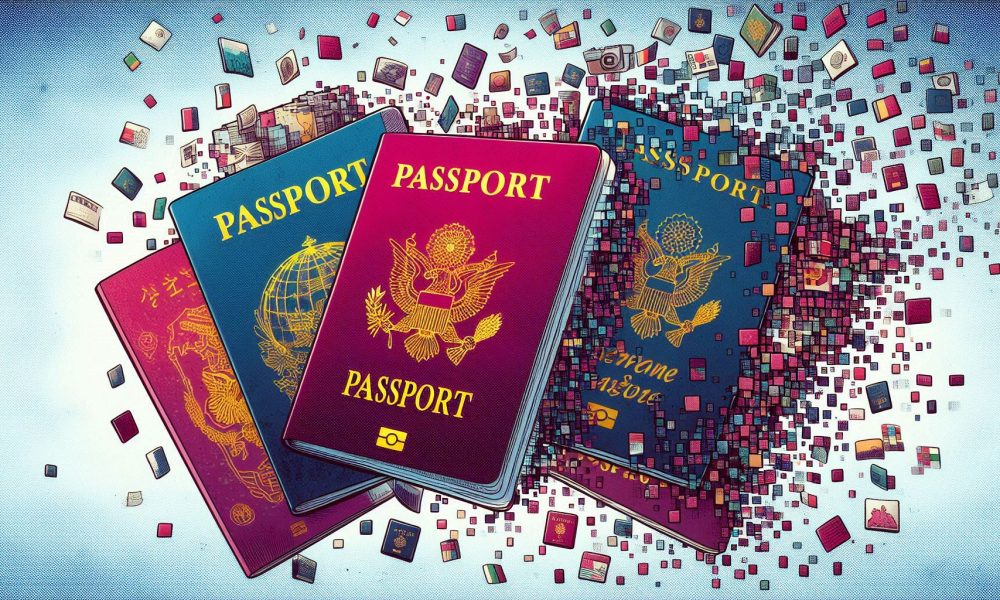
Enable Fugitives to Live Anonymously Abroad
Vancouver, British Columbia — July 23, 2025 — Amicus International Consulting, a global leader in legal identity transformation and international privacy strategy, has released a new investigative report titled “How Fugitives Exploit Passport Loopholes to Live Anonymously Abroad.” The exposé examines how individuals accused or convicted of crimes have exploited legal frameworks—rather than forging documents—to obtain legitimate travel papers, citizenship, and identities that enable them to blend into foreign jurisdictions.
While forged passports once dominated the world of covert travel, today’s fugitives increasingly rely on legal gray areas, bureaucratic loopholes, and investment-based nationality schemes to evade detection in plain sight. The exploitation of these passport loopholes poses a critical challenge for law enforcement, border control, and immigration agencies worldwide.
The Legal Route to Disappearance
In an era of biometric security and intergovernmental intelligence sharing, it may seem impossible to elude international justice. Yet fugitives often leverage the law itself to go underground. By using legitimate documentation obtained through overlooked or manipulated legal procedures, many bypass red flags and live years—sometimes decades—beyond the reach of authorities.
“This isn’t about forging documents in a back alley anymore,” said a former immigration officer interviewed for the report. “This is about understanding the system better than the people who run it.”
Historical Abuse of Loopholes: From the Cold War to the Digital Age
The idea of leveraging passports for geopolitical or criminal advantage is not new. During the Cold War, intelligence agents from both NATO and Warsaw Pact nations frequently carried multiple legal identities, which were sanctioned by their own or allied governments. These passports enabled espionage agents to cross borders undetected.
In the modern era, however, it is private citizens—some accused of white-collar crimes, others of espionage or corruption—who have adopted these tactics. Unlike clandestine agents of old, these individuals often obtain new passports through entirely legal means, including ancestry claims, investment programs, or bureaucratic manipulation.
Legal Gray Zones: Citizenship-by-Investment Programs
At the core of modern passport loopholes lies the lucrative citizenship-by-investment (CBI) industry. Over a dozen nations—including St. Kitts and Nevis, Dominica, Vanuatu, and, until recently, Cyprus and Malta—have allowed wealthy individuals to acquire nationality and a passport in exchange for financial investments ranging from $100,000 to several million.
For fugitives, these programs offer two benefits: a new legal nationality and, in many cases, the opportunity to change their names during the process. These countries do not require extensive residency or background checks and often expedite the application process. In return, fugitives receive passports that offer visa-free access to dozens of jurisdictions, enabling further travel and potential relocation.
Name Changes and National Registry Errors
Another frequently exploited mechanism is the legal name change process, especially in countries where civil registries are fragmented or where local courts have broad discretion in approving identity changes. Fugitives have taken advantage of regions with low document scrutiny to change their names, dates of birth, and, in some cases, even place of birth. Once altered, this information is submitted to passport authorities under the guise of legitimate requests.
Errors in national registries—such as inconsistent data between immigration, police, and civil records—allow these new identities to persist undetected. In cases where a fugitive uses minor spelling variations or switches surnames from maternal to paternal lines, new documents can be issued with minimal red flags.
Second Citizenship via Ancestry: A Backdoor to Europe
Several countries offer citizenship to descendants of former citizens. Italy, Ireland, Poland, and Hungary are among the most popular destinations for this type of second citizenship, where applicants need only prove familial lineage.
Fugitives from Latin America and the Middle East, particularly those of Lebanese or Italian descent, have used this legal right to acquire EU passports. Once European citizenship is granted, they are free to move throughout the Schengen Area, often beyond the reach of countries seeking extradition.
Diplomatic Passports and Immunity Exploits
Though rare, some fugitives have acquired diplomatic passports—either through corrupt governments or honorary positions in countries with lax protocols. These passports are sometimes issued to “economic ambassadors” or “trade envoys” without proper vetting.
One notorious case involved a Central African country issuing diplomatic passports to several businesspeople, including one who Interpol wanted. Another involved a fugitive offering financial “donations” in exchange for an honorary consulate position that included passport and immunity benefits.
Case Study: The Curious Travels of Ricardo Martinelli
Former Panamanian President Ricardo Martinelli fled his country in 2015 after facing charges of corruption and illegal wiretapping. He settled in the United States using his legal diplomatic passport and even applied for asylum. While Panama revoked his passport, bureaucratic delays allowed him to remain in the U.S. for several years before extradition proceedings resumed. His ability to delay justice hinged on the technical legality of the passport at the time of his flight.
Case Study: Jho Low and the Caribbean Passports
The Malaysian financier behind the 1MDB scandal, Jho Low, allegedly used multiple passports—including those from Caribbean nations such as St. Kitts and Nevis—to evade authorities. Reports indicate that he obtained these documents legally through Investment programs and used them to open bank accounts, rent properties, and travel under different identities. Despite global arrest warrants, Low remained at large for years, mainly due to the use of legitimate passports.
Case Study: Viktor Bout’s Multinational Identities
The infamous Russian arms dealer Viktor Bout, nicknamed “The Merchant of Death,” used at least six aliases and passports from multiple countries during his decades-long run. While some were forged, several were legally issued under variant spellings and alternate documentation. Bout operated logistics companies and air transport businesses under these identities until his capture in Thailand.
Case Study: The Golden Visa Trap and EU Backdoors
In Portugal, the Golden Visa program attracted wealthy investors with minimal oversight. Chinese fugitives were among those who obtained residency and, eventually, passports through real estate investments. The lack of consistent biometric verification allowed individuals to apply under different names or to front their investments through intermediaries, masking the real identity of the passport holder.
Expert Interview: Former Border Control Officer on Passport Forgery and Loopholes
A former European border control officer who requested anonymity stated, “We’re no longer fighting amateur forgers—we’re dealing with wealthy individuals who can exploit legal frameworks to look more legitimate than average travellers. Some of them even come with embassy letters and notarized identity documents.”
He added that biometric databases are only as effective as the data submitted. “If a fugitive registers a second identity before they’re flagged in INTERPOL, the biometric system becomes a false sense of security.”
Government Responses: Closing the Gaps in 2025
In response to these growing abuses, the EU, the United States, and Caribbean nations have taken steps to tighten the passport issuance process. The European Parliament recently passed legislation mandating enhanced biometric authentication and unified criminal background checks across the Schengen Zone. Similarly, Caribbean nations under pressure from international regulators have begun to reform their CBI programs to include stricter vetting and post-issuance monitoring.
The U.S. Department of State has also flagged several CBI jurisdictions as “high-risk” and has suspended visa waiver privileges for their nationals, thereby affecting the legitimacy of travel.
The Future of Digital Passports and Smart Identity Systems
As a countermeasure, several countries are piloting digital passports embedded with blockchain-backed identity chains. These passports link facial recognition, fingerprint, iris scans, and digital signatures to a single immutable profile. While still in the testing phase, digital identity platforms, such as Estonia’s e-residency program, offer models for integrating real-time identity verification across borders.
However, privacy advocates warn that these technologies may infringe on individual freedoms and create new vulnerabilities, including centralized data breaches and misuse by authoritarian regimes.
Conclusion: What This Means for Global Security and Privacy
As the world tightens its borders and harmonizes identity systems, fugitives and those seeking privacy will continue to test the boundaries of the law. The line between legal exploitation and outright fraud is often blurred in the world of passports and identity. Governments must strike a balance between national security and the legitimate right to privacy and mobility.
Amicus International Consulting continues to monitor trends in legal identity transformation, privacy frameworks, and cross-border regulatory reforms. By educating policymakers, journalists, and legal professionals on the evolving nature of passport loopholes, Amicus provides a critical perspective on the intersection of legality, identity, and international justice.
About Amicus International Consulting
Amicus International Consulting is a global advisory firm specializing in second citizenship, legal identity change, privacy protection, and international relocation strategies. With clients in over 40 countries, Amicus provides confidential, law-abiding pathways to new beginnings.
Contact Information
Phone: +1 (604) 200-5402
Email: [email protected]
Website: www.amicusint.ca




