
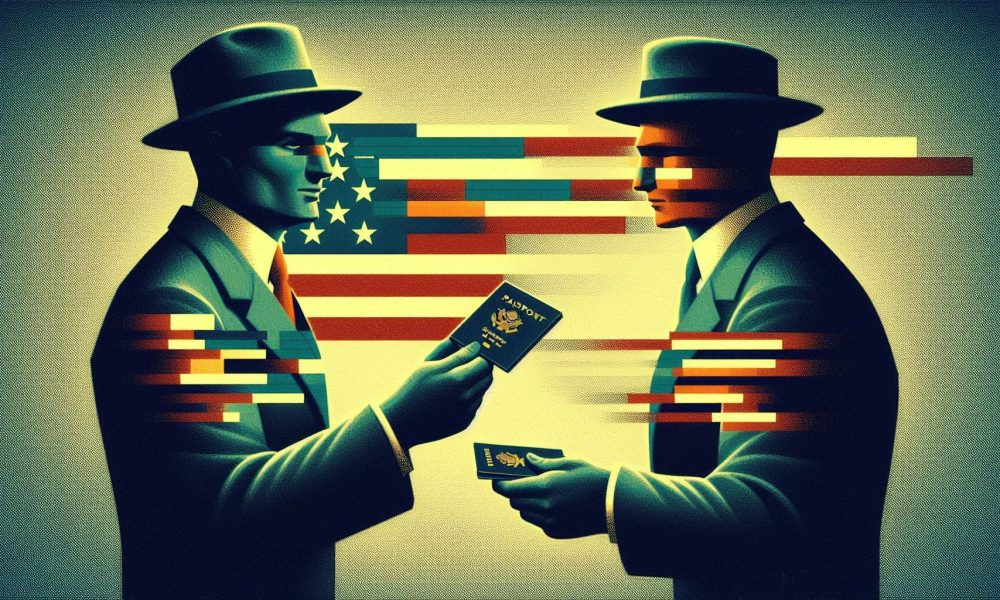
Vancouver, British Columbia — July 21, 2025 — Amicus International Consulting, a world leader in legal identity transformation and personal privacy solutions, has released an in-depth investigative report titled “How Fugitives Use Dual Identities to Live Anonymously in Multiple Countries.” This comprehensive analysis examines how fugitives have historically employed dual passports and identity compartmentalization, how modern surveillance methods challenge these strategies, and the lawful avenues individuals can pursue to reclaim anonymity legitimately.
In a world of rising biometric tracking, global data sharing, and artificial intelligence-powered surveillance, the concept of maintaining two identities remains alluring. While the illegal misuse of dual identities can lead to swift capture, lawful dual citizenship, legal name changes, and proper compartmentalization still provide routes for privacy, especially for individuals facing persecution, political risks, or legitimate security concerns.
The Long History of Dual Identities
Dual identities have been a hallmark of espionage, organized crime, and political exile for centuries. Throughout the 20th century, criminals and dissidents alike employed forged documents to evade border controls and live anonymously. From Soviet spies operating under multiple aliases to South American dictators fleeing justice with counterfeit passports, the notion of a second life under a different identity has captivated the world.
However, by the late 1990s, advancements in database integration and the emergence of biometric checks began closing these loopholes. By 2025, forged documents will be almost instantly detectable in most developed countries. This evolution has shifted the focus from fraud to lawfully acquired dual identities, particularly through the acquisition of legal citizenship and strategic identity compartmentalization.
Case Study 1: Corporate Executive Exploits Legal Citizenship Options
In 2022, a prominent business executive from Eastern Europe, identified as ‘E,’ avoided politically motivated charges by activating his secondary citizenship in Saint Lucia. Acquired legally through the Caribbean Citizenship by Investment (CBI) program, this dual citizenship enabled ‘E’ to relocate, obtain new banking services, and sever his financial connections from his home country. His case is now frequently cited by legal identity consultants as an example of lawful dual identity management in the modern world.
Case Study 2: The Dissident With Legal Dual Identity
In 2023, a Venezuelan political dissident, ‘R,’ escaped persecution by utilizing his Spanish citizenship, which he had inherited through his grandparents. While his Venezuelan identity remains the subject of internal scrutiny, his Spanish citizenship allows him visa-free access across Europe, legal residency in Spain, and the freedom to travel globally under legal protections.
Case Study 3: The Failure of Fake Identities in the Age of Biometrics
In sharp contrast, ‘F,’ a Balkan organized crime figure, was apprehended in 2024 while using a falsified Dominican passport. Biometric inconsistencies at a European airport flagged his identity, leading to immediate detention. This case illustrates the futility of forged documents and the power of modern surveillance systems in uncovering fraudulent dual identities.
The Mechanics of Dual Passports
Dual passports serve as the cornerstone of maintaining dual identities. Legally holding two or more passports can allow individuals to:
Circumvent political restrictions
Bypass country-specific sanctions
Gain access to alternative banking services
Travel freely in regions where their original nationality is restricted
Countries such as Canada, Australia, Ireland, and the United Kingdom permit dual or multiple citizenship. Meanwhile, Caribbean nations such as Saint Kitts and Nevis, Dominica, and Grenada, as well as countries like Turkey and Malta, offer Citizenship-by-Investment programs that grant legitimate dual citizenship.
A legal consultant from Amicus International Consulting explains, “In a lawful framework, dual passports can serve personal security, financial freedom, and mobility—without violating international laws.”
Identity Compartmentalization: A Legal Tool for Security
Identity compartmentalization refers to the practice of maintaining separate legal identities that serve different functions and remain deliberately disconnected. This involves:
Holding legal names in different jurisdictions
Using distinct national identification numbers (NINs)
Managing unique financial portfolios
Operating independent digital footprints
Used correctly and legally, compartmentalization enables individuals to protect themselves from political targeting, safeguard family wealth, and secure access to multiple jurisdictions.
Amicus International Consulting helps clients lawfully navigate identity compartmentalization, ensuring every step complies with domestic and international regulations.
Where Compartmentalization Crosses the Legal Line
Amicus warns that while lawful identity compartmentalization is legal in many countries, crossing into the realm of forged documents, identity theft, or concealed assets intended for money laundering constitutes criminal activity. Key illegal actions include:
Using fraudulent passports
Manipulating biometric records
Concealing assets to evade taxes without disclosure
Lying on legal documents or during due diligence processes
Most arrests of fugitive figures today stem not from mere possession of dual identities but from fraudulent documentation or financial crimes tied to identity concealment.
Countries That Legally Support Dual Identity Structures
Certain countries are uniquely positioned to support legal dual identity structuring due to favourable laws:
Paraguay: Fast Naturalization through residency with minimal biometric tracking.
Dominica: Efficient Citizenship by Investment program, minimal external interference.
Turkey: Citizenship by Investment with high visa access and low political exposure.
Malta: EU citizenship with strong privacy frameworks.
Vanuatu: A tax-neutral jurisdiction with no INTERPOL cooperation for minor financial offences.
According to Amicus advisors, “These jurisdictions serve clients who wish to escape political oppression or start anew lawfully, always within the confines of the law.”
Biometrics: A Double-Edged Sword
While dual identities are legal in many countries, biometric controls prevent their illegal misuse. Facial recognition, fingerprint analysis, and iris scans tie identities to physical features. Attempting to use a false identity in a country with biometric border checks results in immediate detection.
Yet, compartmentalization can be structured around these systems:
Enrolling biometrics only under legally acquired new identities
Avoiding travel through biometric-heavy zones
Using alternative ports of entry
Relocating before biometric systems are integrated in certain countries
Expert Interview: Managing Dual Identities Responsibly
Amicus International Consulting spoke to a privacy and identity expert from Latin America, who explained, “An individual can possess two identities for lawful purposes: one to handle business, another to secure their family’s future. However, the moment falsehood enters the equation—like forged documents—you expose yourself to international capture.”
The expert emphasized that proper legal consultation ensures compartmentalization enhances protection without crossing legal lines.
Digital Footprints and the Threat to Compartmentalization
Amicus highlights that digital surveillance remains a significant threat to maintaining anonymity. Individuals must separate not just their legal documents but also:
Online accounts and social media profiles
Contact numbers and email addresses
IP addresses and devices
Financial activity and payment methods
“Most fugitives are not caught at borders anymore,” said an Amicus cybersecurity expert. “They’re caught because of their digital laziness—one old phone call or social media tag collapses years of careful planning.”
Modern Trends: Lawful Privacy Management on the Rise
With increasing surveillance, even non-criminal individuals seek dual identities:
Whistleblowers: Seeking protection through secondary citizenship.
Political activists: Using safe citizenship to avoid persecution.
Business owners: Using jurisdictional compartmentalization to access global markets.
Wealth managers: Building dual profiles to safeguard family assets.
When Dual Identities Fail: The Risks of Illegality
High-profile cases abound where illegal dual identity use backfired:
Interpol Red Notices: Issued within hours of the detection of illicit identity.
Global banking freezes: Especially through FATCA and CRS enforcement.
Real-time biometric detection results in border arrests and deportations.
Amicus reiterates its firm stance against fraud, offering services only to law-abiding clients.
Amicus International’s Legal Pathways
Amicus International Consulting provides services such as:
Second citizenship applications through legitimate channels
Ancestral citizenship discovery
Residency planning in low-surveillance jurisdictions
Offshore banking for legally compliant asset protection
Digital privacy training
Clients receive full legal vetting, ensuring that all compartmentalization remains lawful, transparent, and secure.
Conclusion: Dual Identity Is Alive—But Must Be Legal
In 2025, dual identities remain an effective means of living anonymously, but only for those who respect the law. Forged documents, identity fraud, and fraudulent activity lead to detection and punishment. However, lawful strategies—centred on citizenship rights, legal residency, and meticulous compartmentalization—enable people to reset their lives safely.
Amicus International Consulting remains at the forefront of legal privacy solutions, helping those who need legitimate anonymity to navigate a world of growing surveillance while preserving their rights and freedoms.
Contact Information
Phone: +1 (604) 200-5402
Email: [email protected]
Website: www.amicusint.ca




