
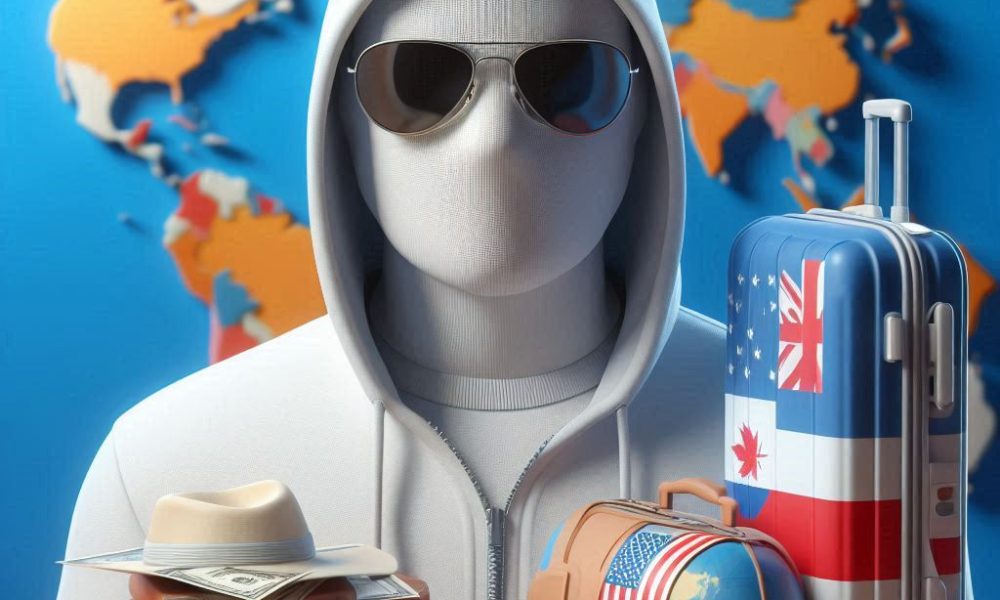
A Deep Dive Into International Travel Privacy, Airline Security, and Legal Identity Solutions in 2025
VANCOUVER, CANADA — With the global surge in biometric surveillance and airline security, many travellers wonder if anonymous flights are still possible—or even legal—in 2025. Can someone board a plane without revealing their true identity? Amicus International Consulting, a global leader in lawful identity services, has conducted an exhaustive investigation into the realities of anonymous flights, separating fact from fiction, and identifying legal options for those seeking privacy while travelling.
This comprehensive 2,200-word report covers everything from international aviation law to privacy loopholes, real-world case studies, expert interviews, and a breakdown of legal solutions for those who value discretion during travel.
The History of Anonymous Flights: From Cash Tickets to Complete Identification
In the 1980s and 1990s, anonymous flights were still possible in many countries. Travellers could purchase airline tickets with cash, check in without identification, and even transit internationally with minimal documentation in certain regions. Stories of fugitives boarding flights under false identities are found in both law enforcement reports and folklore.
However, following the September 11 attacks, international air travel underwent sweeping reforms. The United Nations and major travel security organizations initiated the API (Advanced Passenger Information) program, which requires airlines to transmit passenger details to immigration authorities before takeoff.
In the 2020s, biometric boarding, facial recognition, and e-passport systems became the norm, replacing the myth of anonymous flying with a highly regulated, monitored system.
Current International Law: Why Anonymous Flights Are Illegal in 2025
By international convention, every airline operating commercial flights is required to verify the identity of every passenger before boarding. International Civil Aviation Organization (ICAO) mandates include:
Verification of government-issued travel documents
Biometric identity verification, where applicable
Transmission of passenger data to border security before flight
These regulations make it clear that anonymous flights on commercial airlines are no longer possible. Attempting to board a flight without proper identification is a criminal offence in almost every jurisdiction worldwide.
Case Study: Failed Attempt at Anonymous Flying in Europe
In 2024, “Omar,” a former business executive, attempted to board a flight from Lisbon to Buenos Aires using a false identity. His ticket was purchased with cash, but Lisbon Airport’s biometric check-in flagged inconsistencies. Omar was arrested within minutes, detained for document fraud, and placed on a Europe-wide travel watchlist.
This case exemplifies how anonymous flights have become increasingly complex through mainstream air travel channels.
What About Private Flights? Understanding the Charter and Jet Market
Private charter flights offer a distinct dynamic but remain subject to regulation. Under international law, private aviation providers are obligated to:
Verify passenger identities for international routes
Submit flight manifests to aviation authorities
Comply with customs and immigration checks upon landing
Domestic private flights (within the same country) may offer some leniency regarding identification requirements. In the United States, for example, under FAA Part 135 operations, passengers on domestic private jets are not required to undergo TSA screening. However, passenger identification is still mandatory.
Case Study: Private Jet Travel with Low-Profile Benefits
In 2023, “Isabella,” an entrepreneur, used domestic private flights in Mexico to travel discreetly between business hubs without engaging in biometric screening at major commercial terminals. Isabella remained fully legal by providing proper ID while bypassing invasive surveillance in public airports.
Interview With an Aviation Compliance Specialist
Amicus International spoke with a veteran aviation law consultant.
“The misconception is that private jets mean anonymity,” the expert clarified. “In international airspace, anonymity doesn’t exist. Authorities are aware of who is on every plane entering and exiting their airspace. The only legal way to change your identity in-flight is through a legitimate identity change completed before boarding.”
Anonymous Flight Myths vs. Reality in 2025
Myth #1: You Can Pay Cash at the Airport and Fly Without Questions
Reality: Airlines globally require identification to issue boarding passes. Even last-minute cash tickets are tied to a government ID.
Myth #2: Private Jets Can Smuggle You Without IDs
Reality: Private aviation submits manifests before takeoff, especially on international routes. Smuggling is a federal crime with severe penalties.
Myth #3: Refugee Documents Allow Untraceable Flights
Reality: Refugee travel documents provide legal travel for asylum seekers, but they also include comprehensive identification procedures, including biometric verification.
Legal Alternatives: How Travellers Protect Privacy Without Breaking Laws
While anonymous flights in the traditional sense are not legal, Amicus International Consulting identifies legal privacy-preserving options:
1. Second Citizenship with a New Legal Identity
Citizenship by Investment programs in countries like Antigua and Barbuda, Dominica, Saint Lucia, and Turkey allow applicants to obtain fully legal passports in a new identity after undergoing rigorous due diligence processes. This enables travellers to travel legally under a different name and nationality, thereby minimizing exposure to their prior personal history.
Case Study: Second Citizenship Enables Discreet Global Travel
In 2023, “Daniel,” a European investor, acquired citizenship of Saint Kitts and Nevis through Investment. Travelling on his Saint Kitts passport, Daniel avoided restrictive visa regimes and government scrutiny tied to his original nationality, gaining freedom of movement without breaking any laws.
2. Legal Name Changes and Passport Updates
Domestic name change procedures, followed by updates to passports, driver’s licenses, and civil documentation, provide legal anonymity. Many jurisdictions permit name changes for legitimate reasons, such as marriage, divorce, or personal safety concerns.
Case Study: From Online Harassment to Legal Privacy
In 2022, “Maria,” an influencer suffering from harassment, obtained a court-approved name change in Canada, updated all legal records, and now travels without unwanted public attention. Amicus International guided her through the process.
3. Stateless Travel Documents
Individuals officially recognized as stateless by international conventions are eligible to apply for United Nations travel documents. While limited in scope, they allow legal border crossing without standard national passports.
Case Study: Stateless Client Relocates With Legal Travel Documents
“Samir,” a journalist exiled from North Africa, successfully applied for UN-issued refugee travel documents, enabling legal relocation to Southern Africa with Amicus International’s assistance.
4. Domestic Private Travel for Discretion
In countries with less rigorous domestic flight screening (such as certain African, Caribbean, and Latin American nations), it remains possible to travel domestically with minimal surveillance. However, travellers must always carry a valid ID.
Regions Where Anonymous-Like Travel Is More Relaxed
Amicus International identifies:
Caribbean intra-island travel: In some islands, ID checks are minimal on domestic flights.
Paraguay and Bolivia: Looser internal controls for residents.
Namibia and Zambia: Domestic flight identification requirements are present, but not biometric.
Certain Pacific Islands: Localized aviation services with low surveillance.
Important Legal Disclaimer
Travelling without documentation or attempting to deceive aviation authorities remains illegal. Penalties can include:
Immediate detention
Deportation
Long-term entry bans
Criminal prosecution for identity fraud
Case Study: Smuggling Attempt Ends in Life Ban
In 2021, “Victor,” a businessman, attempted to fly from South America to Europe using falsified documents via a charter service. Upon discovery, Victor was banned from the Schengen Zone for life and faced criminal charges.
Amicus International’s Role in Legal Travel Privacy
Amicus International Consulting supports privacy-conscious clients with:
Legal identity change services
Second passport acquisition through legal Investment programs
Lawful relocation strategies
Assistance with digital privacy, ensuring online presence aligns with updated legal identity
Compliant offshore financial solutions for those relocating internationally
Case Study: Integrated Identity Change Success
In 2024, “Mohammed,” a Gulf-based executive, transitioned to a new identity via legal channels, acquired Saint Lucia citizenship, and relocated to Paraguay with Amicus International’s guidance. His international travel is fully compliant, dignified, and free from prior restrictions.
Key Takeaways: Anonymous Flights Are Not Legal—But Lawful Privacy Exists
Anonymous flights, defined by travel without ID, are illegal worldwide.
Private aviation offers greater discretion but requires legal identification.
Refugee and stateless travel documents offer lawful options under international law.
Second citizenship and name changes provide legal fresh starts for travel.
Legal identity changes remain the safest path to privacy.
Expert Advice from Amicus International
An Amicus legal expert summarizes: “No one can vanish on a plane anymore. But you can reinvent yourself legally, protect your privacy, and travel freely if you follow the law. The only privacy that works in 2025 is lawful.”
Conclusion: Dignity, Privacy, and Lawful Freedom of Movement
The myth of anonymous flights may have faded, but dignity and freedom in travel remain accessible. Amicus International Consulting offers compliant, structured, and ethical pathways to secure your privacy without compromising legality.
For those seeking personal safety, business freedom, or a fresh start, legal identity transformation and relocation strategies offer a solution—no fraud, no crime, just legal privacy in a hyper-surveilled world.
Contact Information
Phone: +1 (604) 200-5402
Email: [email protected]




