
Overview
The Global Digital Twins in Healthcare Market size is expected to be worth around USD 7.24 Billion by 2033 from USD 0.72 Billion in 2023, growing at a CAGR of 26.0% during the forecast period from 2024 to 2033.
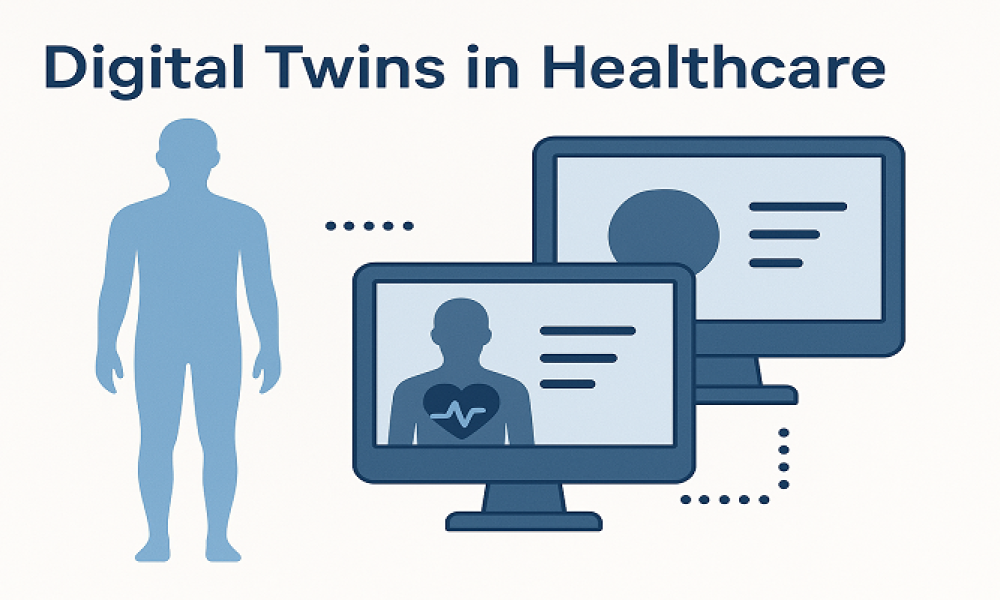
The integration of digital twin technology in healthcare is reshaping patient care, clinical decision-making, and hospital operations. A digital twin is a virtual replica of a physical entity in this case, a patient, device, or healthcare process that uses real-time data to simulate, predict, and optimize outcomes. This innovative technology allows clinicians to model disease progression, personalize treatment plans, and monitor patient responses without invasive procedures.
The global market for digital twins in healthcare is witnessing rapid expansion, driven by increasing demand for precision medicine and the need to reduce operational costs. Applications range from personalized treatment modeling and surgical planning to hospital asset management and predictive maintenance. With the convergence of IoT, AI, and cloud computing, digital twins provide real-time simulation capabilities, improving patient safety, care outcomes, and resource utilization.
According to trusted healthcare sources such as the U.S. FDA and NIH, digital twin models are being increasingly validated for clinical use, especially in chronic disease management, cardiovascular care, and orthopedic surgery. Hospitals and research institutions are investing heavily in digital twin platforms, with North America and Europe leading the adoption curve.
As healthcare systems prioritize value-based care, digital twin technology stands out as a pivotal enabler offering a predictive, patient centric approach that enhances clinical workflows and reduces risks across the continuum of care.
Click here to get a Sample report copy @ https://market.us/report/digital-twins-in-healthcare-market/free-sample/

Key Takeaways
- The global market for digital twins in healthcare was valued at USD 0.72 billion in 2023 and is projected to reach approximately USD 7.24 billion by the end of the forecast period, expanding at a robust compound annual growth rate (CAGR) of 26.0%.
- In terms of type, the process and system digital twin segment led the market in 2023, reflecting its extensive use in optimizing healthcare operations and clinical workflows.
- By application, asset and process management emerged as the leading category, accounting for the highest revenue share of 37.5% in 2023. This dominance can be attributed to the increasing need for real-time operational insights and resource optimization in healthcare settings.
- Among the end-use segments, hospitals and clinics secured the largest revenue share at 34.1% in 2023. This leadership position is driven by growing adoption of digital twin technologies to enhance patient care delivery and streamline hospital operations.
- Regionally, North America dominated the digital twins in healthcare market, capturing a substantial 47.3% share of global revenue in 2023. This regional strength is supported by advanced healthcare infrastructure, high investment in health technology innovation, and early adoption of digital transformation initiatives.
Segmentation Analysis
- Type Analysis: In 2023, the process and system digital twin segment led the market with a 66.2% revenue share. This leadership is driven by the integration of AI, virtual reality, and mixed reality in healthcare operations. These technologies enable real-time simulations for surgical planning, patient flow, and diagnostics. Their use enhances efficiency and reduces errors. Meanwhile, the product digital twin segment is expected to grow rapidly, fueled by the need for smart, connected medical devices and digitized product testing.
- Application Analysis: Asset and process management dominated the digital twins in healthcare market in 2023, accounting for 37.5% of total revenue. Hospitals are increasingly adopting digital twins to monitor infrastructure, schedule preventive maintenance, and manage equipment lifecycles. These virtual models help reduce downtime and improve cost efficiency. At the same time, the drug discovery segment is projected to grow fastest, as digital twins enable real-time modeling of drug behavior, optimizing development speed, safety, and regulatory processes, particularly in vaccine and personalized medicine development.
- End-Use Analysis: Hospitals and clinics held the largest market share in 2023, contributing 34.1% of total revenue. Digital twins are used in these settings to optimize workflows, manage staffing and bed capacity, and simulate operational systems for better decision-making. Tools like IBM’s process mining are increasingly adopted to improve efficiency and reduce costs. Clinical Research Organizations (CROs), on the other hand, are expected to register the fastest growth, as digital twins enhance drug testing, reduce trial durations, and support precision medicine initiatives.
Market Segments
By Type
- Process & System Digital Twin
- Product Digital Twin
By Application
- Asset and Process Management
- Personalized Medicine
- Drug Discovery
- Others
By End-use
- Clinical Research Organizations (CRO)
- Hospitals and Clinics
- Research & Diagnostic Laboratories
- Others
To Purchase this Premium Report @ https://market.us/purchase-report/?report_id=117459
Regional Analysis
In 2023, North America led the Digital Twins in Healthcare Market, securing a dominant revenue share of 47.3%. This leadership is attributed to the early adoption of digital technologies and automation within healthcare systems.
Hospitals and clinics across the region utilize digital twin platforms to improve patient outcomes and operational workflows. The presence of key technology players such as Microsoft, IBM, and IQVIA enhances market growth. Additionally, robust digital infrastructure, supportive government funding, and innovation-friendly policies further strengthen the region’s position in advancing healthcare digitalization.
The Asia Pacific region is projected to register the highest compound annual growth rate (CAGR) of 29% during the forecast period in the Digital Twins in Healthcare Market. Growth is fueled by increasing investments from venture capitalists, private equity firms, and non-profits focused on AI-driven healthcare innovation.
Rapid IoT adoption also supports real-time data modeling and simulation. Countries including China, India, Japan, and South Korea are expanding their digital health capabilities. This regional momentum reflects a shift toward smart healthcare systems focused on diagnostics, monitoring, and personalized treatments using digital twin technologies.
Key Players Analysis
The Digital Twins in Healthcare Market is characterized by intense competition, with several prominent global players striving to enhance their market position. Key companies include Siemens AG, General Electric Company, IBM Corporation, PTC Inc., Dassault Systèmes, Ansys Inc., Medtronic plc, Alphabet Inc. (Google), Honeywell International Inc., and Microsoft Corporation. These firms leverage their technological capabilities, global presence, and established healthcare portfolios to drive innovation and expand market share.
Major players are actively engaging in strategic initiatives such as product development, partnerships, and mergers and acquisitions to strengthen their competitive advantage. Siemens AG and General Electric are integrating digital twin capabilities with advanced imaging and diagnostic technologies. IBM and Microsoft are focusing on artificial intelligence-powered platforms to support personalized care delivery.
Medtronic and Google are utilizing digital twin models to enhance medical device performance and treatment outcomes. These strategic efforts reflect a broader trend among leading companies to invest in digital health technologies, aiming to shape the future of predictive, data-driven healthcare solutions globally.
Market Key Players
- Atos
- Microsoft
- Philips Healthcare
- PrediSurge
- Unlearn AI
- QiO Technologies
- Verto Healthcare
- Dassault Systems (3DS System)
- ThoughtWire
- Faststream Technologies
- Twin Health.
- Other Key Players
Market Dynamics
Market Driver: The growing demand for personalized and predictive healthcare is a major driver of the Digital Twins in Healthcare Market. Digital twins enable real-time patient modeling, enhancing treatment accuracy and clinical outcomes. Rising pressure on healthcare systems to improve efficiency and reduce costs further supports adoption. With increasing prevalence of chronic diseases and the need for remote care solutions, healthcare providers are turning to digital twins to simulate procedures, monitor patients, and optimize operational performance across diverse care settings.
Market Trend: A key emerging trend in the market is the integration of artificial intelligence (AI) and Internet of Things (IoT) technologies into digital twin platforms. These innovations enable real-time data collection, predictive analytics, and dynamic simulations. Healthcare organizations are using AI-enhanced digital twins for surgical planning, diagnostic modeling, and patient flow optimization. This trend reflects the industry’s shift toward data-driven care models, where advanced simulation tools are increasingly vital for improving patient outcomes, reducing errors, and managing complex clinical environments efficiently.
Market Opportunity: Significant market opportunity exists in expanding digital twin applications for drug development and clinical research. Pharmaceutical companies and CROs are adopting virtual patient models to accelerate clinical trials, reduce development costs, and improve regulatory compliance. The use of digital twins in simulating drug interactions and treatment responses offers precise insights without human trials. As demand for personalized medicine rises, digital twin platforms offer scalable, AI-driven solutions to transform drug discovery and development across global healthcare and life sciences markets.
Conclusion
The Digital Twins in Healthcare Market is experiencing significant growth, driven by advancements in AI, IoT, and real-time data analytics. With applications ranging from personalized treatment planning to asset management and drug discovery, digital twins are transforming how healthcare is delivered and managed.
High adoption in regions like North America and rapid growth in Asia Pacific highlight the global potential of this technology. Supported by key players and rising investments, digital twins are poised to become essential tools in modern healthcare, enabling predictive, efficient, and patient-centric care across clinical and research environments.
View More Reports:
Cancer Therapeutics and Biotherapeutics Market



