
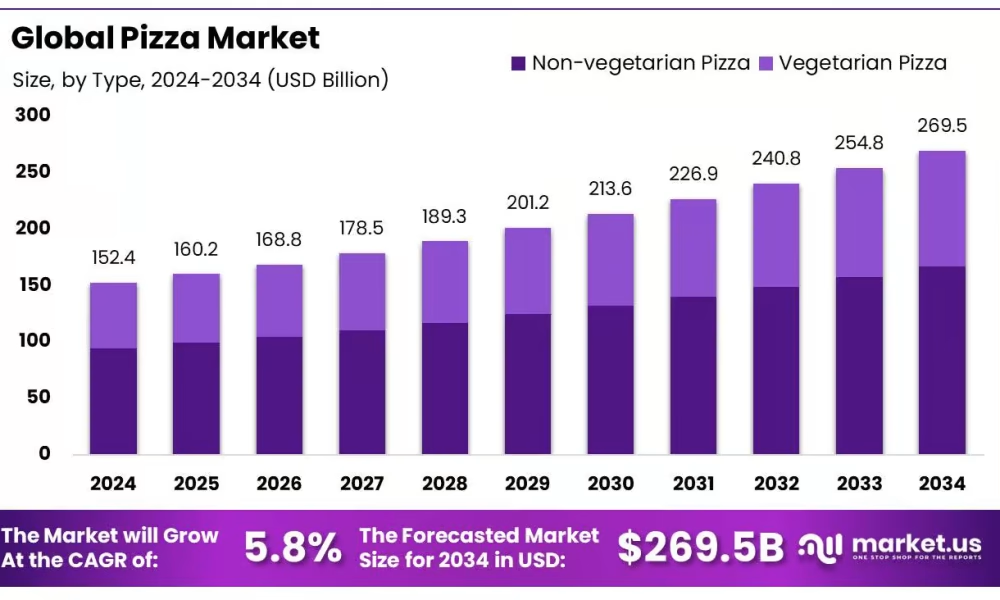
According to market.us, the Global Pizza Market is projected to reach approximately USD 269.5 billion by 2034, rising from USD 152.4 billion in 2024, with a steady compound annual growth rate (CAGR) of 5.8% between 2025 and 2034. This sustained growth reflects the global popularity of pizza as a versatile, quick, and widely accepted food item.
Shifting consumer preferences, particularly in urban populations, have contributed to the rising demand for fast food and ready-to-eat meals, where pizza continues to hold a dominant position among various demographic groups. Established consumption patterns in North America and Europe remain strong, while regions such as Asia-Pacific and Latin America are experiencing accelerating growth due to the adoption of Western eating habits and increasing household spending.
The market’s expansion is further fueled by continuous product innovation, including new toppings, dietary-friendly crusts, and creative flavor combinations. Rising health awareness has led to the development of gluten-free, vegan, and low-carb alternatives. Digital transformation through mobile apps and online ordering platforms has also improved customer reach and convenience.
Moreover, the growth of quick-service formats and cloud kitchens has streamlined operations and extended market access. The emergence of gourmet and artisan pizza offerings is also drawing interest from consumers seeking premium, high-quality food experiences.
Key Takeaways
- The global pizza market will be valued at USD 152.4 billion in 2024.
- The global pizza market is projected to reach USD 269.5 billion by 2033.
- Among types, non-vegetarian pizza accounted for the largest market share of 62.0%.
- Among crust types, thin crust type Pizza accounted for the majority of the market share with 59.9%.
- Based on toppings, meat-based toppings are expected to account for the largest market share in 2024 with 59.4%.
- Among pizza sizes, the large-sized pizza is more popular among consumers, and thus, it holds a 56.0% revenue share.
- Based on the distribution channel, the Quick Service Restaurants (QSR) segment is anticipated to account market share of 67.7%.
- Consumers between 25 and 44 years dominated the market by consumer type segment with a market share of 45.6%.
- There are more than 245,000 pizza restaurants worldwide. This extensive global presence reflects the popularity and widespread acceptance of pizza as a favored fast-food choice, contributing to the overall growth of the global pizza market.
- On average, Americans consume about 46 slices of pizza annually, which adds up to about 23 pounds of pizza eaten annually. Estimates put the number of pizza slices sold each second at 350, which comes out to about 21,000 per minute.
Access a Complimentary Sample of This Premium Report: https://market.us/report/pizza-market/request-sample/
Factors Affecting the Growth of the Pizza Market
Urbanization and Changing Lifestyles: The shift towards busy urban lifestyles has significantly influenced food consumption patterns. As more people seek convenient and quick meal solutions, pizza has become a go-to option due to its ease of access, minimal preparation time, and wide availability through dine-in, takeaway, and delivery models.
Expansion of Quick-Service Restaurants and Delivery Platforms: The widespread presence of fast-food chains and the rise of online food delivery services have made pizza more accessible than ever. The growing network of cloud kitchens and app-based delivery platforms has enabled broader market reach and efficient service, especially in metropolitan and semi-urban areas.
Product Innovation and Customization: The pizza market thrives on continuous innovation in crust types, toppings, sauces, and dietary alternatives. The ability to customize pizzas according to taste, diet, or cultural preference appeals to a broad consumer base, enhancing its global appeal and market penetration.
Health and Wellness Trends: Growing awareness around health and nutrition has led to increased demand for healthier pizza variants. Gluten-free, vegan, whole grain, and low-fat options are gaining popularity among health-conscious consumers, prompting brands to adapt their offerings accordingly.
Cultural Influence and Globalization of Food: Pizza’s adaptability to local flavors has supported its growth across diverse regions. As global culinary exposure increases, pizza has successfully integrated into different cultures by incorporating regional ingredients and preparation styles, further driving its global expansion.
Key Market Segmentation
By Type Analysis
In 2024, non-vegetarian pizza accounted for the largest share of the global pizza market, capturing 62.0% of total revenue. This dominance is primarily driven by the widespread popularity of meat-based toppings such as pepperoni, sausage, ham, and bacon, particularly in Western countries.
These toppings are often viewed by consumers as offering greater flavor and value, leading to a higher willingness to pay. As a result, non-vegetarian pizzas generate more revenue compared to vegetarian options, solidifying their leading position in the market.
By Crust Type Analysis
In 2024, thin crust pizza accounted for the largest market share by crust type, holding 59.9% of the global revenue. Its popularity is attributed to its crisp texture and the way it enhances the flavor of toppings and sauces by minimizing the dough’s presence.
Thin crust is also perceived as a healthier and lighter alternative compared to thick or stuffed crusts. As global dining trends shift toward artisanal and authentic food experiences, thin-crust pizza has gained traction, especially in upscale restaurants and pizzerias, further supporting its market dominance.
By Toppings Analysis
In 2024, meat toppings dominated the global pizza market by topping type, accounting for 59.4% of the total market share. Popular choices such as pepperoni, sausage, ham, bacon, and chicken are widely preferred, especially in Western countries where meat-topped pizzas are deeply ingrained in consumer habits. Strong promotional efforts by major pizza chains have further boosted the visibility and demand for meat toppings, reinforcing their leading position in the market.
By Size Analysis
In 2024, large-size pizzas held the largest share in the global pizza market by size, accounting for 56.0% of total sales. Their popularity is driven by the perception of better value for money, as they offer a lower cost per square inch compared to smaller sizes. This makes large pizzas a more economical choice, particularly for families and groups, reinforcing their market dominance over regular and extra-large options.
By Distribution Channel Analysis
In 2024, Quick Service Restaurants (QSR) led the global pizza market by distribution channel, capturing 67.7% of the total revenue share. This dominance reflects consumer preference for speed, convenience, and affordability. QSRs cater to fast-paced lifestyles by offering quick service, takeout, and delivery options.
Their competitive pricing and adaptability—through flexible menus and technology-driven ordering systems—make them more appealing, especially in cost-sensitive regions, contributing to their strong market position over Full-Service Restaurants and other channels.
By Consumer Type Analysis
In 2024, consumers aged between 25 and 44 years accounted for the largest share of the pizza market, contributing 45.6% to total revenue. This age group typically has higher disposable income than those under 25 and is more likely to dine out or order food due to their career stability and busy lifestyle. Their preference for convenience, coupled with digital engagement, diverse taste choices, and increasing health awareness, makes them the primary target demographic in the pizza market.
Key Market Segments
By Type
- Non-vegetarian Pizza
- Vegetarian Pizza
By Crust Type
- Thin Crust
- Thick Crust
- Stuffed
- Other Crust Types
By Toppings
- Meat
- Vegetables
- Cheese
- Other Toppings
By Size
- Regular
- Large
- Extra-large
By Distribution Channel
- Quick Service Restaurants (QSR)
- Full-Service Restaurants (FSR)
- Other Distribution Channels
By Consumer Type
- Consumers Under 25 Years
- Consumers Between 25 and 44 Years
- Consumers Above 45 Years
Geopolitical Impact Analysis
Geopolitical tensions have significantly disrupted the growth of the global pizza market by affecting supply chains, currency values, and consumer behavior. Fluctuations in the availability and pricing of key ingredients like wheat, tomatoes, and cheese—often imported from conflict-prone regions—have led to increased production costs.
Currency volatility plays a critical role; a weaker currency in exporting nations can reduce ingredient costs for importers, while stronger currencies raise import expenses. Additionally, in times of economic or political instability, consumers may shift to more affordable meals like pizza, providing short-term market support.
However, geopolitical-driven consumer boycotts and stricter food safety regulations may increase operational costs. Labor market instability caused by geopolitical unrest can also disrupt pizza production and distribution. Overall, the pizza market remains vulnerable to a complex mix of geopolitical influences that may hinder or support growth across regions.
Get in Touch with Us:
Market.us (Powered By Prudour Pvt. Ltd.)
Address: 420 Lexington Avenue, Suite 300 New York City, NY 10170, United States
Send Email: [email protected]
Refer to More Related Reports:



