
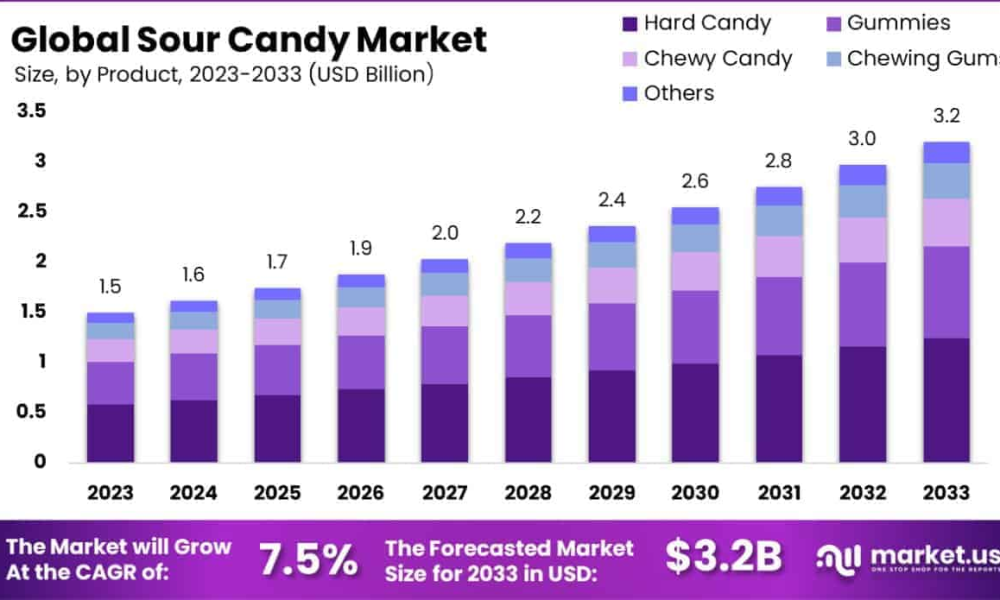
According to market.us, The global sour candy market is projected to reach approximately USD 3.2 billion by 2033, rising from USD 1.5 billion in 2023, and is anticipated to grow at a compound annual growth rate (CAGR) of 7.5% between 2024 and 2033. Sour candy is a distinct segment within the confectionery industry, known for its sharp, tangy flavor profile, which is typically created using ingredients such as citric acid, malic acid, or tartaric acid. These products are available in various formats—including gummies, hard candies, and chewy confections—designed to appeal to a broad demographic across different age groups and taste preferences.
The sour candy market is characterized by its appeal to consumers seeking bold, acidic flavors and novelty experiences, with an expanding range of products being introduced to keep pace with evolving consumer interests. Supporting the market’s growth, a new entrant in the niche of innovative snack foods recently raised $3 million in seed funding, led by Science Inc. and backed by multiple venture capital funds. The investment is intended to scale up inventory, expand operational capabilities, and build stronger collaborations with content creators and influencers, indicating a strategic focus on market visibility and outreach.
In parallel, broader consumer trends such as health and wellness continue to influence the confectionery sector. For example, a fitness technology company named David secured $10 million to enhance its product offerings aimed at supporting muscle gain and fat loss, reflecting increasing consumer demand for performance-oriented solutions. Additionally, Wilde Brands, Inc., recognized for its innovation in protein-based snacks, raised $20 million in growth funding, signaling a robust appetite for health-forward, functional food products. These developments underscore a growing convergence between indulgent treats like sour candy and the broader trends in health, innovation, and lifestyle-driven snacking.
Key Takeaways
- The Global Sour Candy Market is expected to be worth around USD 3.2 billion by 2033, up from USD 1.5 billion in 2023, and grow at a CAGR of 7.5% from 2024 to 2033.
- Gummies dominate the sour candy market, holding a substantial 38.5% share by product.
- Sugar candy remains the most prevalent type, comprising 76.5% of the sour candy market.
- Classic fruits lead in flavor profile, accounting for 43.4% of sour candy preferences.
- Citric acid is the primary souring agent, used in 53.4% of sour candies.
- Hypermarkets and supermarkets are key distribution channels, representing 43.4% of market sales.
- In North America, the Sour Candy Market holds a 40.9% share, valued at USD 0.613 billion.
Access a Complimentary Sample of This Premium Report: https://market.us/report/sour-candy-market/free-sample/
Factors Affecting the Growth of the Sour Candy Market
- Rising Popularity Among Youth and Gen Z Consumers: Sour candy appeals strongly to younger demographics, particularly teenagers and Gen Z, who are drawn to bold, intense flavors and novel taste experiences. This age group actively seeks out adventurous and fun food products, making sour candy a popular choice. The sensory excitement and challenge-like appeal of sour flavors have made these products a staple in youth-driven snacking trends.
- Product Innovation and Flavor Experimentation: Manufacturers are continuously introducing new formulations, unique sour flavor blends, and hybrid combinations (e.g., sweet-sour or spicy-sour) to maintain consumer interest. The inclusion of fruit-based sour ingredients like citric and malic acid, along with colorful and interactive formats such as belts, ropes, and layered gummies, enhances product diversity and keeps the category dynamic and engaging.
- Social Media and Viral Marketing: Social media platforms such as TikTok, Instagram, and YouTube have significantly boosted sour candy’s visibility. Viral challenges and influencer-driven content featuring extreme sour reactions have amplified consumer curiosity and driven impulse buying. The visual appeal and shareability of these candies support widespread brand engagement and sustained consumer interest.
- Increased Availability Through Retail and E-commerce Channels: Wider product availability in supermarkets, convenience stores, specialty candy shops, and online platforms has made sour candy more accessible than ever. E-commerce channels, in particular, have enabled smaller and niche brands to reach broader audiences, while also supporting customized offerings and subscription-based models that cater to sour candy enthusiasts.
- Affordable Indulgence and Impulse Buying Behavior: sour candies are often priced at low-to-mid ranges, making them an attractive, affordable indulgence. Their positioning as impulse-buy items near checkout counters, combined with colorful packaging and novelty appeal, encourages spontaneous purchases, especially among young shoppers and families.
Report Segmentation:
By Product Analysis: In 2023, gummies held the largest share in the sour candy market by product type, accounting for 38.5% of the total market. Their dominance is largely driven by consumer preference for soft textures and a wide variety of flavors that gummies can accommodate. Their versatility, combined with engaging packaging and formats, makes them especially appealing to younger consumers.
By Type Analysis: Sugar candy dominated the sour candy market by type in 2023, holding a commanding 76.5% market share. This strong performance is largely due to continued consumer preference for traditional, indulgent sweets. Sugar candy resonates with both younger and older demographics who prioritize taste and nostalgic value over health concerns.
By Flavor Profile Analysis: Classic fruit flavors led the sour candy market in 2023, representing 43.4% of the market by flavor profile. Their popularity stems from their familiarity and broad consumer appeal, making them a safe and reliable choice for manufacturers targeting mass-market segments.
By Material Analysis: Citric acid was the most commonly used souring agent in the sour candy market in 2023, accounting for 53.4% of the market share by material. Its widespread use is due to its ability to deliver a clean, sharp tartness that is well recognized and liked by consumers of sour confectionery. Additionally, citric acid is cost-effective and readily available, further supporting its widespread application.
By Distribution Channel Analysis: Hypermarkets and supermarkets led sour candy distribution in 2023, accounting for 43.4% of the market share by distribution channel. These retail formats benefit from broad product assortments, high foot traffic, and convenient shopping experiences, making them the preferred channel for mass-market sour candy sales.
To Purchase this Premium Report@ https://market.us/purchase-report/?report_id=132723
Key Market Segments
By Product
- Hard Candy
- Gummies
- Chewy Candy
- Chewing Gums
- Others
By Type
- Sugar candy
- Sugar free candy
By Flavor Profile
- Classic Fruits
- Extreme Sour
- Sweet and Sour Combinations
- Novelty Flavors
By Material
- Citric Acid
- Malic Acid
- Tartaric Acid
- Others
By Distribution Channel
- Hypermarket and Supermarket
- Convenience Stores
- Speciality Store
- Others
Regional Analysis
In 2023, North America emerged as the leading region in the global sour candy market, capturing a substantial 40.9% share, with the market valued at approximately USD 0.613 billion. This dominance is largely attributed to the region’s well-established confectionery culture, strong brand presence, and high consumer expenditure on snacks and sweet treats. The popularity of bold and tangy flavors, coupled with a growing trend of novelty snacking, continues to drive demand for sour candy across the United States and Canada.
Europe followed as a key market, supported by mature consumer bases in countries such as Germany and the United Kingdom. The region benefits from a balance between traditional confectionery preferences and an openness to innovative flavor profiles, allowing sour candy products to appeal to a wide demographic. The integration of classic fruit flavors with modern sour twists has enabled manufacturers in Europe to maintain strong market engagement and diversify their product offerings to suit evolving consumer tastes.
Market Key Players
- Albanese Confectionery Group, Inc.
- Ferrara Candy Company
- Haribo
- Jelly Belly Candy Company
- Mondelez International, Inc.
- Perfetti Van Melle, Albanese Confectionery
- Taffy Town, Inc.
- The Hershey Company
- The Topps Company, Inc.
- Tootsie Roll Industries, Inc.
- Wm. Wrigley Jr. Company
Refer More Related Reports



