
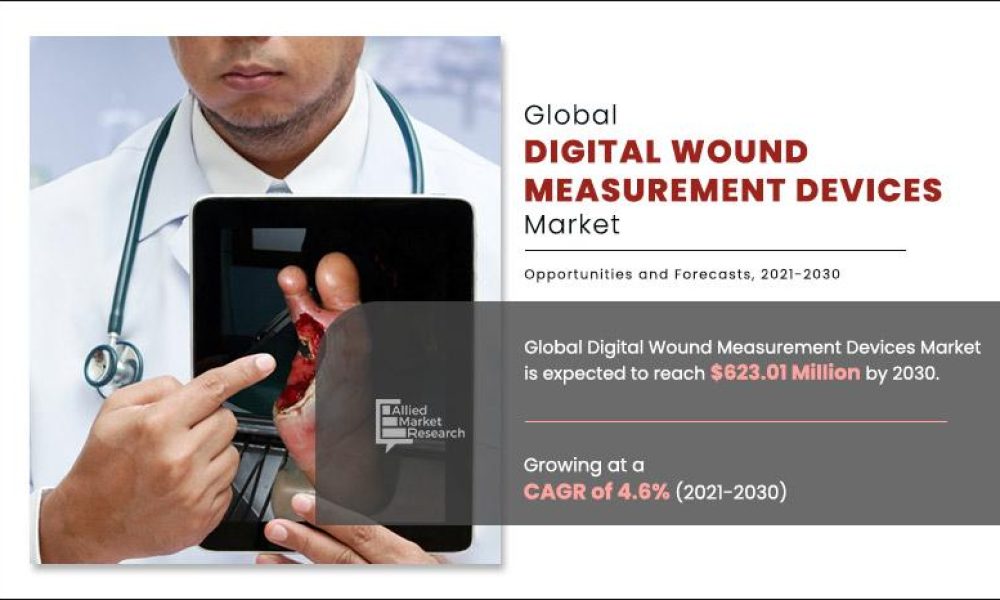
The global digital wound measurement devices market is experiencing significant growth, driven by advancements in wound care technology and an increasing prevalence of chronic wounds. Valued at $401.0 million in 2020, the market is projected to reach $623.01 million by 2030, growing at a CAGR of 4.6% from 2021 to 2030.
These devices play a crucial role in accurately measuring wound dimensions (length, width, depth, and area) using 3D imaging and electronic medical record (EMR) integration. They help healthcare providers track healing progress, improve treatment plans, and reduce healthcare costs.
Key Market Drivers
Rising geriatric population – Increased susceptibility to chronic wounds.
Growing diabetes and obesity rates – Leading to higher cases of diabetic foot ulcers.
Advancements in wound care technology – Non-contact devices offer precise measurements.
Cost-effective wound management – Reducing hospital stays and treatment expenses.
Telehealth adoption – Remote wound monitoring post-COVID-19.
Impact of COVID-19 on the Market
The pandemic initially disrupted wound care services due to:
Closure of wound care clinics (deemed non-essential).
Delayed elective surgeries and reduced hospital visits.
Supply chain disruptions affecting device manufacturers.
However, the market is rebounding in 2024, driven by:
Increased telemedicine adoption for remote wound assessment.
Reopening of wound care centers with enhanced safety protocols.
Growing demand for advanced wound care solutions in home healthcare.
Market Segmentation
By Product Type
Non-contact wound measuring devices (Dominant segment due to high accuracy and ease of use).
Contact wound measuring devices (Traditional methods with limited adoption).
By Wound Type
Chronic Wounds (Largest market share, including):
Diabetic foot ulcers
Pressure ulcers
Venous leg ulcers
Arterial ulcers
Acute Wounds (Includes surgical wounds and burns).
By End User
Hospitals (Leading segment due to high patient admissions).
Community health centers (Growing adoption in outpatient care).
By Region
North America (Largest market due to advanced healthcare infrastructure).
Europe (Strong government support for wound care).
Asia-Pacific (Fastest-growing region with rising healthcare investments).
LAMEA (Emerging opportunities in developing nations).
Future Growth Opportunities
AI-powered wound analysis for real-time healing assessment.
Expansion in emerging markets with unmet wound care needs.
Wearable wound monitoring devices for continuous tracking.
Key Players in the Market
Smith & Nephew Plc.
eKare Inc.
Kent Imaging Inc.
NetHealth (Tissue Analytics, Inc.)
WoundVision, LLC
Perceptive Solutions, Inc.
Arnaz Medical Limited
Conclusion
The digital wound measurement devices market is set for steady growth, fueled by technological advancements, rising chronic wounds, and post-pandemic recovery. With AI integration and telehealth expansion, these devices will play a pivotal role in modern wound care, offering better accuracy, efficiency, and cost savings.
For healthcare providers and investors, this market presents lucrative opportunities, especially in non-contact devices and emerging economies.
Key Takeaways (Bullet Points)
✔ Market size: $401M (2020) → $623M (2030) | CAGR 4.6%
✔ Top drivers: Aging population, diabetes rise, telehealth adoption
✔ Leading segment: Non-contact devices (high precision)
✔ Post-COVID recovery: Telemedicine & reopening of wound clinics
✔ Fastest-growing region: Asia-Pacific (increasing healthcare investments)
✔ Future trends: AI wound analysis, wearable monitoring tech
By staying ahead of these trends, healthcare providers and manufacturers can capitalize on the expanding demand for digital wound measurement solutions.




