
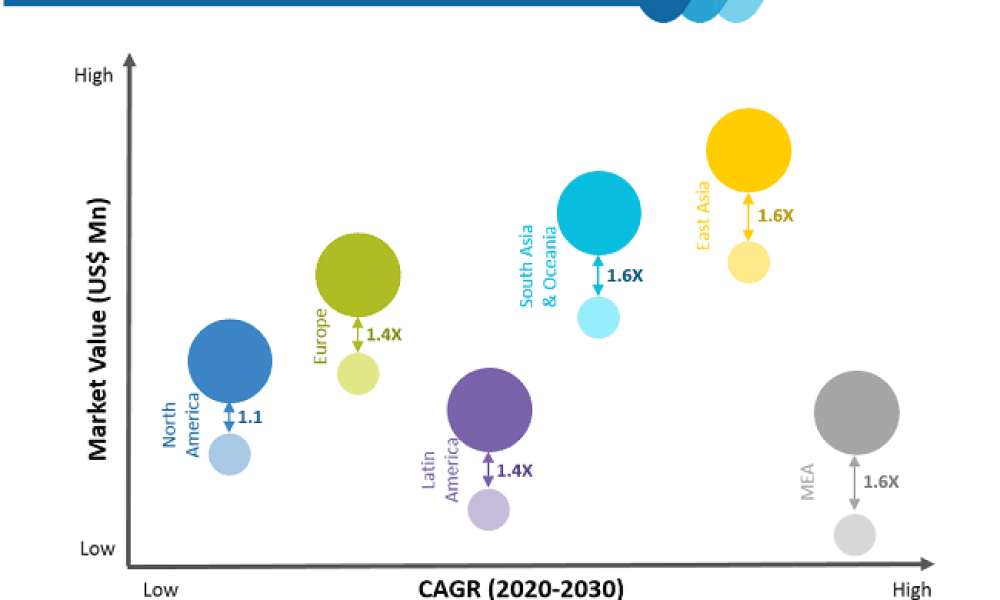
By the conclusion of the forecast period of 2020-2030, the global market for automotive exhaust aftertreatment systems, which was valued at more than US$ 88 billion in 2019, is expected to grow at a CAGR of 4%. The global economy’s instability and the coronavirus pandemic have made 2019 and 2020 challenging years for the auto sector. Sales of automotive exhaust after-treatment systems are declining dramatically as the global car industry grows more integrated. However, it is anticipated that the tough emission regulations implemented by several governments all over the world would result in a rise in the market for aftertreatment systems for car exhaust.
For instance, emerging nations like India are moving towards BS-VI emission standards whereas European nations have adopted Euro VI emission standards. By the end of 2020, when the epidemic is under control and auto production is ramping up, this growth is anticipated.
Download a Sample Copy of This Report:
https://www.factmr.com/connectus/sample?flag=S&rep_id=3228?PS
Diesel Particulate Filter (DPF) to Garner Significant Traction
A diesel particulate filter (DPF) is a tool made to filter diesel particulate matter or soot out of a diesel engine’s exhaust gas. These filters guarantee the efficiency and fuel economy of the cars by removing around 85% of the exhaust particle content. The demand for diesel particulate filters is anticipated to rise as a result of stricter emission regulations and growing environmental safety awareness.
Future fast urbanisation will also provide new retail and e-commerce platforms that call for effective logistics, which in turn will increase demand for light commercial vehicles.
This is therefore anticipated to create significant demand for diesel particulate filters as they are highly operated on diesel engines. Owing to the above mentioned facts, the global diesel particulate filter (DPF) is estimated to create an absolute $ opportunity of more than US$ ~14.8 Bn during the forecast period (2020-2030).
Key Takeaways of Automotive Exhaust Aftertreatment Systems Market
- The global automotive exhaust aftertreatment systems market is projected to create an absolute $ opportunity of more than ~US$ 42.3 Bn and is anticipated to surpass a value of ~US$ 131.1 Bn during the forecast period
- East Asia is projected to account for major share of the market as compared to the rest of the regions, accounting for 37.5% share by the end of forecast period
- OEM sales channels are projected to grow 4X faster than aftermarket sales channel and is anticipated to create an absolute $ opportunity of more than ~US$ 32.9 Bn during the forecast period
- Amongst all product types, diesel particulate filters (DPF) accounted for ~47% of the demand pie in 2020
“A positive outlook for the production of automotive vehicles by the third quarter is anticipated in developing countries like India and China which will set the tone for growth in the automotive exhaust aftertreatment systems market,” says the FactMR analyst. “Despite the spread of COVID-19 and sluggish economic growth globally.”
With a strong focus on cutting emissions and increasing fuel efficiency, the global automotive industry is undergoing a transformational change towards sustainability. The Automotive Exhaust Aftertreatment Systems Market is one of the key participants in accomplishing these objectives. The importance of exhaust aftertreatment systems in the automobile industry, current trends, and their crucial role in determining the future of the sector are all covered in this blog.
Understanding Automotive Exhaust Aftertreatment Systems
Automotive exhaust aftertreatment systems are an integral part of modern vehicles, designed to reduce harmful emissions from internal combustion engines. These systems are essential for meeting stringent emissions regulations while maintaining engine performance and fuel efficiency. Common pollutants targeted by aftertreatment systems include nitrogen oxides (NOx), carbon monoxide (CO), hydrocarbons (HC), and particulate matter (PM).
Key Components of Aftertreatment Systems:
Catalytic Converters: These devices use precious metals like platinum, palladium, and rhodium to catalyze chemical reactions that convert harmful exhaust gases into less harmful substances.
Diesel Particulate Filters (DPF): DPFs capture and trap particulate matter emitted from diesel engines, preventing it from being released into the atmosphere.
Selective Catalytic Reduction (SCR): SCR systems use a urea-based solution (AdBlue) to convert NOx emissions into nitrogen and water vapor.
Exhaust Gas Recirculation (EGR): EGR systems recirculate a portion of exhaust gases back into the engine’s combustion chamber to reduce NOx emissions.
Market Trends and Dynamics
Stringent Emission Regulations: Governments worldwide are imposing strict emissions standards to combat air pollution and reduce the automotive industry’s carbon footprint. This has driven the adoption of advanced aftertreatment systems.
Growing Electric Vehicle (EV) Segment: The rise of electric vehicles doesn’t diminish the importance of aftertreatment systems. As long as internal combustion engines exist, emission control will be vital. Hybrid vehicles and hydrogen fuel cell vehicles also rely on aftertreatment systems.
Innovations in Materials and Technology: Continuous research and development efforts are leading to more efficient and durable catalytic converters and filters. Nanomaterials and advanced coatings are improving performance and longevity.
Integration of IoT and AI: Smart aftertreatment systems are emerging, utilizing IoT sensors and AI algorithms to optimize performance and reduce emissions further. This enables real-time monitoring and adjustments.
Global Expansion: The market is expanding beyond North America and Europe, with Asia-Pacific countries like China and India experiencing substantial growth due to increased automotive production and stricter emission norms.
Future Outlook
The automotive exhaust aftertreatment systems market is poised for significant growth in the coming years. Several factors will shape its future:
Hydrogen Fuel Cells: As hydrogen fuel cell technology matures, aftertreatment systems for these vehicles will become increasingly important for reducing emissions, particularly in heavy-duty transportation.
Circular Economy: Recycling and reusing precious metals from old catalytic converters will gain prominence, reducing the environmental impact of manufacturing new units.
Rising Demand for Clean Energy: The global push for renewable energy sources will indirectly benefit aftertreatment systems as cleaner energy production can mitigate the need for stringent vehicle emissions reductions.
Government Initiatives: Continued government support, incentives, and regulations will drive innovation and adoption in the aftertreatment systems market.
The Automotive Exhaust Aftertreatment Systems Market plays a pivotal role in the automotive industry’s journey towards sustainability. As emissions regulations tighten and the industry evolves, these systems will continue to be a critical component in reducing the environmental impact of internal combustion engines. Innovations in technology and materials, along with global expansion, promise a bright future for this market as it contributes to a cleaner and more sustainable transportation ecosystem.
Facility Expansion to Enhance Market Resiliency
Key players in the automotive exhaust aftertreatment systems market are Bosal Group, Friedrich Boysen GmbH & Co. KG, Cummins Inc., Donaldson Company, Inc., Magneti Marelli S.p.A., Johnson Matthey, Eberspächer Group, Tenneco Inc., among others. Prominent automotive exhaust aftertreatment system market players are focusing on expanding their manufacturing facilities to increase their reach in the global market. For instance,
- In 2020, the Bosal Group has invested heavily to upgrade and relocate its new OEM manufacturing Emission Control System (ECS) plant in Koedoespoort Industrial, Pretoria. With the expansion, the company intends to double its revenues from the MEA region
- In 2020, Magneti Marelli expanded its new research and development center in Turin. With that expansion, the company is focusing on innovating new technologies in the field of Lighting and Body Electronics (LBE).
- In 2018, Friedrich Boysen GmbH & Co. KG expanded its business unit in Pune, India. With this expansion, the company is targeting the growing demand for emission control systems in India and also increase its revenue in Asia Pacific region
Get Customization on this Report for Specific Research Solutions:
https://www.factmr.com/connectus/sample?flag=RC&rep_id=3228?PS
Key Segments of the Automotive Exhaust Aftertreatment Systems Market
Fact.MR’s study on the automotive exhaust aftertreatment systems market offers information divided into three key segments— product, vehicle, sales channel, and region. This report offers comprehensive data and information about important market dynamics and growth parameters associated with these categories.
| Product |
|
| Vehicle |
|
| Sales Channel |
|
| Region |
|
Find More Valuable Insights on Automotive Exhaust Aftertreatment Systems Market
Fact.MR, in its new offering, brings to fore an unbiased analysis of the global automotive exhaust aftertreatment systems market, presenting historical demand data (2015-2019) and forecast statistics for the period, 2020-2030. The study divulges compelling insights on the automotive exhaust aftertreatment systems market based on product (three way catalytic convertor, diesel particulate filter (DPF), diesel oxidation catalyst (DOC), selective catalytic reduction (SCR), gasoline particulate filter (GPF), lean NOx trap (LNT), others), vehicle (passenger car, light commercial vehicle, heavy commercial vehicle, off-highway vehicle (forestry vehicle, agriculture machinery, construction machinery, forklift), and sales channel (OEM, aftermarket), across six major regions.
Contact:
US Sales Office :
11140 Rockville Pike
Suite 400
Rockville, MD 20852
United States
Tel: +1 (628) 251-1583
E-Mail: [email protected]




