
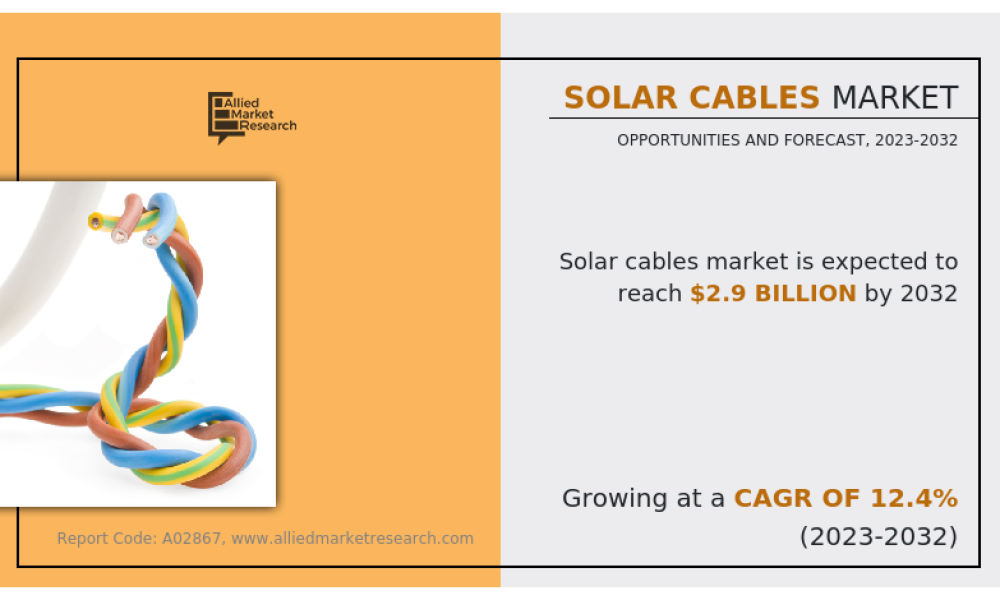
According to a new report published by Allied Market Research, titled, “Solar Cables Market,” The solar cables market was valued at $0.9 billion in 2022, and is estimated to reach $2.9 billion by 2032, growing at a CAGR of 12.4% from 2023 to 2032..
Solar cables are specifically engineered to endure harsh environmental conditions such as prolonged exposure to sunlight, moisture, and extreme temperature fluctuations. These cables are UV-resistant and possess excellent weather-resistant properties, ensuring long-term durability and reliable performance in outdoor and demanding settings. Their robust design makes them suitable for use in both residential and commercial solar power installations where environmental exposure is a key concern.
Constructed from high-quality materials like cross-linked polyethylene (XLPE) or ethylene propylene rubber (EPR), solar cables offer superior electrical insulation and mechanical strength. These materials enable the cables to handle the high voltages and currents produced by solar panels while maintaining the flexibility required for easy installation and routing. This combination of durability, efficiency, and flexibility makes solar cables a critical component in the safe and efficient operation of solar energy systems.
Download PDF Brochure: https://www.alliedmarketresearch.com/request-sample/A02867
The solar cables market is emerging as a vital segment within the electrical industry, fueled by the increasing adoption of solar energy systems for electricity generation. Solar cables serve a crucial function in these systems by transmitting the electrical power generated by solar panels to inverters and other connected components. As global interest in solar power continues to rise, so does the demand for reliable and efficient solar cable solutions that support the growth of the renewable energy sector.
This demand is particularly significant in utility-scale solar power plants, where vast arrays of interconnected solar panels require cables with minimal power loss to ensure optimal system efficiency. The growing emphasis on sustainability has also prompted the development of eco-friendly solar cables, with manufacturers exploring innovative materials and production techniques to reduce environmental impact without compromising performance.
Moreover, continuous research and development efforts are driving technological advancements in solar cable design. These include the creation of higher-capacity cables to support larger, more powerful solar installations, as well as improvements that aim to enhance durability, lower installation costs, and improve system performance. However, the need for strict adherence to safety and quality standards remains a limiting factor, as compliance requirements can increase production complexity and costs.
Despite these challenges, increasing investments by emerging economies in renewable energy infrastructure are expected to create substantial growth opportunities for the solar cables market. With the ongoing transition to clean energy and the expanding scope of solar power projects worldwide, the demand for advanced, high-performance solar cables is projected to rise steadily in the coming years.
For Purchase Inquiry: https://www.alliedmarketresearch.com/purchase-enquiry/A02867
The solar cables market forecast is segmented on the basis of material type, type, end-use, and region. By material type, the market is classified into copper, aluminum, and others. By type, the market is bifurcated into solid and stranded. By end-use, the market is categorized into residential, commercial, and industrial. By region, the market is analyzed across North America, Europe, Asia-Pacific, and LAMEA.
Asia-Pacific leads the solar cables market, driven by rapid industrialization and urbanization that have significantly accelerated the adoption of renewable energy—particularly solar power. Countries such as China and India are at the forefront, supported by ambitious renewable energy targets and favorable government policies that create an enabling environment for solar energy expansion. Additionally, the region’s growing population and increasing electricity demand fuel the need for reliable and efficient power transmission solutions, further propelling the demand for high-quality solar cables. These combined factors firmly establish Asia-Pacific as the dominant region in the global solar cables market.
Key players in the solar cable industry include Prysmian Group, General Cable Technologies Corporation, Lapp Group, Nexans, Leoni AG, HELUKABEL, Top Cable, KEI Industries Limited, Havells India Ltd., and Belden Inc.
The solar cables market is analyzed in accordance with the impacts of the drivers, restraints, and opportunities. The period studied in this report is 2023–2032. The report includes the study of the solar cables market with respect to the growth prospects and restraints based on the regional analysis. The study includes Porter’s five forces analysis of the industry to determine the impact of suppliers, competitors, new entrants, substitutes, and buyers on the market growth.
Key Finding of the Study:
- On the basis of material type, the copper segment emerged as the global leader by acquiring more than half of the market share in 2022 and is anticipated to continue this solar cable market trend during the forecast period.
- On the basis of type, the stranded segment emerged as the largest solar cables market size in terms of share in 2022, which accounts for more than three-fourths of the solar cables market share.
- On the basis of the end use, the commercial segment emerged as the largest market share in 2022 which accounts for more than two-fifths of the solar cables market share and is anticipated to continue this trend during the forecast period.
- On the basis of region, Asia-Pacific is the major consumer of solar cables among other regions. It accounted for more than two-fifths of the global market share in 2022.




