
Amicus International Consulting Releases Expert Guide for Maintaining Anonymity While Travelling in a Digitally Tracked World
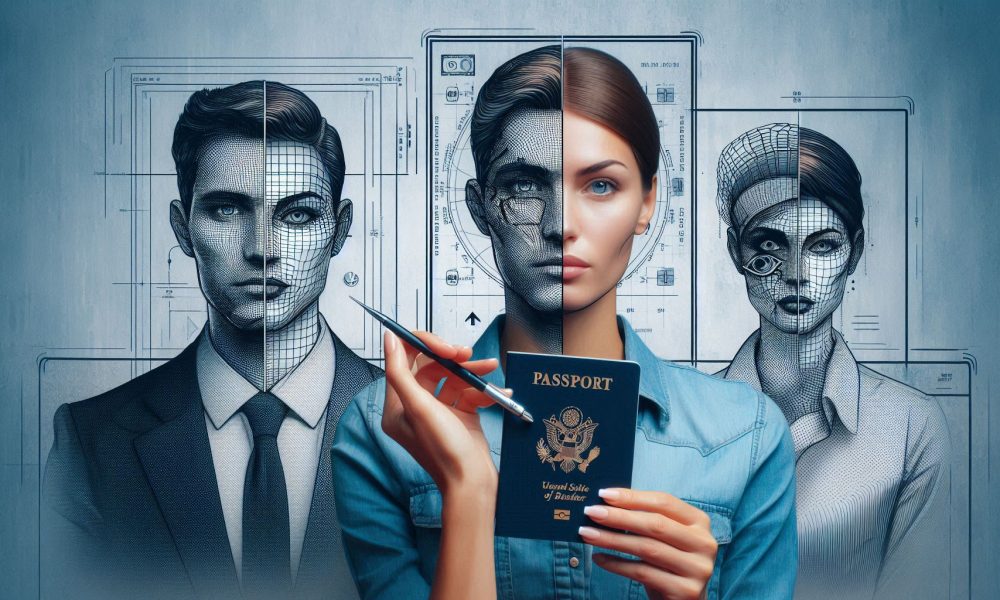
VANCOUVER, Canada – May 26, 2025 – In a time when satellites scan crowds, facial recognition systems identify people in milliseconds, and biometric data links travellers to global databases, one question remains vital for privacy-conscious individuals: Can you still travel anonymously? According to a newly released report by Amicus International Consulting titled “Hidden in Plain Sight: Advanced Anonymous Travel Techniques,” the answer is yes—if you understand the technology and the law.
As global surveillance capabilities expand, Amicus International Consulting, a global authority in legal identity management, second citizenship, and privacy protection, unveils a comprehensive 1700-word report aimed at executives, whistleblowers, dissidents, and high-profile individuals who require secure mobility without compromising their identities.
A Surveillance Era Demands Smarter Strategies
With over 160 countries now using some form of biometric border security, anonymous travel is no longer as simple as taking the road less travelled. Government agencies coordinate through data-sharing agreements, while private corporations gather detailed behavioural information on travellers long before they arrive at an airport. Travellers are tracked through:
Facial recognition at border checkpoints
Mobile device metadata
Banking transactions
Hotel check-ins linked to digital IDs
Wi-Fi triangulation and Bluetooth sniffers in urban areas
Amicus International’s new guide explores how, despite this hyper-connected reality, it remains legally possible to travel with discretion, security, and anonymity, without violating international law.
What Is “Advanced Anonymous Travel”?
Advanced anonymous travel refers to legally compliant methods that reduce or mask a traveller’s identity or data exposure. Unlike illegal travel using forged passports or smuggler routes, Amicus advocates for privacy-preserving strategies that operate within the law.
“Many of our clients are not criminals—they’re targets,” said a spokesperson from Amicus International. “From whistleblowers to domestic violence survivors to CEOs avoiding corporate espionage, the need for lawful, anonymous movement has never been higher.”
Key Anonymous Travel Techniques in 2025
The Amicus report details several techniques to remain “hidden in plain sight”—moving safely and legally through high-surveillance environments:
1. Legal Second Citizenship and Passport Diversification
Holding a second passport legally through citizenship-by-investment or ancestral right allows individuals to separate their travel profiles from their primary nationality, providing greater flexibility in their travel arrangements. This dilutes exposure to country-specific watchlists and restricts data correlation across databases.
2. Biometric Countermeasures
Facial recognition-defeating devices, such as infrared-reflective glasses, pattern-disrupting masks, and textiles embedded with AI-confusing prints, are increasingly used by privacy professionals. While legal in many jurisdictions, Amicus emphasizes researching destination laws before use.
3. Mobile Phone Discipline
Leaving smartphones behind is not practical for most travellers, but Amicus suggests using “clean phones”:
Minimal app installations
Encrypted communication tools
No social media connections
VPN usage and MAC address randomization
Burner phones with eSIMs or international roaming SIMs linked to non-personal data are also recommended for short-term movement.
4. Private and Alternative Travel Routes
Chartered private flights, sea travel, and overland border crossings at non-busy locations can offer entry points with less surveillance infrastructure, as long as travellers comply with all legal entry requirements. The fewer third-party systems involved, the less metadata is created.
5. Anonymous Financial Transactions
Using anonymous or semi-anonymous financial methods, such as prepaid debit cards, Monero/XMR wallets, or travel expense trusts, helps keep payment trails obscure. These must still comply with local anti-money laundering laws, which Amicus assists clients in navigating.
6. Pseudonymous Online Personas
For individuals managing sensitive communications or logistics abroad, Amicus recommends maintaining pseudonymous digital identities—using email, cloud storage, and booking platforms under alternative but legally acquired names, sometimes employing middle names or business entities.
Case Studies: Anonymous Travel in Action
Case Study 1: Female Tech Executive Avoids Corporate Espionage
A high-ranking executive in a biotech firm began receiving threats and unwanted attention from competitors. Amicus assisted her in creating a second legal identity, managing her travel under her alternate citizenship while using biometric-evasion gear and a burner phone. She continued business in Europe and Southeast Asia without triggering her adversaries’ data monitoring.
Case Study 2: Middle East Activist Relocated Safely
A political activist targeted for online dissent was placed under surveillance. With Amicus’s support, he legally changed his name, obtained alternate travel documents via ancestry, and left the region via overland travel. Today, he lives anonymously in a European country with no extradition arrangement with his country of origin.
Case Study 3: Investigative Journalist Reporting Undercover
A Western journalist covering arms trafficking in Africa used clean phone protocols, anonymous lodging networks, and alternative air routes to avoid detection. With Amicus-provided legal tools, she remained “visible” to local officials—but “invisible” to adversaries.
Legal Boundaries of Staying Anonymous
Amicus International is clear: anonymity does not mean illegality. The report stresses:
No use of forged passports or false declarations
All identities must be obtained through lawful channels
Compliance with local customs and entry laws is mandatory
Avoidance of INTERPOL Red Notice violation is essential
Privacy is not a loophole—it’s a right. The techniques Amicus outlines are designed for high-risk individuals with legitimate travel needs to minimize exposure while maintaining safety.
Who Needs This Information?
Whistleblowers under threat of retaliation
High-profile entrepreneurs and inventors
Human rights defenders and NGO workers
Journalists covering conflict or corruption
Political dissidents and refugees
Whether seeking to avoid data profiling, stalkers, or foreign intelligence services, anonymous travel is not a luxury—it’s a survival strategy.
A Future Where Travel Privacy Still Exists
With global surveillance becoming increasingly powerful, Amicus International’s work ensures that privacy remains within reach. They continue to serve clients with integrity, legal precision, and technical sophistication.
“Invisibility is no longer about disappearing—it’s about choosing where and how you’re seen,” the Amicus spokesperson said. “We help clients take control of that decision, legally.”
Google News Optimization
This release adheres to Google News best practices, utilizing structured, keyword-rich subheadings and fact-based, objective language. Key phrases include “anonymous travel techniques,” “how to travel discreetly,” “facial recognition evasion,” and “legal second passport travel.” The document is written in AP Style and avoids promotional tone, ensuring high visibility in news indexing systems.
About Amicus International Consulting
Amicus International Consulting is a global leader in legal identity change, second passport acquisition, privacy residency planning, and digital erasure strategies. With clients in over 60 countries, Amicus provides privacy-focused legal solutions to journalists, executives, dissidents, and high-risk individuals. The firm operates in full compliance with international law and believes that privacy is a right, not a privilege.
📞 Contact Information
Phone: +1 (604) 200-5402
Email: [email protected]
Website: www.amicusint.ca




