
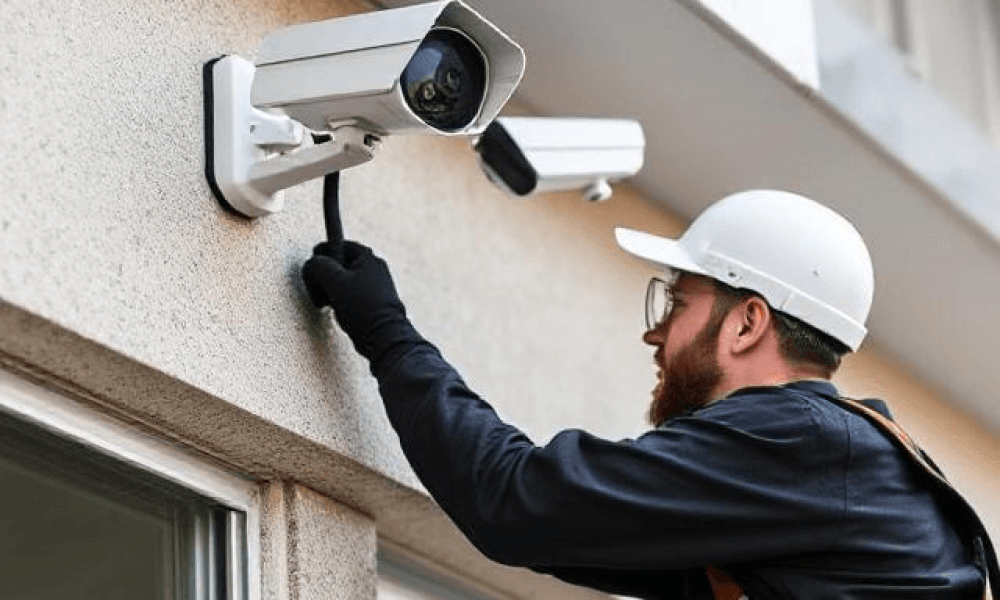
Security systems, including business security cameras, help protect your business, your staff, and your valuables. But many people make mistakes when installing them, which can lead to serious problems. With over 50 years of experience, we’ve seen many of these mistakes. Let’s look at 10 common ones and how to avoid them.
1. Trying to Install It Yourself (DIY Problems)
Some business owners try to install business security cameras on their own by watching online videos. But this can lead to mistakes. We’ve seen people get hurt trying to install cameras on high ceilings. Others mess up the wiring or forget important steps. If you don’t have experience, it’s safer to hire professionals. A mistake could leave your business unprotected.
2. Placing Cameras in the Wrong Spot
One of the biggest problems is placing business security cameras where they can’t capture clear footage. Some cameras don’t show doors or parking lots where incidents usually happen. Others have blind spots. An expert knows where to place cameras to give the best coverage with fewer devices.
3. Forgetting About Windows and Doors
Locks aren’t enough. Windows and doors are the easiest ways for someone to break in. If you forget to add sensors or alarms to them, your system won’t be very useful. Always include glass break sensors and motion detectors to secure every entry point.
4. Using Low-Quality Equipment
If your video is too blurry to see anything clearly, it won’t help in case of theft or damage. Cheap cameras often don’t work well in low light or bad weather. To stay safe, choose the best business security cameras you can afford. High-quality equipment lasts longer and gives clearer footage.
5. Not Training Your Team
A security system only works if people know how to use it. We’ve seen many cases where the system is installed, but nobody knows how to view video, change settings, or share access. Make sure your team is trained so everyone can respond quickly if something goes wrong.
6. Leaving Passwords or Codes Visible
Some people write down their passcodes on sticky notes and leave them on desks or walls. That makes it easy for the wrong person to see them. Always keep passwords private and use secure methods to share them only with trusted employees.
7. Forgetting to Back Up Video Footage
Some cameras only save video for a few hours or days. If a problem happens later, the video may already be deleted. Make sure your system has enough storage to keep footage for at least 30 days. It’s better if it can store up to 6 months.
8. Not Protecting Remote Access
Many security systems can be checked from your phone or computer. But if this connection isn’t secure, someone else could also access it. Use strong passwords and secure apps when connecting to your system from outside your office.
9. Choosing the Wrong Installer
Installing business security cameras is like any construction job. Some companies do it right. Others cut corners and do poor work. Make sure you hire someone with a good reputation, clear pricing, and experience working with commercial buildings.
10. Forgetting About Physical Security
Even with the best system, you still need strong doors and windows. Cameras and alarms help, but locks and reinforced windows are your first line of defense. Don’t ignore them. Make sure your building is secure both digitally and physically.
Final Words
Putting in security cameras for your business is very important. But if you do it the wrong way, it can be risky and cost you money. If you put cameras in the wrong place or use cheap tools, it can cause big problems later. Always make a good plan, use strong and trusted tools, and ask trained people for help. Want to keep your business safe the right way? Get your business security cameras installed by a team that knows how to do it well.




