
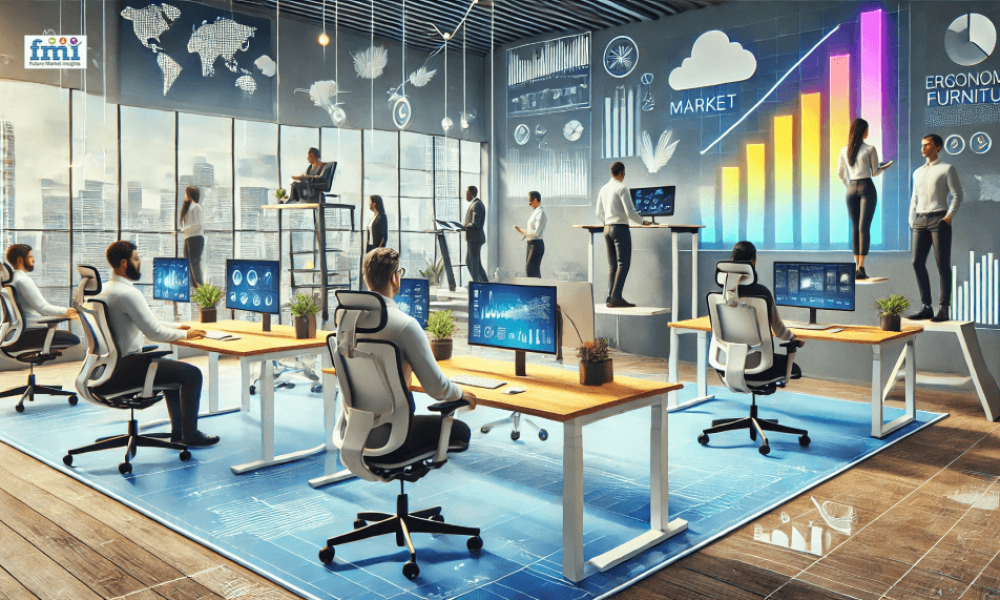
The global market for ergonomic furniture is estimated to grow substantially. In 2024, the market is estimated to reach USD 22,211.8 million, and by 2034, it is projected to reach USD 42,884.1 million, based on a value-based compound annual growth rate (CAGR) of 6.8% from 2024 to 2034. The growth of this market is mainly attributed to increased awareness about health and productivity benefits and growing demand for ergonomic solutions in offices and homes.
This has led to expansion and growth in the market for global ergonomic furniture because people and organizations have become increasingly conscious of being comfortable, productive, and healthy both at work and at home. The call for ergonomics continues to grow as people become more aware of the ill effects of poor posture and long periods sitting. Ergonomic furniture offers comfort by removing physical pressure through good posture and offering support for long hours.
Further, design innovations and incorporation of high technologies along with options for customization, which meets a wide range of requirements, contribute to the growth. More and more businesses opt for ergonomic office space solutions and consumers set up comfortable home offices, especially during the pandemic era, thus opening up greater expansion in the coming years.
Discover key market opportunities – Request your sample report now! https://www.futuremarketinsights.com/report-sample#5245502d47422d3139393334
Key Drivers of Market Growth
- Health Awareness: Concerns for poor posture, back pain, and carpal tunnel syndrome continue to rise in terms of health risks, thus motivating consumers and businesses to spend money on ergonomic furniture. It has created an immense opportunity in the furniture market to ensure a focus on long-term health benefits.
- Increased Adoption of Remote and Hybrid Work Models: Hybrid work cultures are giving rise to ergonomic furniture in home offices. Remote workers need ergonomic furniture that encourages comfort and works as a productivity enhancer. This is creating a massive demand for ergonomic desks, chairs, and accessories.
- Technological Advancements: Smart ergonomic furniture is one of the key drivers. Adjustable desks, chairs that support the lumbar, and latest furniture with built-in sensors for posture correction have been changing the way human beings interact with their furniture.
- Workplace Wellness Programs: Many companies will be prioritizing employee wellness programs and adding ergonomically correct furniture to workspaces. That is part of a larger process of enhancing workers’ productivity levels, reducing rates of absenteeism, and even reducing work injuries.
Regional Analysis
- North America: North America is a significant player in the global ergonomic furniture market, driven by high consumer awareness, robust demand for office furniture, and widespread adoption of remote work practices. The U.S. and Canada are the leading countries in this region, with major companies producing and innovating ergonomic solutions.
- Europe: Europe also holds a substantial market share, with countries like Germany, the U.K., and France contributing to the growth. The region places a strong emphasis on workplace wellness and employee health, further fueling demand for ergonomic office solutions. Additionally, European businesses are increasingly adopting sustainable practices in ergonomic furniture design.
- Asia-Pacific: The Asia-Pacific region is expected to experience rapid growth, driven by an expanding middle class, increasing adoption of ergonomic furniture in offices, and a growing awareness of health issues. Countries like China, Japan, and India are becoming key players, with a shift toward improving work environments and lifestyles.
Uncover new possibilities—explore groundbreaking insights and opportunities with our Home and Living Industry Reports! https://www.futuremarketinsights.com/industry-analysis/home-and-living
Recent Trends in the Ergonomic Furniture Market
- Sustainability and Eco-Friendly Designs: Companies are increasingly focusing on sustainable materials and eco-friendly production methods in their ergonomic furniture lines. There is a growing preference for products made from recycled materials or renewable resources.
- Customization and Personalization: Many consumers and businesses now demand custom-built ergonomic furniture solutions that match individual preferences for comfort and functionality. Adjustable components and tailored designs are becoming more common.
- Integration of Technology: The use of smart features in ergonomic furniture, including posture correction sensors and programmable settings, built-in charging ports among other features, is a prominent trend. Innovations like these enhance the user experience by fostering good working habits.
- Heightened Focus on Employee Well-Being: In the corporate world, ergonomic furniture is no longer a luxury but a requirement for employee health and productivity. Companies have started to embrace well-being office designs centered on comfort and minimizing physical strain.
Competitive Landscape
Key players in the ergonomic furniture market are focusing on line expansion with high-quality products using advanced technology and materials that would help enhance the brand image. They also look for strategic collaboration, mergers, and acquisitions to add diversified products and sustain the market leadership.
Recent Industry Developments
- In 2023, Haworth acquired KJ Ryan, a UK-based high-end car interior manufacturer, and also acquired Zanotta through its Cassina brand. Additionally, they established a long-term partnership with Ralph Lauren to enhance luxury furniture production and open standalone stores.
- In 2023, Global Furniture Group introduced its new Rebound seating series at NeoCon 2023, a versatile stacking chair featuring a patented flex back for optimal comfort. The company also launched the Spyker chair, emphasizing its innovative product offerings.
- In 2023, Teknion launched the Kupp Table, a signature flip-top table designed for versatile use in classrooms and training environments, and entered into a strategic partnership with British Brand Modus to enhance sustainability and product offerings.
Key Players of the Ergonomic Furniture Industry
- Herman Miller, Inc.
- Steelcase Inc.
- Haworth Inc.
- Knoll, Inc.
- Humanscale Corporation
- Vitra International AG
- Global Furniture Group
- Okamura Corporation
- Kokuyo Co., Ltd.
- IKEA
Get Full Access of this Report: https://www.futuremarketinsights.com/reports/ergonomic-furniture-market
Key Segments of the Ergonomic Furniture Industry
By Product Type:
In terms of product type, the industry is divided into chair, desk and accessories.
By Material Type:
The industry is classified by material type as metal, plastic and wood.
By End Use:
The industry is classified by end use as residential and commercial.
By Application:
The industry is classified by application as workplace ergonomics, gaming ergonomics and healthcare.
By Sales Channel:
In terms of sales channel, the industry is segregated into wholesalers/retailers, hypermarket/supermarket, direct sales, online stores, and others sales channel.
By Region:
Key countries of North America, Latin America, Europe, Asia Pacific, and Middle East and Africa (MEA) have been covered in the report.
About Future Market Insights (FMI)
Future Market Insights, Inc. (ESOMAR certified, recipient of the Stevie Award, and a member of the Greater New York Chamber of Commerce) offers profound insights into the driving factors that are boosting demand in the market. FMI stands as the leading global provider of market intelligence, advisory services, consulting, and events for the Packaging, Food and Beverage, Consumer Technology, Healthcare, Industrial, and Chemicals markets. With a vast team of over 400 analysts worldwide, FMI provides global, regional, and local expertise on diverse domains and industry trends across more than 110 countries.




