
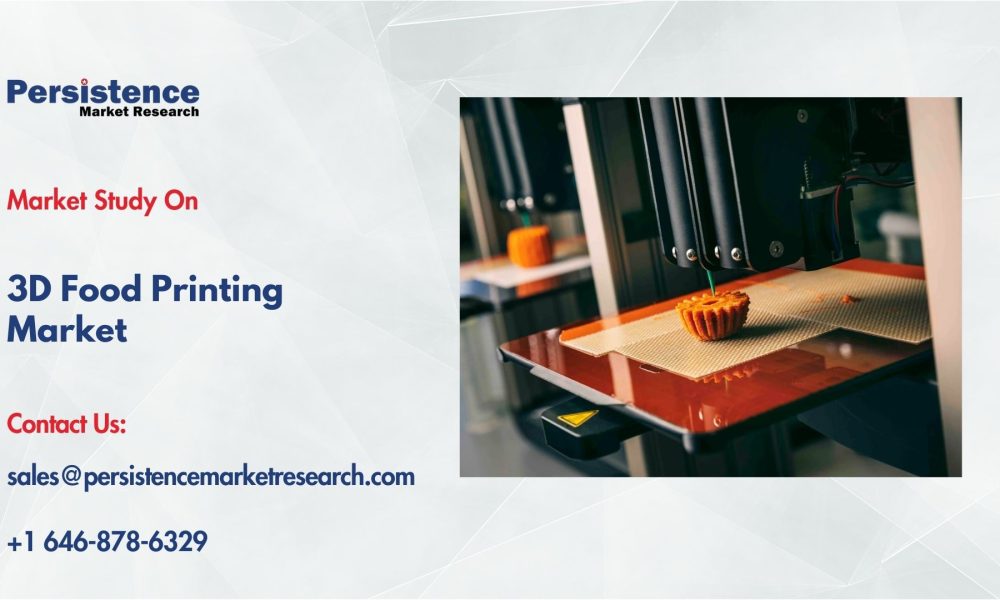
The global 3D food printing market is poised for remarkable growth in the coming years, reflecting the increasing intersection of food technology, consumer demand for customization, and sustainability-driven innovations. Valued at US$320.0 million in 2025, the market is projected to expand significantly, reaching US$1,604.5 million by 2032, at an impressive compound annual growth rate (CAGR) of 25.9% during the forecast period of 2025 to 2032.
This dynamic growth trajectory is underpinned by a surge in demand for food personalization, the adoption of advanced 3D printing technologies, and the increasing awareness of sustainable food production practices. The market is also benefiting from rising investments in food innovation, particularly from food manufacturers, hospitality operators, and healthcare providers looking to provide nutritionally optimized meals with precision.
Among the core growth drivers are the rising demand for plant-based alternatives, heightened interest in food sustainability, and the ability of 3D printing to reduce food waste through precise portioning and tailored ingredient use. Additionally, the expanding use of 3D printing in confectionery, bakery, and savory foods highlights the versatility of the technology, opening pathways to widespread adoption.
What are the key benefits of 3D food printing for the food industry?
The key benefits of 3D food printing include enhanced customization, waste reduction, and scalability. The technology enables manufacturers to design intricate shapes and textures that cannot be achieved with traditional food processing methods. It also allows precise control of ingredient proportions, ensuring consistent quality, nutritional optimization, and sustainability. In industries such as healthcare and space exploration, 3D food printing provides a unique solution for delivering specialized diets or food in challenging environments.
Receive Sample of Research Report @ https://www.persistencemarketresearch.com/samples/11176
Segmentation Analysis
By Type
The 3D food printing market can be segmented by type into extrusion-based printing, inkjet printing, binder jetting, and selective sintering. Among these, extrusion-based printing dominates the market, largely due to its wide applicability in producing intricate confectionery, pasta, and bakery products. This segment has proven highly adaptable, capable of working with diverse ingredients such as chocolate, dough, and plant-based pastes. Inkjet printing, however, is emerging as one of the fastest-growing segments, as it enables the precise deposition of flavors, colors, and edible inks for food decoration and enhanced personalization.
By Product Type
In terms of product type, the market encompasses confectionery, bakery products, savory items, and nutritional food formulations. The confectionery segment has historically been the most prominent due to its ability to create customized chocolates, candies, and intricate edible designs. However, nutritional and functional food formulations are gaining traction, particularly within the healthcare sector. Hospitals and elder care facilities are increasingly adopting 3D food printing to develop meals tailored to patients with specific dietary needs, offering both visual appeal and nutritional precision.
By Technology
The technological landscape of 3D food printing is evolving rapidly, with key innovations focusing on multi-material printing and automated ingredient handling systems. Advanced printers with AI-enabled software are transforming the industry, making it easier to design personalized meals with complex shapes and textures. These advancements are not only enhancing product diversity but also improving efficiency and reducing production costs, further supporting market expansion.
Regional Insights
Geographically, North America leads the global 3D food printing market, driven by high adoption rates in the United States and Canada. The region benefits from robust investments in food technology, strong consumer demand for customized food solutions, and the presence of leading players advancing 3D food printing technology.
Europe represents another critical market, with countries like Germany, the Netherlands, and the United Kingdom embracing 3D food printing in both commercial kitchens and research facilities. Government-supported food innovation programs and strong interest in sustainability are further strengthening Europe’s position in the market.
Meanwhile, Asia Pacific is projected to be the fastest-growing region during the forecast period. Rapid urbanization, growing disposable incomes, and a rising appetite for food innovation in countries like China, Japan, and South Korea are driving demand. Additionally, the region’s strong focus on technology adoption in manufacturing and food processing is fueling rapid advancements in 3D food printing applications.
Do You Have Any Query or Specific Requirement? Request Customization of Report: https://www.persistencemarketresearch.com/request-customization/11176
Unique Features and Innovations in the Market
The 3D food printing market is characterized by unique features that set it apart from traditional food processing. Modern solutions offer an unprecedented level of customization, enabling intricate designs, personalized nutrition, and on-demand food production.
Technologies such as artificial intelligence (AI), the Internet of Things (IoT), and cloud connectivity are enhancing the capabilities of 3D food printers. AI-driven software allows for automated recipe creation and ingredient optimization, while IoT-enabled devices ensure real-time monitoring and control over the printing process. These innovations are enabling manufacturers and end-users to scale operations efficiently while ensuring quality and consistency.
Furthermore, the integration of 5G technology is enhancing connectivity and data exchange, supporting remote operations and faster design-to-production cycles. Together, these advancements are redefining food production, making 3D printing a future-ready solution for both commercial and domestic settings.
Market Highlights
A key reason for the adoption of 3D food printing is its ability to meet diverse consumer demands while aligning with sustainability goals. The technology significantly reduces food waste through precise portioning and allows the use of alternative ingredients such as insect protein, algae, or plant-based substitutes, aligning with the rising demand for eco-friendly food solutions.
Additionally, industries are recognizing the role of 3D food printing in enhancing customer experiences. Restaurants and hotels are using the technology to create visually stunning, customized dishes that elevate dining experiences. Healthcare institutions are adopting it to prepare meals that cater to specific medical conditions, offering patients both appealing and nutritious options.
Government regulations around food safety and sustainable practices are also supporting market expansion. As regulatory frameworks evolve, they are creating pathways for standardization and widespread adoption, further strengthening the global outlook.
Key Players and Competitive Landscape
The competitive landscape of the 3D food printing market is characterized by innovation, strategic collaborations, and regional expansion.
- Natural Machines: A pioneer in the field, Natural Machines is known for its Foodini printer, which is widely used in commercial kitchens and healthcare facilities. The company emphasizes sustainability and personalized nutrition as part of its strategic vision.
- byFlow: Based in the Netherlands, byFlow has carved a niche in the market by focusing on accessible and easy-to-use food printers. Its printers are used in restaurants, research institutions, and catering businesses across Europe.
- 3D Systems Corporation: Leveraging its strong expertise in 3D printing technologies, the company has extended its portfolio to include food-related applications. Its focus on R&D and collaborations with food manufacturers positions it as a leading innovator.
- BeeHex: Known for its pizza printing technology, BeeHex has attracted attention from both the aerospace sector and commercial kitchens. The company’s focus on high-speed, large-scale food printing makes it a notable player.
- Print2Taste GmbH: Specializing in flavor cartridges and food-grade printing materials, Print2Taste is enhancing the functionality and appeal of 3D food printers. Its innovative approach to ingredient use sets it apart in the competitive landscape.
These players, alongside emerging startups and regional innovators, are contributing to the overall expansion of the market by offering diverse solutions and enhancing consumer accessibility.
Outlook
The future of the global 3D food printing market is defined by immense growth opportunities, driven by rising consumer demand for personalized, sustainable, and visually appealing food solutions. With evolving technologies such as AI, IoT, and 5G enhancing product capabilities, the market is expected to experience a surge in adoption across commercial kitchens, healthcare institutions, and even household settings.
Government initiatives promoting food sustainability, coupled with ongoing regulatory support, will further encourage widespread implementation. Looking ahead, as the food industry continues to evolve, 3D food printing is set to play a transformative role, reshaping how food is prepared, consumed, and experienced worldwide.
Explore the Latest Trending Research Reports:




