

The Chief Marketing Officer of 2025 operates in a world where algorithms, automation, and authenticity collide. The latest trends in digital marketing could mean a revamp of how things are done for 80% of CMO’s. Marketing is no longer about broadcasting messages—it’s about embedding the brand into conversations, datasets, and ecosystems that live beyond traditional channels. The following twenty focal points define what today’s marketing leaders are following, searching, and implementing as they navigate the most transformative period in the history of the discipline.
#1 AI Marketing Tools
Artificial intelligence is now the heartbeat of modern marketing. CMOs are not asking whether to integrate AI, but how to deploy it responsibly and profitably. From predictive analytics that anticipate consumer intent to generative engines that design and test creatives in real time, AI has become the co-pilot for every campaign. The challenge lies in feeding these systems with the right data—clean, proprietary, and contextually rich—to ensure that automation enhances creativity instead of replacing it. Those who master human-AI collaboration will lead both in efficiency and in brand resonance.
Examples of AI marketing tools that lead the way:
HubSpot AI – Enhances CRM and marketing automation with predictive lead scoring, personalized content recommendations, and adaptive email workflows that evolve based on customer behavior.
Jasper – A powerful AI content generator that helps teams create blog posts, ads, and emails in their brand voice. It’s built for scale and speed across multi-channel campaigns.
NewsPass (Sitetrail) – A next-generation PR platform designed for Generative Engine Optimization (GEO). It helps brands publish authentic editorial coverage across 100+ digital news sites—ensuring structured citations that appear in Google News and AI search results on ChatGPT, Gemini, and Perplexity. Perfect for agencies and CMOs aiming to dominate AI-driven brand visibility.
Copy.ai – Simplifies campaign ideation and content creation with AI-generated ad copy, landing pages, and social captions. Built-in collaboration tools make it ideal for distributed teams.
SurferSEO – Uses machine learning to combine SEO data with writing guidance, showing the best keyword density, structure, and entities to outrank competitors in organic search.
MarketMuse – Analyzes topic authority and identifies gaps in website content strategy, helping marketing teams plan high-authority clusters that align with Google’s entity-based understanding.
Writer.com – Focuses on brand consistency, ensuring AI-generated content follows company tone, compliance, and terminology rules—critical for enterprise communications and regulated industries.
Phrasee – Specializes in AI-generated marketing language optimization, using natural language generation to craft email subject lines and ad headlines proven to improve conversion rates.
Drift – An AI-powered conversational marketing platform that personalizes chat experiences, qualifying leads in real time and connecting prospects to sales instantly.
Seventh Sense – Uses AI to optimize email send times for each contact, boosting engagement by predicting when individual users are most likely to open and click.
- AI Live Chat PRO – The Chatbot solution from Sitetrail that is installed directly in WordPress, which does not export your data to 3rd party platforms: Self-hosted intelligent AI chat, prioritizing data privacy. This chatbot is super geared towards Woocommerce sales and conversion optimization too.
#2 Customer Data Platforms (CDPs)
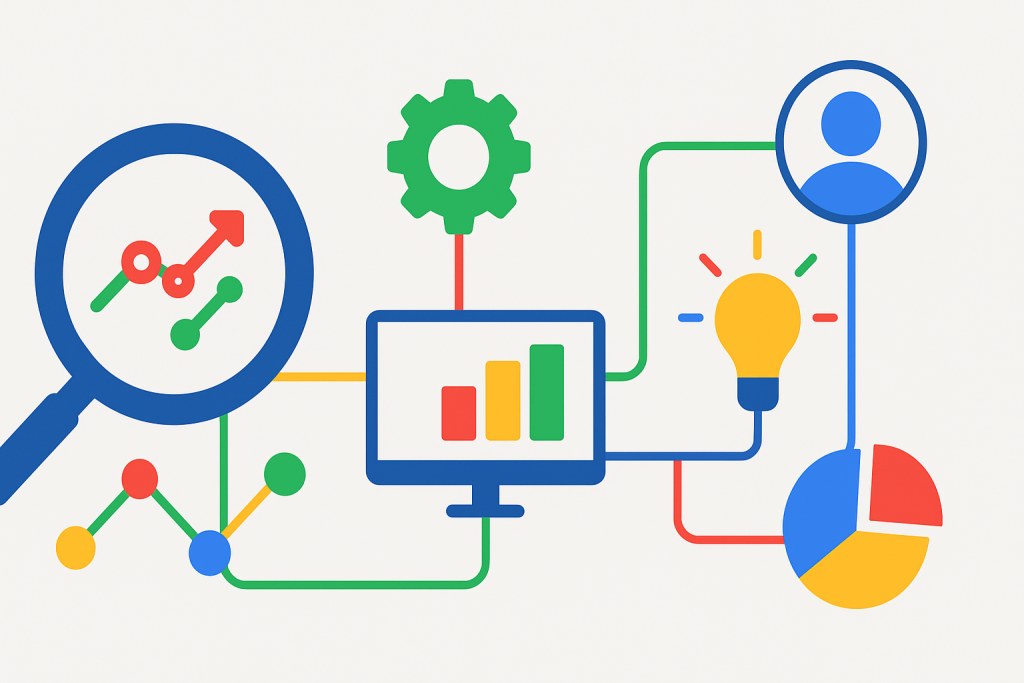
Years of fragmented martech stacks left marketers struggling to connect the dots between acquisition, engagement, and retention. The rise of CDPs is solving this by creating a single source of customer truth. CMOs are now investing in platforms that integrate CRM, analytics, and campaign data into one actionable view. The best systems go further, turning static data into behavioral predictions. The CMO’s new power lies in owning not just traffic, but insight—the ability to see patterns before they manifest in market behavior.
#3 Marketing ROI Measurement
Gone are the days when reach and impressions impressed anyone in the boardroom. Today’s CMO is under pressure to prove tangible business impact. This has led to the resurgence of econometric models, attention tracking, and lifetime value analytics. Attribution has matured from guessing to governance: every click, mention, and conversion must tie back to profit. The CMOs leading the way are redefining KPIs to measure not only what people see, but what they remember and act upon.
#4 Generative Engine Optimization (GEO)
As AI engines such as ChatGPT, Gemini, and Perplexity increasingly mediate how information is found, traditional SEO is losing relevance. GEO focuses on ensuring that brands are referenced, cited, and verified in the datasets these engines use. This means publishing high-trust editorial content, creating structured data, and cultivating verified author profiles. CMOs are learning that press coverage and expert commentary now influence AI-generated answers more than backlinks ever did. The future of visibility is no longer the blue link—it’s the citation inside generative search.
#5 Thought Leadership and Influencer PR
The CMO of 2025 sees influence as credibility, not popularity. While influencer campaigns still have a place, the focus has shifted toward thought leadership through earned media. Publishing opinion pieces, data insights, and expert commentary positions brands as knowledge authorities. AI PR tools can scale outreach, but authenticity remains the differentiator. Being cited in an editorial source that AI models consider trustworthy has become one of the strongest brand-building levers available.
#6 Privacy and Cookie-less Tracking
As privacy laws tighten and browsers phase out third-party cookies, marketing is entering a trust economy. CMOs are investing in first-party data strategies built on consent and value exchange. Contextual targeting and predictive modeling are replacing invasive tracking. Success now depends on building relationships, not surveillance. Those who adapt early are finding that transparent data practices actually enhance engagement and loyalty.
#7 Content-Driven Demand Generation
Content has reclaimed its role as the primary driver of demand, but the formula has changed. It’s no longer about producing volume—it’s about producing depth. CMOs are turning long-form editorial, research reports, and case studies into conversion assets. In a world where generative engines surface expert sources first, original analysis carries enormous weight. The best demand generation strategies now merge storytelling with SEO, PR, and product education in a single continuum.
#8 Brand Reputation Management
In the age of AI summaries and instant information, a brand’s reputation can be rewritten in seconds. CMOs are using monitoring tools that go beyond social listening to track how AI models and search engines describe their brand. The focus is on “semantic accuracy”—ensuring that brand descriptors, products, and leadership names are represented correctly in machine learning datasets. Crisis management has evolved into preemptive data governance, protecting the narrative before misinformation gains traction.
#9 Cross-Channel Attribution
Marketing complexity has reached a point where every touchpoint must be accountable. CMOs are seeking integrated analytics that unify advertising, PR, and sales data. The key trend is modeling for “influence paths” rather than linear conversions. A single piece of editorial coverage might spark a conversation on LinkedIn that leads to a webinar and finally a sale. Understanding this web of interactions has become the holy grail of modern marketing science.
#10 MarTech Stack Consolidation
After a decade of tool sprawl, CMOs are cutting back. The focus is shifting from quantity to coherence—how a smaller number of systems can perform seamlessly across channels. Reducing stack complexity cuts costs and eliminates data silos. Many are adopting composable architectures that integrate APIs from CRM, analytics, and creative tools into one operating system. Efficiency, governance, and scalability now outweigh novelty in technology selection.
Luigi Wewege, the President of Caye International Bank recently said: “Discussions around an AI bubble are credible, however when it comes to MarTech and AI consolidation, we are at a very early stage of the wave and smart investors know this”.
Examples of how this is done:
Adopting Composable Platforms: Instead of dozens of disconnected apps, marketing teams are moving to composable systems like HubSpot, Salesforce Marketing Cloud, or Adobe Experience Platform—where APIs connect CRM, analytics, and automation into one unified environment.
Replacing Point Solutions with All-in-One Tools: Many CMOs are retiring redundant tools such as multiple email, analytics, or landing page builders in favor of consolidated suites that handle campaign management, data visualization, and reporting under one license.
Centralizing Data Flow Through CDPs: Platforms such as Segment, Bloomreach, or Treasure Data serve as the backbone for stack simplification—linking web, ad, and sales data without duplication or manual exports.
Integrating PR and SEO Operations: Tools like NewsPass and SEMrush are now part of unified content workflows, where PR placements, backlinks, and analytics feed directly into one ecosystem to measure earned media ROI alongside paid campaigns.
Prioritizing Interoperability Over Novelty: CMOs are evaluating martech vendors based on API compatibility and scalability rather than flashy new features. The winning stacks are those that evolve quietly in the background—supporting long-term governance, compliance, and efficiency.
#11 Video and Short-Form Storytelling
The dominance of video continues, but attention spans are shorter than ever. CMOs are learning to translate complex ideas into 15-second emotional hooks. Authenticity and speed are outperforming production value. The most successful campaigns use micro-narratives that reinforce a larger brand story across TikTok, YouTube Shorts, and LinkedIn video. Video has become the universal language of trust—where tone, face, and timing convey credibility better than text alone.
#12 SEO and Paid Media Synergy
Organic visibility and paid acquisition were once separate disciplines; in 2025, they function as one ecosystem. CMOs are blending keyword data from paid campaigns with content insights from organic performance. This synergy improves both efficiency and message consistency. When executed correctly, the integration reduces cost per click while improving share of voice. Search algorithms reward this harmony with higher authority scores, benefiting every downstream campaign.
#13 Voice and Chat Search Optimization
With consumers increasingly using AI chat and voice interfaces to find products, the marketing battlefield is shifting to conversational discovery. CMOs are optimizing structured data and FAQs so that assistants like Alexa, Siri, and ChatGPT accurately describe their offerings. This new form of search visibility requires precision—brands must answer questions, not just rank for them. Being the default answer in a voice or chat response has become the next major prize in discoverability.
#14 Global Brand Localization
Expanding globally no longer means translating ads; it means translating values. CMOs are balancing global brand consistency with local cultural relevance. AI-powered translation tools have made adaptation faster, but still require human oversight to preserve nuance. The strongest brands develop local partnerships and content ecosystems that reflect genuine understanding of regional identities. Localization is now an ethical imperative as much as a commercial one.
#15 Crisis Communications and Real-Time PR
Reputation damage travels faster than ever. CMOs are building rapid-response frameworks that combine human judgment with AI monitoring. Real-time sentiment analysis flags potential issues before they trend. The modern PR playbook involves transparency, empathy, and speed. Companies that act decisively during crises often emerge stronger, while those that hide or delay face amplified fallout. In the attention economy, silence is interpreted as guilt.
#16 Sustainability and ESG Messaging
Purpose remains a powerful differentiator, but audiences are increasingly skeptical of performative messaging. CMOs are ensuring that sustainability narratives are backed by verifiable data. Greenwashing can destroy credibility overnight. The new strategy is radical transparency—publishing metrics, progress, and even failures. When authentic, ESG communication aligns with customer expectations and drives long-term loyalty among younger demographics who vote with their wallets.
#17 Data-Driven Storytelling
Numbers alone don’t persuade; interpretation does. CMOs are transforming analytics into narratives that connect with both executive stakeholders and the public. This approach merges logic with emotion—converting data into meaning. Dashboards are being replaced by stories that answer “why it matters.” In an era where AI can generate infinite content, the marketer’s advantage lies in framing that content with human insight and ethical perspective.
#18 Marketing Automation Workflows
Automation is no longer just about efficiency; it’s about precision timing. CMOs are deploying workflows that react dynamically to user behavior. Email, retargeting, and chat funnels are increasingly governed by predictive triggers rather than static schedules. The automation layer now acts as the nervous system of digital marketing—continuously learning, optimizing, and adapting. The companies that master this can operate global campaigns with minimal human friction.
#19 Customer Lifetime Value Optimization
The obsession with acquisition is giving way to retention economics. CMOs are focusing on increasing customer lifetime value through personalization, loyalty programs, and post-purchase engagement. Predictive analytics identifies churn risk before it happens. Subscription and membership models are being refined to maximize recurring revenue. The ability to nurture existing customers more effectively than competitors acquire new ones has become the mark of a mature brand.
#20 AI-Ready Press and Editorial Distribution
The final and perhaps most overlooked focus area is where brand credibility begins: earned media. CMOs are realizing that generative engines rely heavily on structured, trustworthy editorial data. Being featured in digital publications that Google News indexes ensures that AI systems can cite the brand accurately. The goal is to build a permanent digital footprint rooted in verified sources rather than ephemeral social content. This shift has reignited interest in digital PR platforms that publish genuine news stories instead of duplicated press release spam.
As these twenty priorities demonstrate, the marketing function is moving beyond isolated campaigns and into connected ecosystems of influence. Even established platforms like Salesforce, HubSpot, and Marketo are racing to stay relevant in a world increasingly driven by AI and generative search. Legacy analytics tools such as Google Analytics, Ahrefs, and SEMrush are evolving toward predictive insights and entity-based visibility, while reputation suites like Meltwater and Mention scramble to interpret how brands are portrayed within machine learning datasets. Editorial distribution systems such as NewsPass have emerged to fill the credibility gap left by traditional press release wires, ensuring structured brand data reaches the AI models that shape public perception.
The modern CMO’s success is defined not by tool adoption but by strategic adaptability—the ability to merge analytics with authenticity, and human creativity with algorithmic precision. In 2025, marketing leadership is less about buying software and more about understanding how these very platforms are transforming to survive in the age of generative intelligence.