
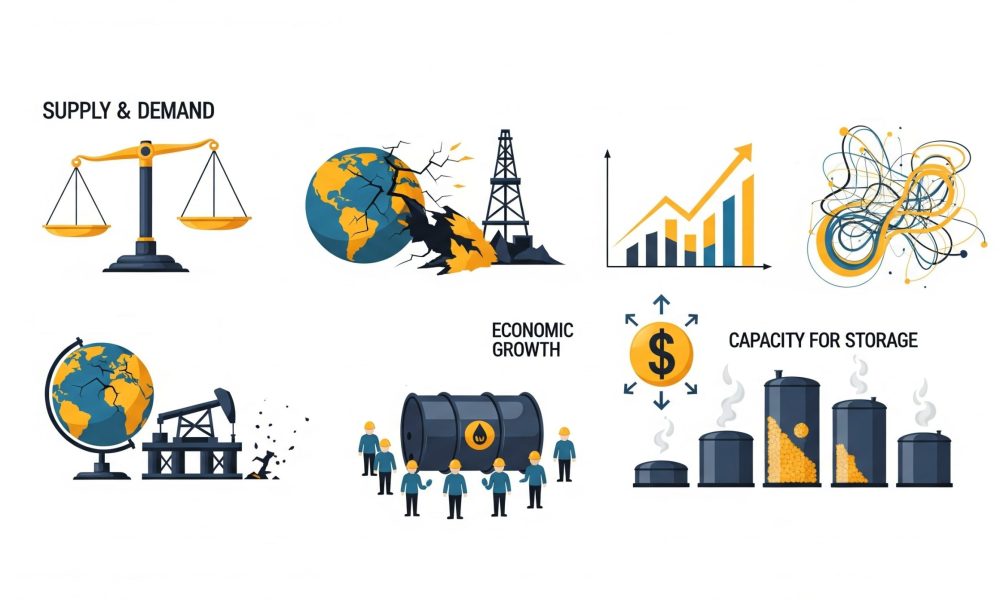
Even though oil prices can be amongst the most closely followed economic indicators globally, it still puzzles many to understand why there are so many changes in the markets of crude oil. Although they appear random and unpredictable, these price fluctuations in actual sense do follow patterns which are influenced by certain factors that anyone can be trained to understand. Learning these principles is important to new entrants into the energy markets so that they can comprehend daily news headlines and economic discussions. This can be utilized within the context of personal finances as well as a general awareness of how oil price affects everything ranging up to the stability of world economics.
1. Supply and Demand: The Foundation of Price Discovery
Supply and demand, a basic economics principle, according to which the prices rise as a result of demand outweighing supply and drop in case demand is lower than supply, is the first element affecting oil prices. The pattern of oil consumption in all parts of the globe is affected by the seasonal changes, the activity level of industries in different areas and the development of the economy. On the supply side, the quantity of crude oil which enters the market is determined by the technology of production, new discoveries of oil reserves and the quantity of oil production by large producers. This connection should be known in order to realize why the prices of oil might change greatly when major producers face some delay in production or when the economy of the world changes rapidly, which affects the trends of energy consumption patterns across the world.
2. Geopolitical Events Shape Market Sentiment
In the wake of potential supply disruptions, political instability, wars, and diplomatic pressures in oil-intensive states result in great price fluctuations. Unstable political conditions in key oil producing countries often threaten to affect the capacity to supply oil resulting in the merchants creating artificial shortages through increasing prices. The movement of oil may be instantly affected by trade issues, international sanctions, and armed conflicts, which often lead to the rapid fluctuation of prices. As market players attempt to position themselves for possible supply chain interruptions that may never materialize, even rumors or fears of political unrest in important oil locations can cause significant price swings.
3. OPEC Decisions Drive Global Production Levels
The organization of the petroleum exporting countries influences pricing of oil significantly by regulating production decisions of its member states. Although increase in production normally leads to reduction in prices, when OPEC announces that it is cutting production normally the prices of oil increase because of the reduction of the world supply. These decisions are portrayed by strategic issues surrounding market shares, revenue maximisation, and the geo-political relationship amongst the member states. Since OPEC exercises a significant influence in the supply of oil and subsequently the international market prices, being able to collectively produce oil, energy traders and authorities keenly watch its meetings as well.
4. Economic Growth Patterns Influence Energy Consumption
With goods being produced on a larger scale, there is a growing transport deamand and as more people spend more money on various fields the oil requirement is also growing in correlation with the world economic development. During recessions oil demand would normally decrease due to slow production processes, limited movement and in general a reduced commercial activity. Though the intake of developed nations may be considered more reliable, the emerging economy that has propelled industrial growth at an alarming rate is the core source of the knowingly intensifying demand in oil. Oil demand is also influenced by seasonal economic trends, since most areas use more energy during the summer driving season, and winter heating season, making price fluctuations predictable year-round.
5. Currency Strength Affects Oil Pricing Dynamics
Since oil prices are usually reported in US dollars, currency exchange rates play a big role in figuring out how much oil actually costs in other nations. When the dollar appreciates compared to other currencies oil becomes more expensive to customers using foreign currencies and this could reduce the demand and prices. Conversely, a weakening dollar reduces the cost of oil to overseas consumers, an event that may increase the demand and the price. Due to this connection, interest rates, monetary policy, and the US economy could influence oil prices in the global economy indirectly by influencing the value of dollar in the foreign exchange market.
6. Storage Capacity and Inventory Levels Matter
Since oil storage facilities do not have very high capacities, the prices would decrease tremendously because producers would want to store excess output when storage facilities become near capacity. Conversely, with low levels of storage, the prices tend to rise since the market anticipates shortages. Strategic petroleum reserves held at government level have the ability to affect the nature of the market because releases can be used to help hold prices stable when there is a break in supply. The weekly inventory reports of various organizations provide essential details pertaining to the balances between supply and demand, and traders are keen on monitoring these data to understand market conditions to adjust their inventory accordingly.
7. Market Speculation and Trading Psychology
Financial markets play a major role in causing the changes in the price of oil, through speculation, future trading, and the sentiment of the investors, which do not necessarily reflect current drivers of supply-demand. In the short term, traders engaged in buying and selling oil futures due to forecasts of future price fluctuations can lead to much fluctuation in price. Market psychology such as fear, greed and herd mentality can cause an exaggeration of price movements far beyond anything that is justified by the underlying economic forces. The reasons why oil prices tend to be sometimes so far removed from the realities behind supply and demand are more comprehensible when we take into account that the oil prices reflect both the financial and physical market situations.
Conclusion
The complex systems of association between multiple factors, including basic supply-demand economics and more complex phenomena of money markets, should be identified to understand the shift in oil price. Experienced analysts have difficulty predicting the accurate movement of prices, but these simple concepts provide valuable clues to comprehend why oil prices act as they do. This knowledge helps individuals to better understand the economic news, make more informed financial choices on their behalf and see the broader impact of actions taken at the energy market on the conditions of the world economy and daily existence.