
Wheat Gluten Market Overview :
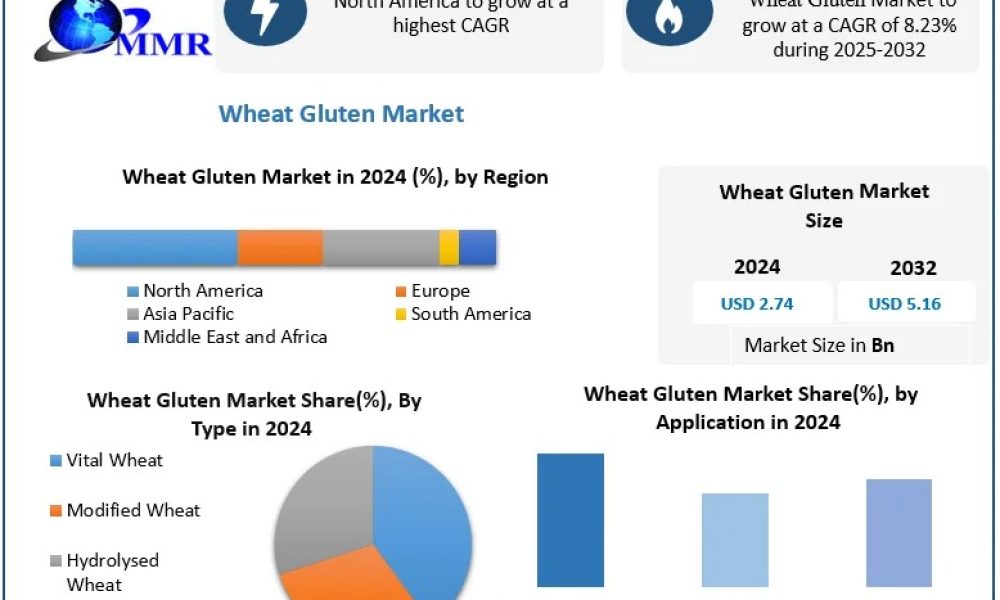
Wheat Gluten Market was valued at USD 2.74 billion in 2024 and is projected to reach USD 5.16 billion by 2032, growing at a CAGR of 8.23% during the forecast period from 2025 to 2032. This growth is primarily driven by the increasing demand for plant-based diets, the rise of vegan and vegetarian food products, and the growing preference for clean-label ingredients in food manufacturing.
Key Highlights & Insights
Market Size & Growth: The wheat gluten market is expected to expand from USD 2.74 billion in 2024 to USD 5.16 billion by 2032, reflecting a CAGR of 8.23%.
Dominating Region: North America is anticipated to lead the market, driven by the growing demand for plant-based and vegan products, as well as significant investments by key players in the region.
Leading Application: The food and beverage sector holds the largest share in the wheat gluten market, with increasing utilization in bakery products, meat analogs, and other processed foods.
Key Drivers: Rising consumer awareness about health and sustainability, along with the growing popularity of plant-based diets, are major factors contributing to the market’s growth.
Market Dynamics
Growth Drivers
Plant-Based Diets: The shift towards plant-based diets is creating opportunities for wheat gluten as a meat substitute in vegetarian and vegan dishes. Wheat gluten’s high protein content and meat-like texture make it an ideal ingredient for meat analogs.
Clean Label Trends: Consumers are increasingly seeking products with natural and recognizable ingredients. Wheat gluten, being a clean-label and natural ingredient, aligns with these consumer preferences, driving its demand in food manufacturing.
Health and Sustainability Awareness: Growing concerns about health and environmental sustainability are prompting consumers to opt for plant-based and clean-label products, further boosting the demand for wheat gluten.
Challenges
Allergenicity Concerns: Wheat gluten is a known allergen, and its consumption can lead to adverse reactions in individuals with celiac disease or gluten sensitivity. This poses a challenge for its widespread adoption.
Price Volatility: Fluctuations in wheat prices can impact the cost and availability of wheat gluten, affecting market stability.
Regulatory Issues: Stringent regulations regarding food labeling and ingredient disclosures can pose challenges for manufacturers in marketing wheat gluten-based products.
Opportunities
Product Innovation: There is significant potential for innovation in wheat gluten-based products, including the development of gluten-free alternatives and new meat analogs, to cater to the evolving consumer preferences.
Emerging Markets: Growing awareness and adoption of plant-based diets in emerging markets present new opportunities for the wheat gluten market.
Strategic Partnerships: Collaborations between wheat gluten producers and food manufacturers can lead to the development of new products and expansion into new markets.
Unlock more insights—request a free sample report now.https://www.maximizemarketresearch.com/request-sample/220459/
Regional Analysis
North America: Dominates the wheat gluten market due to the high demand for plant-based and vegan products, as well as significant investments by key players like Archer Daniels Midland Company and Cargill.
Europe: Exhibits steady growth, driven by increasing consumer awareness about health and sustainability, and the rising popularity of plant-based diets.
Asia-Pacific: Expected to witness rapid growth, attributed to the increasing adoption of plant-based diets and the expanding food processing industry in countries like China and India.
Latin America & Middle East & Africa: Emerging markets with potential growth opportunities due to changing dietary patterns and economic development.
Product Segmentation
| Segment | Description |
|---|---|
| By Type | Vital Wheat Gluten, Modified Wheat Gluten, Hydrolyzed Wheat Gluten |
| By Application | Food and Beverage, Pharmaceuticals, Pet Foods |
| By Region | North America, Europe, Asia-Pacific, Latin America, Middle East & Africa |
Key Trends
Clean-Label Products: Increasing consumer demand for transparency and natural ingredients is driving the development of clean-label wheat gluten products.
Functional Foods: Rising interest in functional foods that offer health benefits beyond basic nutrition is boosting the use of wheat gluten.
Sustainable Practices: Adoption of sustainable farming and production practices is becoming a key focus for industry players to meet environmental and consumer expectations.
Quote
“As consumer preferences shift towards plant-based diets and functional foods, the wheat gluten market is experiencing significant growth. Innovations in product formulations and a focus on sustainability are key factors driving this expansion,” said an industry analyst.




