
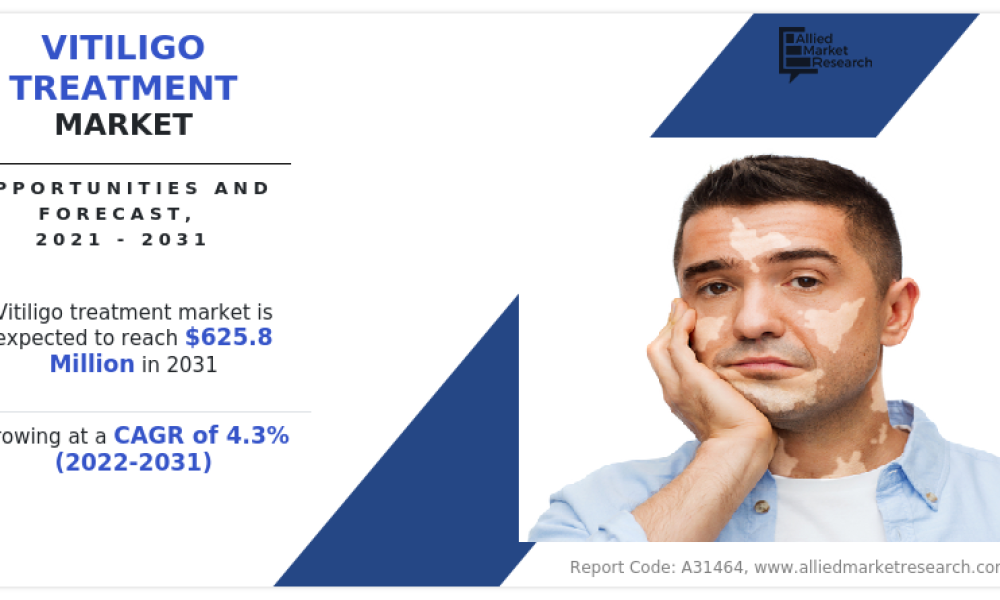
The global vitiligo treatment market was valued at $410.5 million in 2021 and is projected to reach $625.8 million by 2031, growing at a CAGR of 4.3% (2022–2031). The market growth is fueled by an increasing prevalence of vitiligo, rising awareness among patients, and strong R&D efforts from pharmaceutical companies to develop innovative therapies.
Understanding Vitiligo
Vitiligo is a chronic autoimmune skin disorder that causes the loss of skin pigmentation in patches due to the destruction or dysfunction of melanocytes — pigment-producing cells responsible for melanin. The condition can affect the skin, hair, mouth, hands, eyes, and neck. While vitiligo does not pose life-threatening risks, it can lead to eye and hearing issues, sunburn sensitivity, and co-existing autoimmune diseases such as thyroid disorders and anemia.
There is currently no permanent cure for vitiligo, but treatment options such as corticosteroids, calcineurin inhibitors, phototherapy, and systemic medications help manage symptoms and slow disease progression.
Get a Sample Copy of this Report: https://www.alliedmarketresearch.com/request-sample/A31464
Key Market Drivers
Rising global prevalence: According to the Global Vitiligo Foundation (2021), nearly 70 million people worldwide live with vitiligo, with 20–30% being children.
Dominance of non-segmental vitiligo: This type is the most common, affecting 0.77% of the global population (National Library of Medicine, 2020).
Increasing demand for new treatments: Growing need for therapies with better potency, safety, and outcomes is driving innovation.
Advancements in R&D: Major pharma players like Incyte Corporation, Pfizer, Mylan N.V., and Astellas Pharma are investing in novel therapies and gaining regulatory approvals.
Awareness campaigns: Increasing recognition of vitiligo in developed and developing nations such as the U.S., Germany, Japan, and India is propelling treatment adoption.
Market Restraints
High cost of treatments remains a barrier in low-income regions.
Side effects of therapies: Prolonged use of corticosteroids may cause burning and stinging sensations, impacting long-term adherence.
COVID-19 Impact
The pandemic significantly disrupted the vitiligo treatment market. Outpatient visits declined by nearly 60% in 2020 (Commonwealth Fund), reducing the demand for therapies. Corticosteroid prescriptions also decreased. However, the market began to recover in 2021, with stable long-term growth expected as healthcare services normalize.
Market Segmentation
By Drug Class Type
Corticosteroids held the largest share in 2021 and are expected to remain the fastest-growing segment (2022–2031) due to their anti-inflammatory benefits and frequent use as first-line therapy.
Calcineurin inhibitors and others are also gaining momentum as alternative treatments.
By Type
Non-segmental vitiligo dominated in 2021 and is projected to continue its lead, driven by higher prevalence and awareness.
Segmental vitiligo, though less common, is an emerging area for targeted treatment research.
By Distribution Channel
Drug stores and retail pharmacies were the leading distribution channel in 2021, supported by high prescription drug sales.
Online pharmacies are expected to witness significant growth due to convenience, affordability, and e-pharmacy expansion.
By Region
North America accounted for the largest market share in 2021, supported by advanced healthcare infrastructure and strong presence of pharmaceutical players.
Asia-Pacific is expected to grow at the fastest pace during the forecast period due to a large patient base, rising healthcare spending, and active R&D investments in China and India.
Competitive Landscape
Leading players in the vitiligo treatment market include:
Arcutis Biotherapeutics
Astellas Pharma Inc.
Bausch Health Companies Inc. (Bausch+Lomb)
Bristol Myers Squibb
Dermavant Science Inc.
Dr. Reddy’s Laboratories Ltd.
Incyte Corporation
Merck KGaA
Pfizer Inc.
Viatris Inc. (Mylan N.V.)
Strategic moves such as product launches, collaborations, and licensing agreements are key growth tactics. For instance, Arcutis partnered with Jiangsu Hengrui Medicine Co. Ltd. to exclusively license ARQ-252, a highly selective JAK1 inhibitor, for topical dermatological uses across North America, Europe, and Japan.
Future Outlook
The global vitiligo treatment market is poised for steady growth, driven by:
Rising demand for effective and safe therapies
Expanding access to treatments in emerging economies
Increasing focus on precision medicine and biologics
Growth of e-pharmacy platforms
As awareness rises and innovation accelerates, the market is expected to transform, offering better outcomes and quality of life for millions of patients worldwide.




