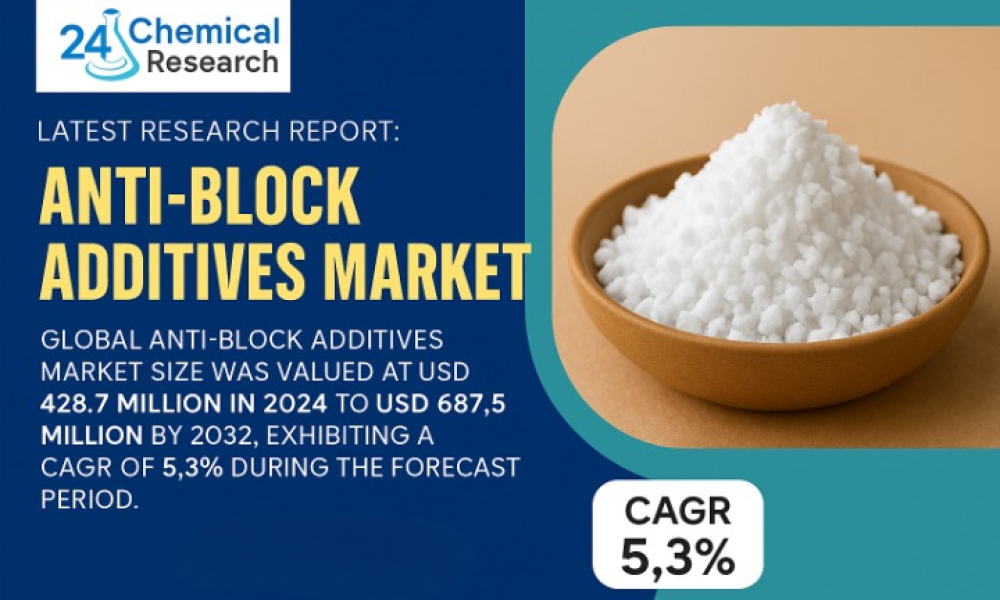
U.S. anti-block additives market reached USD 428.7 million in 2024, with projections showing steady growth at a CAGR of 5.3%, expected to reach approximately USD 687.5 million by 2032. This growth is primarily fueled by the increasing demand for flexible packaging in the food, pharmaceutical, and agricultural sectors, where these additives are crucial in preventing polymer film adhesion during processing and storage.
Curious about market dynamics? Grab our Sample Report for an in-depth look – https://www.24chemicalresearch.com/download-sample/223854/united-states-antiblock-additives-market
Key Industry Dynamics Shaping Growth
- Scaling Flexible Packaging Sector
Flexible packaging now accounts for over 40% of plastic use in the U.S. Its growth, particularly in frozen foods (which represent 35% of polyethylene film use), is driving the demand for anti-block additives. These additives enhance film handling, processing speed, and shelf-life. - Innovation in Nanoparticle-Based Additives
Nanocomposite anti-block agents, which are used at low loadings (0.1–0.5%), offer superior performance while maintaining film clarity. This segment is forecasted to grow at an 8% CAGR through 2032, particularly benefiting BOPP and CPP films. - Regulatory Pressure & Purity Requirements
Stricter FDA regulations (updates to 21 CFR 175–178) are increasing purity standards, especially for food and pharmaceutical packaging. This is driving demand for ultra-pure inorganic additives and reformulations of existing products.
- Scaling Flexible Packaging Sector
- Raw Material Price Volatility
Key feedstocks like silica and talc account for 40–60% of costs. In 2023, these materials saw price fluctuations of 15–20%, creating pressure on manufacturers to adjust prices or switch to less expensive alternatives.
- Regional Formulation Preferences
- California & Texas: Dominating manufacturing with sustainable food packaging preferences, especially silica-based solutions.
- Midwest: Notable growth in agricultural film applications.
- Northeast: Preference for organic additives like fatty acid amides, especially in medical packaging.
Recent Innovations & Market Trends
- Nanotechnology: Nanoparticles are gaining traction due to their ability to provide anti-block performance with lower dosage and minimal clarity loss.
- High-Speed Production Rollout: Additives optimized for extrusion speeds above 450 m/min are essential to minimize die buildup and boost productivity in monolayer PP film processes.
- Sustainable & Bio-based Additives: The growing demand for biodegradable packaging is pushing the development of additives sourced from agricultural byproducts, aligning with environmental goals.
Market Forecast & Regional Growth
- 2024: USD 428.7 million
- 2032 projection: USD 687.5 million, with a CAGR of 5.3%
North America leads the global market, with the U.S. contributing approximately 85% of the regional volume. Europe and APAC are also growing steadily, with APAC projected to reach USD 540 million in 2023 and grow at over 5% CAGR.
How Leading Players Are Navigating the Market
- Honeywell International: Leads with a vertically integrated, sustainable portfolio tailored for food-safe inorganic anti-block additives.
- Evonik, Clariant, W.R. Grace, Mitsui, Croda, and others: These companies target niche segments, such as pharmaceuticals, agricultural films, and bio-based solutions. They focus on ultra-pure grades, regional production capacities, and partnerships with film manufacturers to meet evolving regulatory and performance demands.
Market Insights
- Why Anti-block Additives Are Vital for U.S. Flexible Packaging: These additives are key to enhancing performance and maintaining product integrity in packaging.
- Nanoparticle Anti-block Agents: The Next-Gen Solution: Nanoparticles are setting the standard for high-performance additives with minimal clarity loss.
- FDA Updates Push Demand for Ultra-pure Additives: Regulatory shifts are driving the demand for higher purity additives, especially in food and medical applications.
- Regional Formulation Trends: Midwest to West Coast Differences: Geographic preferences influence the use of different types of additives in specific applications.
- Market Forecast: U.S. Anti-block Additives to Hit $687M by 2032: The market is set for consistent growth through 2032, fueled by demand from various industries.
Key Benefits of Purchasing the Report on the United States Anti-block Additives Market
- Target High-Growth Segments:
Learn about the increasing demand for anti-block additives in flexible packaging applications across the food, pharmaceutical, and agricultural sectors. With CAGR of 5.3%, this market offers significant growth potential, particularly in industries that require improved polymer film performance. - Technology & Innovation Trends:
Stay ahead of technological advancements in nanoparticle-based anti-block additives that outperform conventional products at lower loading levels. This report highlights the latest innovations, giving you a competitive edge in adopting superior materials and formulations. - Regional Demand Breakdown:
The U.S. accounts for 85% of North America’s consumption, driven by its advanced packaging industry and food safety regulations. The report highlights the key states, including California and Texas, as hubs for manufacturing and industry expansion, helping you identify key geographic opportunities.
- Strategic Insights for Manufacturers:
Discover how leading manufacturers are optimizing production facilities in strategic locations such as California and Texas. Learn how to leverage these insights to enhance your market positioning and supply chain strategies. - Actionable Market Trends:
With in-depth market analysis, this report offers actionable insights into the evolving dynamics of the anti-block additives market. It covers current and future trends, allowing businesses to stay ahead of competition by anticipating shifts in demand and technology. - Regulatory and Compliance Updates:
Understand the impact of food safety regulations and how they influence the demand for anti-block additives in food and pharmaceutical packaging. Stay compliant and align with industry standards by gaining knowledge from the report’s regulatory insights.
Trending Updates Related to Anti-block Additives Market
- Growth in Flexible Packaging:
The rising demand for flexible packaging across industries such as food and pharmaceuticals is driving the growth of the anti-block additives market. These additives prevent adhesion during film processing and storage, making them essential for ensuring product quality and ease of handling. - Technological Advances in Nanoparticles:
The development of nanoparticle-based anti-block additives is revolutionizing the industry by offering superior performance with lower loading levels. This innovation is attracting considerable attention from manufacturers looking to enhance the efficiency of their packaging processes. - Sustainability Focus:
The increasing push for sustainable packaging solutions is prompting the anti-block additives industry to innovate and provide eco-friendly alternatives. As environmental regulations tighten, businesses are seeking additives that support sustainability while ensuring high-performance packaging. - Geographic Market Insights:
The Midwest U.S. is witnessing accelerated demand due to expanding applications in agricultural film packaging. As California and Texas continue to dominate, understanding regional growth trends is critical for businesses looking to expand their market share.
Refer to the Executive Summary and Table of Contents for essential insights – https://www.24chemicalresearch.com/reports/223854/united-states-antiblock-additives-market
Frequently Asked Questions
1.What is the U.S. anti-block additives market size and growth rate?
The market was valued at USD 428.7 million in 2024 and is expected to grow at a 5.3% CAGR, reaching approximately USD 687.5 million by 2032.
2.Which industries are driving anti-block additive demand?
The primary demand comes from the food (especially frozen foods), pharmaceutical, and agricultural film industries.
3.What are the main types of additives used?
The industry uses inorganic additives (silica, talc, calcium carbonate) for durability and regulatory compliance, as well as organic additives (fatty acid amides) for clarity, particularly in medical packaging. Nanoparticle-based additives are also gaining popularity for their high performance.
Contact Us:
Email: [email protected]
International: +1(332) 2424 294 | Asia: +91 9169162030
Website: https://www.24chemicalresearch.com/
View More Reports:
Global Anti-block Additives Market – https://www.24chemicalresearch.com/download-sample/258508/global-antiblock-additives-market-2024-831




